How Modern Automation Is Transforming Pre-Roll Production for Modern Businesses
Jump To Key Section
- Why Production Consistency Matters
- The Role of Advanced Machinery in Modern Manufacturing
- Understanding the Importance of Specialized Equipment
- Exploring RollPros and Its Approach to Innovation
- Increasing Efficiency Without Compromising Quality
- Customization and Product Differentiation
- Maintenance and Technical Support
- How to Choose the Right Manufacturing Solution
- Looking Ahead: The Future of Automated Manufacturing
- Final Thoughts
- FAQs
Modern automation is transforming production by shifting businesses from isolated manual tasks to intelligent, connected workflows that boost speed, accuracy, and flexibility. Note that “pre-roll production” is not a standard industry term. It may refer to pre-production (planning, design, and stimulation before manufacturing or media production), or core production (the main benefit or operational output).
Traditional processes are manual-based, which can create lengthy production times and inconsistencies within your final product. Modern automation solutions can help overcome this issue and aid your business in becoming more efficient with production and overall performance.
Why Production Consistency Matters
Steadiness is one of the most important factors in building a successful product brand. Customers expect products to meet the same quality benchmark every time they make a purchase. Differences in weight, concentration, appearance, and overall construction can influence customer contentment and how a brand is perceived.
Manufacturers will have many products to produce, possibly hundreds, if not thousands. As everything is done manually, it can be hard to keep the product up to standard.
Automation can help producers keep consistency between batches. By having set processes and flexible machinery settings, products can be made to a more regular specification.
A steady manufacturing process can support stronger customer relationships, improve brand identification, reduce material waste, and help businesses remain competitive in an increasingly demanding marketplace.
The Role of Advanced Machinery in Modern Manufacturing
Automation plays a key role in many production industries as it allows businesses to automate and reduce recurring tasks using dedicated machinery.
Within the pre-roll manufacturing industry, companies will need machinery to help increase their production whilst conserving the quality of the products.
Modern manufacturing machinery can help businesses supervise several important functional requirements:
- Production Efficiency: Automated systems can reduce the time needed to complete repeated manufacturing tasks.
- Consistent Results: Standardized machine settings help maintain trustworthy production specifications.
- Labor Management: Automation decreases the need for repetitive manual work, permitting employees to focus on other important responsibilities.
- Scalability: Businesses can arrange production more effectively as customer demand and order volumes increase.
- Quality Management: Replicable processes make it easier to identify inconsistencies and maintain settled manufacturing standards.
However, automation should not be measured as a complete replacement for proper planning or quality control. Successful production operations combine advanced machinery with trained employees, reliable materials, and regular supplies maintenance.
Understanding the Importance of Specialized Equipment
Not all manufacturing equipment is designed to attain the same results. Some systems focus mainly on filling pre-made cones, while other technologies use alternative strategies for product formation.
Specialist tools can help manufacturers have more control over their production processes. You can research different product designs, tailor the product to your needs, and get products that are closer to your brand.
Having adaptable equipment means you can easily add new product variants.
As an owner, you will want to see what manufacturing process the equipment uses, how adaptable it is, what maintenance is needed, and how much technical support you will get from the producer.
Choosing the correct equipment can make a big difference to your long-term production.
Exploring RollPros and Its Approach to Innovation
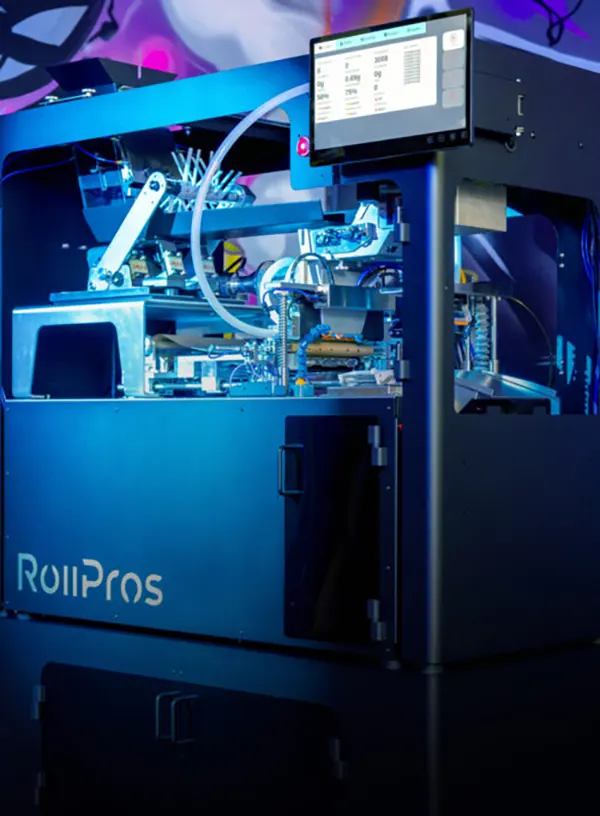
Equipment producers play an important role in helping businesses modernize their production processes. RollPros is one company working to introduce innovative automated technology to the pre-roll producing sector.
The company has developed a particular system called Blackbird, which uses its patented TruRoll technology to produce joints through a replacement process rather than depending on conventional pre-filled cones.
This technology offers businesses another approach to product manufacturing and provides opportunities to explore different production specifications.
More information about the company’s technology, tools, and manufacturing solutions is available at https://rollpros.com/
The Blackbird system has been improved to allow commercial manufacturers to scale their production process whilst having better control over their final products. With various adjustable options, manufacturers can experiment with different product requirements.
If you are looking at investing in automatic production systems, knowledge of how the technologies work will make you a more familiar decision-maker.
Increasing Efficiency Without Compromising Quality
Never sacrifice quality when increasing production. Although having more production capacity can be beneficial for your business, it can also cause issues by producing conflicting results. This can cause extra costs due to wasted materials, defective products, and complaints from customers.
Consider how new equipment would help enhance your manufacturing performance.
Improving your manufacturing processes can have several benefits. Training staff, having standardised processes, regular maintenance checks, and the same quality control documentation.
Regular maintenance checks can help recognize issues that could cause problems when producing in larger quantities. Keeping precise records of your production can help you keep track of how well you are executing and allow you to make improvements.
Automated processes integrated with good quality control can help increase productivity without compromising standards.
Customization and Product Differentiation
Competition across modern product markets makes differentiation progressively important. Businesses need to develop products that contemplate their brand identity and appeal to their target customers.
Customization can involve various elements, including material selection, paper options, filter designs, product measurements, and packaging presentation.
Flexible manufacturing tools can help you trial different variations in your product expertise.
For example, if you have various sizes of your product or perhaps a lot of different paper options you would like to try, using supplies that allow for flexible production settings can help you make those changes.
This can allow you to introduce new products, adjust to changing customer tastes, and keep your branding steady across your range.
However, your product should still follow any applicable manufacturing standards.
Maintenance and Technical Support
Even advanced production equipment will need regular maintenance. This preventive maintenance will help to ensure your business is getting value out of your equipment. It will decrease unplanned downtime and keep your production running smoothly.
Ensure you have usual maintenance schedules in place and your staff knows how to use and check the supplies properly.
When looking at production tools, it is also important to consider technical support. Unplanned issues can occur, which will cause disturbance.
Having a producer who can provide good technical support, helpful resources, and customer support can make a big difference.
Before buying any machinery, it is a good idea to look into what warranty, spares, maintenance, and training are available.
This can help to decrease any unnecessary issues within your business and confirm you get value out of your investment.
How to Choose the Right Manufacturing Solution
Selecting proper manufacturing equipment requires a clear understanding of current production needs and future business objectives.
Before investing, manufacturers should estimate several important factors:
- Production Requirements: How much are you currently generating, and how much do you expect production to rise in the future?
- Space Requirements: Contemplate the physical dimensions of the equipment, installation needs, and the overall production facility layout.
- Operating Costs: Assess employee requirements, maintenance expenses, disposable materials, and ongoing operating costs.
- Product Flexibility: Determine whether the supply can support your desired product requirements and different manufacturing requirements.
- Training and Support: Research the training programs, technical assistance, maintenance services, and warranty reporting offered by the manufacturer.
- Long-Term Investment Value: Contemplate whether the equipment will provide computable benefits through improved efficiency, production consistency, reduced waste, and increased output.
Taking the time to assess these factors can help businesses make informed decisions and avoid investing in machinery that does not meet their operational requirements.
Looking Ahead: The Future of Automated Manufacturing
Technology will continue to influence how products are produced, packaged, and distributed across different industries. Businesses are progressively looking for trustworthy production systems that support greater efficiency, improved consistency, and better operational control.
Automation can allow processes to become more productive, which can help to meet rising demands from the market. As specific machinery continues to develop, manufacturers will have new opportunities to improve their production strategies and create new formats for products.
Companies that invest in suitable technology, efficient quality control processes, and practical long-term strategies are more likely to be able to adapt to changing market expectations.
Automation will likely continue to play a key role in enhancing production capabilities and providing a motivated edge in the future, as production standards continue to change.
Final Thoughts
Successful pre-roll manufacturing needs the right balance of quality, efficiency, flexibility, and operational control. As customer expectations continue to evolve, businesses must ensure that their production systems can deliver trustworthy and consistent results.
Specialised automated machinery can help manufacturers simplify their processes and increase regularity in production. Choosing the right machinery will depend on the needs of your process, maintenance requirements, technical support, and long-term goals.
By having the right machinery and an organised manufacturing process, you can increase efficiency when producing whilst ensuring quality is maintained.
Manufacturers interested in exploring modern production technology can learn more about the equipment, innovative approaches, and solutions offered by https://rollpros.com/.
FAQs
Ans: Businesses can automate individual steps or full lines, including writing and shifting, cone loading, weight tossing, tamping or spinning, twisting or folding, and packaging.
Ans: Tabletop or modular units suit smaller batches, frequent strain changes, or tight floor space. High-volume automated lines fit high monthly output, where speed, minimum handling, and continuous operation matter most.
Ans: Yes, Consistent particle size, proper moisture, dryness, and controlled room conditions help prevent clogging, clumping, or paper damage during high-speed runs.