Why Display Advertising Is the Missing Piece in Your Australian Marketing Strategy
Jump To Key Section
- What Display Advertising Actually Is
- How Display Ads Work
- The Australian Market in Numbers
- When It Makes Sense to Get Professional Help
- Benefits of Display Advertising for Australian Businesses
- How Display Works with Search and Social
- How to Measure Display Campaign Performance
- Common Mistakes to Avoid
- A Simple Example
- Final Thoughts
- Frequently Asked Questions
Many Australian businesses spend most of their online budget on search and social, then wonder why growth slows. Display advertising is the best solution for them. These are the banner ads and other visual messages that appear on news sites, apps, and other pages your customers already visit.
Display ads build brand awareness, reach targeted audiences without synthetic internet traffic, and bring back people who left your site without buying if used well.
This guide explains how display advertising works, what the latest Australian numbers show, and how it supports your other online advertising.
What Display Advertising Actually Is
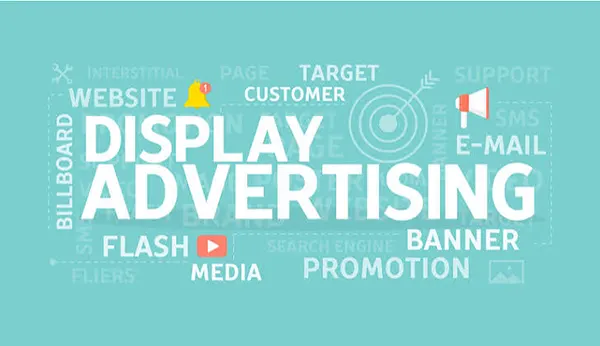
Display advertising is paid online advertising that uses images, illustrations, and short messages instead of plain text. You see it as a banner at the top of an article, a square box beside a story, or a graphic inside an online application.
Search ads answer a question someone has already searched. Display ads work earlier. They introduce your business to people who may need you soon but are not searching yet. That makes them helpful for building awareness, which then feeds your search and social results.
How Display Ads Work
The process has a few moving parts. Once you know them, a quote or a report from an agency becomes much easier to read.
Banner and Visual Ad Formats
Display ads appear in standard sizes, such as the wide leaderboard, the medium rectangle, and the tall skyscraper. Mobile screens use smaller banners and full-screen formats. Many ads also use native layouts that merge into the page, like a sponsored card in a news feed.
A good ad is plain. It has one clear message, a short headline, one image or graphic, and a button that tells the audience what to do next.
Audience Targeting
You do not pay to show ads to everyone. Targeting brings in potential buyers. Common options include:
- Location. Show ads only in your state, city, or suburbs.
- Interests and behaviour. Reach people who read about topics linked to your product.
- Demographics. Select age or life stage when it matters.
- Placements. Pick the types of websites or apps where your ad goes.
- Your own customer lists. Target people who already know you, where privacy rules and platform policies allow it.
Retargeting
Most visitors do not buy on their first visit. Retargeting shows ads to customers who already visited your website or looked at a product. It is a polite reminder, not a new pitch. Good campaigns limit how often one person sees the ad, a setting called frequency capping, so the message does not become annoying.
Buying and Delivery
Ads are generally bought through automated systems that place your ad in front of the chosen audience in a fraction of a second. You normally pay by impressions (how often the ad is shown) or by clicks. You set an amount, and the platform spreads it across your schedule.
The Australian Market in Numbers
Online advertising is a large and growing part of how Australians get customers. The IAB Australia Internet Advertising Revenue Report, compiled by PwC Australia, gives a helpful snapshot.
| Measure | Result |
| Total internet advertising, FY26 (to 30 June 2026) | $19.8 billion, up 14.0% on the year before |
| Video advertising, FY26 | $5.9 billion, about 30% of total spend |
| General display (not video), FY26 | $2.2 billion, up 6.9% |
| Infeed and native display growth, FY26 | Up 10.9%, the strongest part of general display |
| Biggest display spenders | Retail, automotive, entertainment and media, finance, and FMCG made up 56% of general display spend |
Two points stand out for a business proprietor. First, advertisers keep investing, so your competitors are likely already visible. Second, the fastest growth is in formats that look natural on the page, which rewards clean, useful creative over crowded banners.
When It Makes Sense to Get Professional Help
You can run a small display campaign yourself. But as soon as you require several audiences, more creative sizes, regular reporting, and careful budget control, the work grows quickly. That is when many businesses consult a display advertising agency for planning, setting up, and managing campaigns.
A good agency should be able to do a few convenient things:
- Explain its targeting plan in plain language.
- Show how it will measure results against your goals.
- Share clear reports on spend, reach, and outcomes.
- Be open about fees and what is included.
Ask for examples of the type of reports you would get. If the answers are vague, keep looking.
Benefits of Display Advertising for Australian Businesses
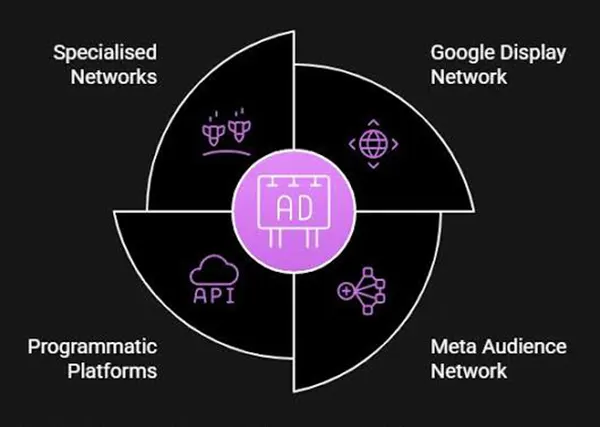
Here are some benefits of display advertising for Australian businesses:
Builds Awareness Early
People are more likely to click or search for a name they have seen before. Display ads trigger that familiarity at a modest cost per impression compared with many other formats.
Reaches Relevant Audiences
Because you can target by location, interest, and behaviour, your budget goes toward people who could genuinely buy. A Perth tradie does not need to pay for views in Sydney.
Supports Lead Generation
A display ad can send people to a landing page with an offer, a quote form, or a booking button. Retargeting then reminds visitors who ignored the first time.
Gives You Visual Control
You decide your brand appeal. Images, colors, and short messages let you show products and services in a way text cannot.
Offers Flexible Budgets
You can begin with a small daily budget, see what works, and increase spending only on ads that perform.
How Display Works with Search and Social
Think of the three channels as several stages of the same path.
| Channel | Main job | Typical moment |
| Display | Introduce your brand and remind visitors | Before and after a search |
| Search | Capture people who are ready to act | When someone types a need |
| Social | Build community and share stories | While people scroll and chat |
Here is an understandable example. Someone sees your display ad on a news site and does not click. A week later they search for your service and remember your name, so they click your search ad. Then a retargeting ad reminds them to complete the booking. Each channel does its own part.
How to Measure Display Campaign Performance
Display is usually judged unfairly because people look at the wrong numbers. Pick measures that match your goal.
| Goal | Useful measures |
| Awareness | Impressions, reach, and how often people see the ad |
| Interest | Click-through rate, time on site, pages viewed |
| Leads | Form fills, calls, and bookings from the campaign |
| Sales | Conversions and cost per sale |
Keep these habits:
- Set one main goal per campaign. Mixed goals make results difficult to read.
- Track conversions. Use your analytics tools to count calls, forms, and purchases.
- Look at assisted results. Some people watch a display ad and convert later through search. Good reporting shows that link.
- Test two or three creative versions. Preserve the best and replace the weakest.
- Review every few weeks. Short reviews catch problems before the budget is spent.
Common Mistakes to Avoid
- Too many messages in one ad. Target one clear idea.
- No landing page plan. Send clicks to a page that matches the ad.
- Ignoring frequency. Displaying the same ad too often wears out goodwill.
- Judging only by clicks. Display also builds recall that clicks do not capture.
- Skipping privacy basics. Follow Australian privacy rules and platform policies when you use customer information.
A Simple Example
This example is invented to show how the pieces fit, not a report on an actual business.
A Brisbane home renovation company wants more quote requests. It sets a modest monthly budget and creates three display ads showing recent kitchen projects. It targets homeowners within a set distance of Brisbane and uses retargeting for visitors to its gallery page.
In the first month, it learns that the ad with a perfect kitchen photo draws more clicks than the one with a logo only. It drops the weaker ad and moves budget to the stronger one. It also includes a short quote form on the landing page. Over the next few months, it compares the number of quote requests with the previous quarter and checks which ads helped most. The attraction is the method: clear goal, simple tests, steady improvements.
Final Thoughts
Display is not a miracle fix, and it will not replace search or social. What it does well is fill the early and late parts of the customer path, where search and social leave gaps. It builds algorithm reputation and awareness, reaches the right audience, and brings back visitors who were almost ready to act.
Start with one goal, a reasonable budget, and two or three ad designs. Measure what matters, keep the winners, and add more as you learn. If the work grows beyond what you can manage, get expert support and ask for clear reporting. Done this way, display becomes the missing piece in your Australian marketing plan.
Frequently Asked Questions
Ans: It uses images and short messages that appear on websites and apps, such as banners and sidebar boxes. It supports businesses in building awareness and reaching people before they search.
Ans: Costs depend on your audience, location, ad format, and budget. Many platforms let you set a daily or monthly limit, so you can start small and increase capital when results justify it.
Ans: No single channel is best for every goal. Search captures people ready to act, social builds community, and display builds awareness and reminds visitors. They work best together.
Ans: Retargeting shows ads to people who already visited your website or viewed a product. It works as a reminder and often helps bring back people who left without buying.
Ans: Match your measures to your goal. Use reach and impressions for awareness, and conversions such as calls, forms, and sales for lead and sales goals. Review results every few weeks and adapt accordingly.