Metal Roof Installation for Homeowners: What Actually Happens on Install Day
Jump To Key Section
- What Separates A Metal Roof From An Asphalt One, In One Paragraph
- Why Install Day Matters More Than The Panel You Picked
- The Install Day Timeline, Stage By Stage
- Five Things To Check While The Crew Is On Your Roof
- A Short Word On Weather And Timing
- Panel Choice: Standing Seam Versus Exposed Fastener
- What The Day After Install Should Look Like
- FAQs
Most homeowners sign a metal roofing contract without even knowing what a roofing panel is. Approving a scope, writing a deposit, and then letting a crew climb onto your house and making a decision every hour that you will live with for the next four or five decades.
You do not need to swing a hammer yourself, but you just need to know what a finished layer looks like at each stage, so you can spot a shortcut before it is buried under metal.
After experiencing and witnessing enough of these jobs, this article states the difference between a roof that lasts thirty years and the one that lasts fifty. And that’s not just about the panels; the secret lies in the six hours of installation.
If you are hiring this out, work with a crew that handles metal roof installation for homeowners as a documented, inspected process rather than a same-week sprint.
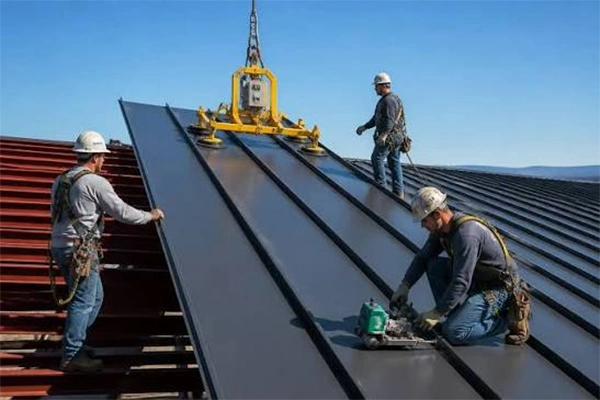
What Separates A Metal Roof From An Asphalt One, In One Paragraph
Asphalt shingles are a base. Metal is a system. Panels, clips, underlayment, edge metal, and fasteners all have to work together as your house expands in August and contracts in January, and every one of those layers matters as much as the panel you usually see. Skip the underlayment spec or let a crew fasten panels right through the face, and you have bought an expensive roof that leaks at year twelve. Get the details right, and the same material can outlive your mortgage thrice over.
Why Install Day Matters More Than The Panel You Picked
Homeowners spend months comparing standing seam against exposed fastener and steel against aluminum. That is time well spent, but the panel selection is roughly thirty percent of your outcome. The rest, seventy percent, is installation. According to the Department of Energy, a well-installed metal roof with the right reflective finish can purposefully cut heat gain in a hot climate, but “well-installed” is doing a lot of work in that sentence. A poor application with a great panel is still a poor roof. A careful install with a mid-tier panel is generally a better roof.
So when you interview contractors, stop asking only which panel they use. Know who runs the crew, how long that crew has been together, and what happens if a fastener is placed in the wrong place. The answers tell you more than any panel brochure.
The Install Day Timeline, Stage By Stage
Here is how a normal one- to three-day residential metal roof replacement works in most of the country, weather permitting.
- Tear-off and deck inspection. Old roofing comes up, and the crew diagnoses the sheathing underneath. Rotted or delaminated decking gets replaced at that moment, not later.
- Deck prep and underlayment. A synthetic layer or high-temp ice-and-water membrane goes down, overlapping the right way, with the edge metal placed first so water always shingles over.
- Flashing and penetration work. Valleys, chimneys, vents, and pipe boots are the leak magnets, so this stage requires the most attention and usually gets the least.
- Panel layout and setting. Panels are measured, cut, and set from a chalk line so the seams stay parallel. A crooked layout is cosmetic on day one and a warranty issue for years.
- Fastening and clip placement. Standing seam scones with concealed clips that let the roof move. Exposed fastener panels get screwed through the face with gasketed screws, which is an actual long-term tradeoff, not a marketing talking point.
- Ridge, trim, and final closure. Ridge caps, gable trim, hip and valley metal go on, and every opening is closed against wind-driven rain.
- Cleanup and magnet sweep. A crew that leaves screws in your lawn is a crew that will leave a conversation half finished. The magnet sweep is a two-minute job that tells you a lot.
Ask for images of stages two through four before they are covered. Any contractor who will not take those photos is probably a fraud.
Five Things To Check While The Crew Is On Your Roof
- Underlayment overlap and orientation, specifically in valleys and around chimneys.
- Fastener placement: clips on the seam for standing seam, screws centered in the flat with gaskets seated flat, not forced.
- Panel alignment from the ground, because a run that drifts left by a half inch across the roof is visible from the street.
- Flashing specs at every wall, pipe, and skylight, the places a five-minute shortcut costs you a repair five years out.
- Site protection: gutters and landscaping covered, and a cleaning at the end of each day, not just the last one.
You are not inspecting for craftsmanship. You are seeking care. Those are different things, and only one of them is visible in a contract, like only a subject is visible in AI Video Dubbing.
A Short Word On Weather And Timing
Metal installs are weather-sensitive in a way shingle placement is not, mostly because crews move slower with long panels and a sudden gust turns a controlled lift into a hazardous one. The National Weather Service is the source most contractors see, and a good one will tell you the day before if a forecast is going to redate the schedule. If your contractor never mentions weather until the morning of, that is a planning habit, not bad luck, and it generally shows up in other places too.
Panel Choice: Standing Seam Versus Exposed Fastener
I would pick concealed fastener standing seam for any home I thought to own for more than fifteen years, and I would say so to you directly. It costs more up front, but the fasteners are not through the roof surface, which removes the single most common cause of failure on metal roofs. Exposed fastener panels are good on barns, shops, and detached structures where budget rules and the roof is convenient to reach. They also make sense on a house you plan to sell within a few years, if the cost matters to you.
Either way, rely on a written underlayment spec, a flashing detail sheet, and a fastener type. According to the National Institute of Standards and Technology, curtain wall products work best when they are installed as matched, tested assemblies, which is an elegant way of saying the parts matter less than the combination. That is accurate here.
| Decision | What it affects | My pick |
|---|---|---|
| Concealed clip vs exposed fastener | Leak risk, lifespan, resale | Concealed clip for a primary home |
| Panel layout line choice | Visual drift over long runs | Start from the dominant street view |
| Underlayment spec | Warranty and moisture control | Written spec, high temp in hot climates |
| Flashing approach | The leaks you never see coming | Custom bent, not site folded |
What The Day After Install Should Look Like
When the crew drives off, you should have signed off on a documented sequence, seen photos of every covered layer, and done a walk with a magnet and a critical sight. Two weeks later, after the first hard rain, roam in your attic with a flashlight and look for daylight and moisture. If you see either, call before the next storm, not after. Metal roof application is unforgiving of small mistakes, and forgiving of almost nothing once water gets in. The 9 practical ways AI can improve productivity, organization, and daily work are worth considering to prevent mistakes in your life.
The roof you live with is the one your crew built, not the one in the brochure. So which stage of the process would you feel least confident finding a shortcut in right now?
FAQs
Ans: Most residential metal roof replacements take one to three days, depending on the roof size, complexity, weather conditions, and any repairs needed in the roof decking.
Ans: Homeowners should check underlayment placement, panel alignment, fastener installation, flashing around vents and chimneys, and site cleanup.
Ans:Standing seam roofing uses concealed fasteners and allows fasteners to expand and contract with temperature changes. Exposed fastener roofing costs less but requires attention to exposed screws and their sealing washers over time.