A Small Component With Big Impact: The Role Of Cable Glands In Electrical Safety
Imagine a giant factory as a living body: a powerful heart of electricity, muscular machines, and a nervous system of computers and sensors. Now, picture a single, tiny nerve ending—a sensor whose only job is to feel for the slightest tremor. Its purpose is to scream “DANGER!” at the first sign of trouble.
One day, a nearly invisible speck of dust settles on it. To a person, it’s nothing. But to the factory’s brain, this tiny fault is a deafening, constant alarm. Trusting this guardian absolutely, the brain slams on the emergency brake. The heart stops pumping, the powerful muscles freeze, and the entire operation grinds to a costly halt. All because a minuscule part did its job too well. Yet, for every one of these dramatic stops, a thousand disasters are silently prevented by an utterly humble, unseen hero: the cable glands.
What In The World Is A Cable Gland?
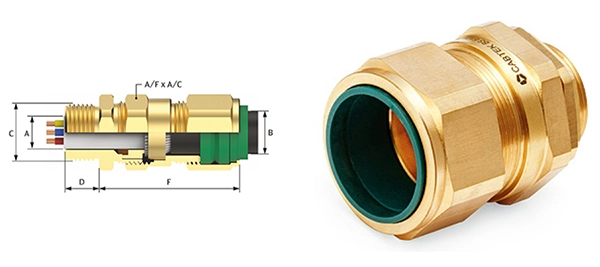
If you’re imagining something organic, think again. A cable gland is a small, tough device made of plastic or metal. It’s that nut-like fitting you see where a cable enters a machine or control panel. Its job is deceptively simple: it’s a bouncer, a bodyguard, and a sealant, all in one.
Think of an electrical cable as a busy highway of power and data. Where this highway enters a machine, there’s a hole. An open hole is an invitation to disaster—allowing dust, water, and other hazards inside. This is where our tiny guardian, the cable gland, steps in to secure the entry point.
The Three Superpowers Of A Tiny Titan
1. The Bouncer: Keeping the bad stuff out
Imagine that hole in the machine is a nightclub door. Without a bouncer, anyone and anything could wander in: dust, dirt, water, even curious insects. In an industrial setting, this isn’t just messy; it’s deadly. A sprinkle of water on live electrical components can cause a short circuit, a spark, or even an explosion in volatile environments like chemical plants or grain mills. Dust can clog sensitive circuitry, causing sensors to fail and machines to behave erratically.
The cable gland screws tightly onto the entry point, forming a powerful seal. Its internal design, often with rubber seals and threading, acts like a relentless bouncer, allowing only the approved cable to enter and firmly keeping moisture, dust, and other contaminants out. This single act of exclusion prevents countless electrical faults and fires every day.
2. The Bodyguard: Holding the line under pressure
Cables aren’t static; they deal with constant stress. They get tugged during maintenance, they vibrate from the machinery they power, and their own weight pulls on the connection point inside the device. Without protection, this constant pulling and shaking can loosen wires, fray connections, and eventually yank them clean out. A loose wire is like a blocked artery—it can cause a system-wide failure or become a red-hot point of danger.
This is where the cable gland’s second superpower comes in: strain relief. Inside the gland, clever components grip the cable’s outer jacket firmly but gently, like a steadfast bodyguard holding the line. It absorbs the physical stresses and vibrations, ensuring they never reach the delicate electrical terminals inside the equipment. The gland takes the beating so the sensitive connections don’t have to.
3. The Sealant: Containing the danger within
In some environments, the danger isn’t what gets in, but what might get out. In hazardous locations where flammable gases, vapors, or dust are present, a single tiny spark from a poorly contained connection can be catastrophic. The cable gland plays a critical role here as an explosion-proof seal.
Specially designed glands for these areas are engineered to contain any internal explosion or spark within the enclosure. If a spark were to occur inside the junction box, the ultra-secure seal of the gland would prevent it from escaping and igniting the volatile atmosphere outside. It’s the ultimate containment specialist, sacrificing itself to protect the entire plant.
A World Without Guardians: A Story Of Chaos
Let’s revisit our factory body. Now, imagine its nervous system—the miles of cables carrying signals—is completely unprotected. In the washdown area, a light spray of water seeps into a control panel through an unglanded cable hole. Fizz. Pop. A critical motor controller fails. The conveyor belt stops. Production line halted.
In the packaging area, the constant vibration from a giant machine slowly works a power cable loose. The exposed wires inside touch, creating a resistance point that gets hotter and hotter. It begins to smolder, threatening to ignite nearby materials. A potential fire is born from a simple lack of grip.
In a refinery, a flammable gas drifts towards an electrical panel. It finds its way inside through the gap around a cable. A normal arc from a switch inside the panel is all it needs. The resulting explosion, contained only by the robust, certified cable glands on the panel, is prevented from becoming a plant-wide disaster.
This isn’t scare-mongering; it’s daily physics. And it’s the cable gland’s unassuming, silent vigilance that keeps these scenarios in the realm of fiction.
The Takeaway: Respect The Small Stuff
We naturally marvel at the giant robots, the powerful engines, and the flashy touchscreens. But true reliability and safety are built from the ground up, on a foundation of countless, tiny, perfectly executed functions. The cable gland is a masterpiece of this philosophy. It asks for no glory, requires minimal maintenance, and works 24/7 in the dark, in the dirt, and under pressure.
So, the next time you see a complex machine, a wind turbine spinning on the horizon, or even the traffic lights controlling your morning commute, take a moment to consider the tiny guardians at the gates. Those small, nut-like fittings are the unsung heroes holding the line, ensuring that the lifeblood of power and data flows safely, keeping the modern world turning, one secure connection at a time. Their impact is anything but small.