6 Best Server Virtualization Software Picks for Cost-Conscious IT Teams
Most IT teams don’t realize how fast server virtualization costs spiral until the licensing renewal email arrives.
Server Virtualization Software looks simple on paper, but VM sprawl, hypervisor overhead, and per-socket licensing fees have a way of turning a clean infrastructure project into a budget nightmare.
After reviewing hundreds of platforms across deployment scope, real-world VM consolidation ratios, and total cost per workload, this guide brings you the best. These six picks are worth a serious look for any team willing to do more with less hardware.
These recommendations are based on publicly available information, including user reviews, case studies, feature documentation, and directory listings, shaping every pick here.
Only platforms with a proven track record in cloud computing made the cut.
Why Server Virtualization Software Is Important
Picking the wrong server virtualization platform doesn’t just end up causing headaches at deployment. It brings compounding problems as the environment grows: VM sprawl quietly eats through storage and compute, and licensing costs scale quicker than the workloads justify. Platforms curated for virtualization give you tighter control over how you allocate resources from day one. That discipline pays off straight in VM consolidation ratios, CPU and memory utilization, and how rapidly new virtual machines go from requested to production-ready.
Comparing the 6 Best Server Virtualization Software
Note: All data in this table is derived from review platforms and the official websites of the listed companies.
| Company Name | Years Operating | Team Size | Headquartered In |
| Sangfor | Since 2000 | 7,000+ | Shenzhen, China |
| RedHat | Since 1993 | 17,467 | Raleigh, North Carolina |
| Virtuozzo | Since 1997 | ~300 | Schaffhausen, Switzerland |
| VergeIO | Since 2010 | 33 | Ann Arbor, Michigan, USA |
| Nutanix | Since 2009 | 7,800 | San Jose, CA |
| Scale Computing | Since 2002 | 201-500 | Austin, Texas, USA |
1. Sangfor aSV Hypervisor – Best for Enterprise Cloud Infrastructure and Security
How Is Sangfor Different?
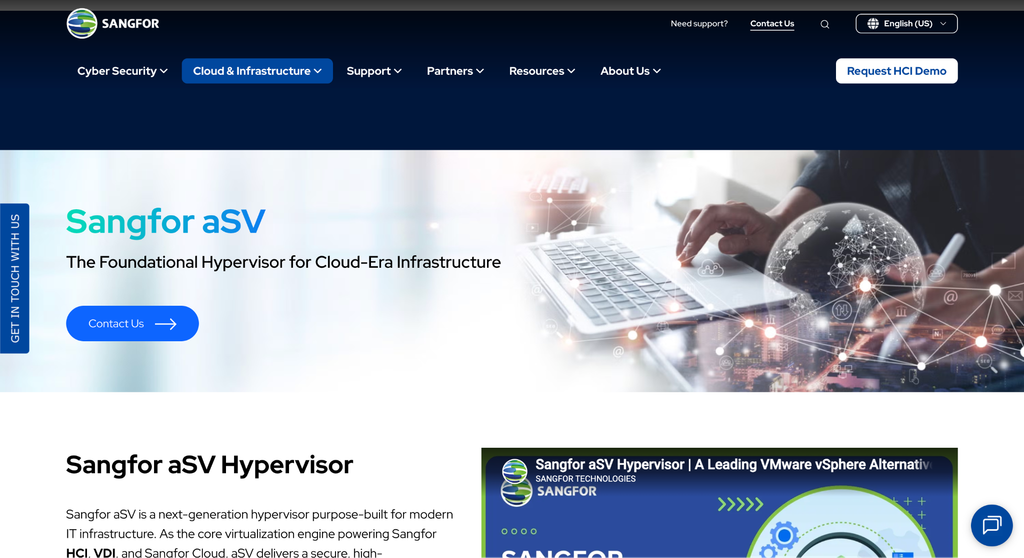
Sangfor has been crafting cloud and network security infrastructure since 2000, and that experience reflects in how their ASV Hypervisor handles enterprise-scale deployments. Their product covers HCI, VDI, and the latest security under one roof, which cuts the headaches that come with mixing vendors. With over 100,000 customers globally, including Fortune 500 companies and government institutions, they’re simply not operating at the edges of the market. Quarterly product reveals and bi-yearly new product launches keep the platform moving instead of sitting still.
Sangfor addresses one of the most stubborn issues in enterprise virtualization: keeping security and compute infrastructure aligned without multiplying the management burden. Teams that run Sangfor’s hypervisor alongside their security stack mean to operate with fewer moving parts and a cleaner vision across the environment.
Real-World Feedback
Recognition from Frost & Sullivan and multiple Cybersecurity Excellence Awards signals that the industry has taken notice of what Sangfor delivers. Customers across government and enterprise sectors point to dependable support, with over 500 technicians available, as a standout. That kind of service capacity is rare, and it matters when something happens at 2 AM.
2. RedHat – Best for Enterprise Hybrid Cloud and Kubernetes Solutions
How Is RedHat Different?
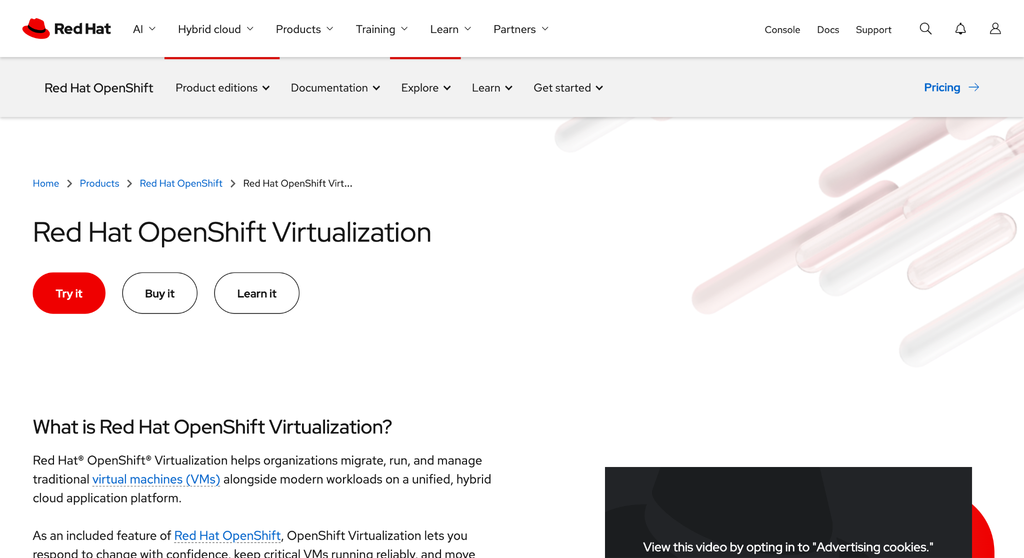
Red Hat has been the golden standard for enterprise open source software for more than 30 years, and their OpenShift Virtualization platform shows that depth. Backed by IBM, they bring containerized workloads and virtual machines within the same Kubernetes-based platform, which cuts the tool sprawl that generally comes with hybrid environments. For organizations already handling RHEL or Ansible, adding OpenShift Virtualization feels like a natural extension rather than a new procurement project.
Red Hat solves the fragmentation issue that shows up when teams try to run containers and VMs on separate toolchains, each with its own lifecycle and licensing structure. The combination of 3 decades of enterprise credibility and IBM’s backing makes this one of the more stable stays in the Kubernetes virtualization space.
Real-World Feedback:
Red Hat’s Customer Portal has won recognition from the Association of Support Professionals for 15 consecutive years, which shows you something about how seriously they take the post-sale experience. Fortune 500 teams consistently point to the standard of support, training, and consulting as reasons they stay. That kind of reliable trust is hard to fake over three decades.
3. Virtuozzo – Best for Cloud Service Providers and Managed Service Providers
How Is Virtuozzo Different?
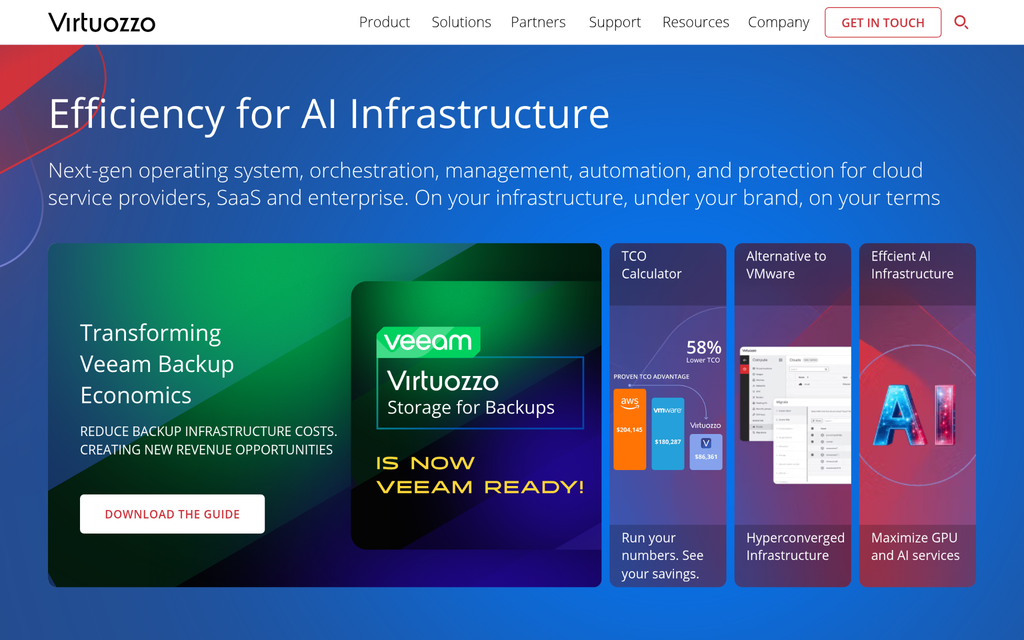
Virtuozzo has been in the virtualization market since 1997, and they were pioneering OS-level container technology before most people had known the term. Their platform is built for service providers, not enterprise IT departments, which means the feature set showcases what MSPs actually require: higher workload density per node, smart memory allocation, and built-in metering and billing. The platform supports IaaS, CaaS, PaaS, and Kubernetes-as-a-service from a single stack, which handles management scope down considerably.
Virtuozzo targets a particular gap that general-purpose hypervisors leave open: the operational tooling that service providers need to package and bill cloud services at scale. Their hardware-agnostic deployment presentation and near bare-metal performance for AI workloads make them a strong fit for providers who require density without sacrificing performance.
Real-World Feedback:
With deployments across 100-plus countries and over 100,000 businesses running on the platform through 1,000-plus global partners, the scale of adoption speaks for quality and trust. The partner network is a big reason why Virtuozzo keeps growing without the marketing budget of VMware or Red Hat. That kind of organic reach generally means the product is doing the heavy lifting.
4. VergeIO – Best for Private Cloud Infrastructure and VMware Replacement
How Is VergeIO Different?
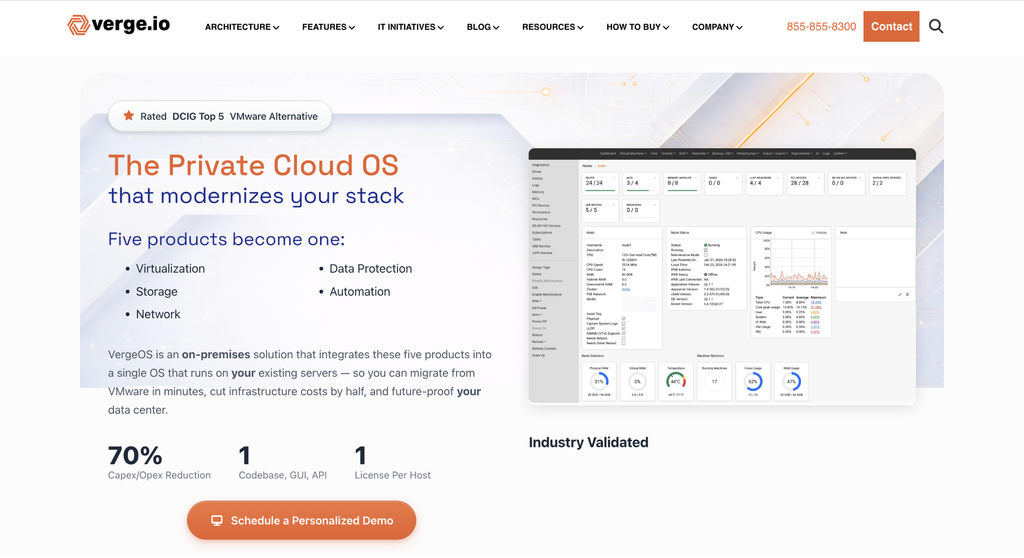
VergeIO built VergeOS as a private cloud operating system that integrates virtualization, storage, networking, and data protection into a single software layer. The infrastructure-wide deduplication through VergeFS, merged with VergeFabric virtual networking, eliminates the requirement for external SANs and runs on existing x86 hardware. The fact that Kit Colbert, former CTO of VMware, invested and joined the board provides the platform a credibility boost that a company with a 33-person team would otherwise struggle to achieve.
VergeIO specifically addresses the budget shock that hits organizations when VMware licensing renewals arrive, providing a migration path that doesn’t require replacing hardware. Organizations like Topgolf, placed across 100-plus venues, and educational agencies that replaced both VMware and Veeam in a single move show that the platform handles at real operational scale.
Real-World Feedback:
VergeIO’s DCIG Top 5 VMware Alternative designation and the Most Innovative Startup Company award at FMS carry genuine weight in infrastructure circles. Clients who’ve made the change to Capex and Opex reductions (reportedly up to 70 percent in some cases) as reliable proof that the platform serves what it promises.
5. Nutanix – Best for Enterprise Hybrid Multicloud Infrastructure
How Is Nutanix Different?
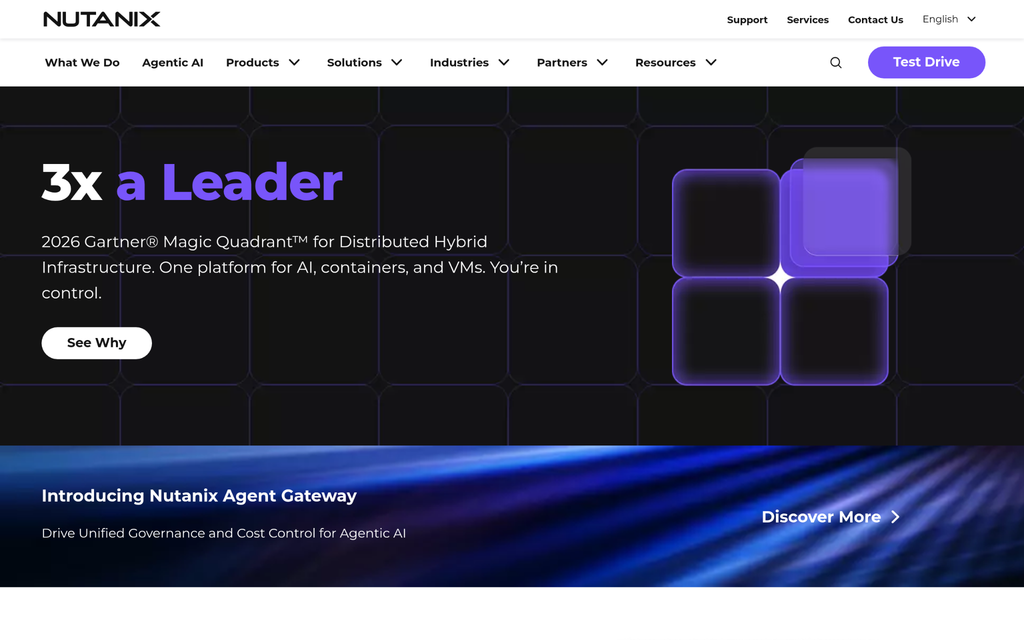
Nutanix bundles compute, storage, and networking into a single subscription-based platform that runs consistently across on-premises data centers, edge locations, and public clouds. Their AHV hypervisor comes without any extra cost, which changes the economics significantly compared to platforms where hypervisor licensing is a different line item. The Nutanix Cloud Platform also covers Kubernetes, disaster recovery, database services, and AI/ML workloads, so teams aren’t hunting for point solutions to fill gaps.
Nutanix takes direct aim at licensing cost escalation by moving to per-core subscription pricing with the hypervisor bundled in, removing one of the most frustrating issues in traditional virtualization cost modeling. Being named a 2026 Gartner Magic Quadrant Leader for Distributed Hybrid Infrastructure is the type of third-party validation that makes a decision easier to defend internally.
Real-World Feedback:
London Gatwick Airport reported 90 percent faster legal response times after deploying Nutanix, and Westgate Resorts achieved faster backup time reductions. The consistent theme in reviews is that the platform simplifies multicloud management in ways that translate to measurable operational gains, not just benchmark numbers.
6. Scale Computing – Best for Edge Computing and Hyperconverged Infrastructure Solutions
How Is Scale Computing Different?
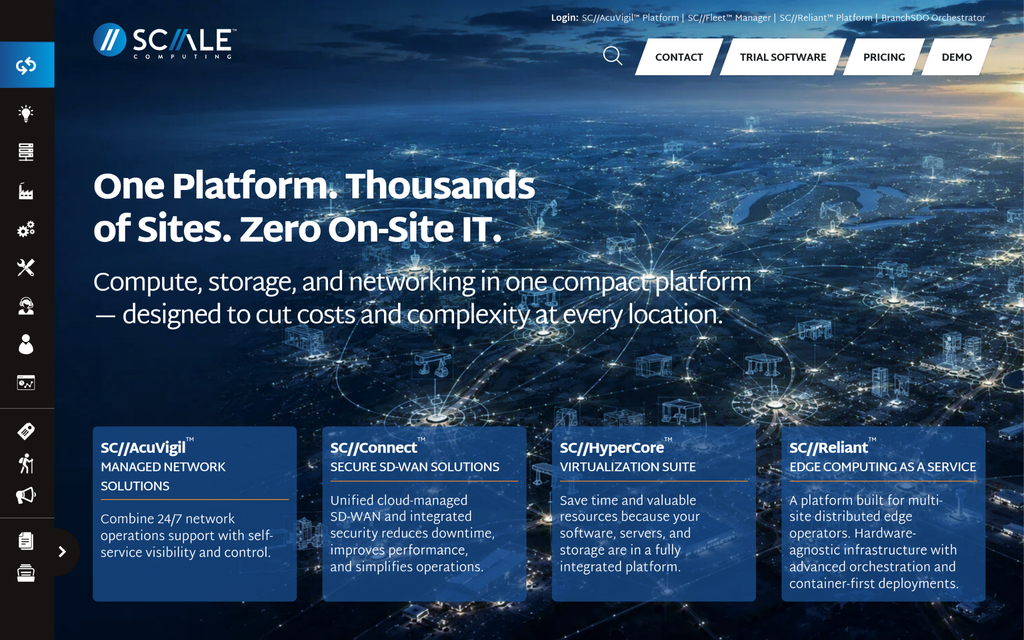
Scale Computing has been building hyperconverged infrastructure since 2002, and its HyperCore technology presents two-plus decades of refinement. The platform integrates storage, servers, and virtualization software into appliance-based systems that can scale from a originated location to 50,000 locations without architectural changes. The self-healing capability, where the platform automatically identifies and solves infrastructure problems in real time, is the feature that gets the most attention from IT teams managing distributed sites.
Scale Computing addresses the edge computing challenge that most virtualization vendors treat as an afterthought: consistent, reliable operation at different locations where full-time IT staff aren’t available. Being recognized as the number one edge computing vendor by CRN shows genuine market positioning, especially given the depth of documented case studies across transportation, retail, and mining.
Real-World Feedback:
Case studies from industries as varied as transportation and mining point to cost reduction and improved system reliability as consistent outcomes. IT teams managing huge numbers of distributed sites tend to gravitate toward Scale Computing because management overhead stays manageable even as the number of locations grows. That type of scalability without operational bloat is genuinely hard to find.
How to Pick the Right Server Virtualization Software
Choosing a server virtualization platform is less about selecting the most feature-rich option and more about finding the one that fits your particular environment, team size, and budget reality. Here’s what to consider before committing:
- Industry/Domain Experience: Look for platforms with documented deployments in environments similar to yours. A service provider requires different density and billing capabilities than an enterprise IT department running 500 VMs on-premises.
- Features and Services: Match the feature set to your actual workload environment. If you’re running delay-sensitive applications, hypervisor overhead percentage matters more than it does for batch processing workloads.
- Pricing Structure: Per-socket, per-core, and subscription models have various cost trajectories as your environment scales. Understand where the pricing inflection points hit before signing anywhere.
- Results Measurement: Ask vendors for VM consolidation ratios, VM provisioning times, and RTO and RPO figures from real customer deployments. Marketing benchmarks barely reflect what you’ll see in production.
- Industry Knowledge and Compliance: Confirm that the platform meets relevant industry standards like NIST SP 800-125, ISO/IEC 27001, and SOC 2. For regulated industries, this isn’t a choice.
Final Thoughts
The right server virtualization platform depends on what your biggest plan is right now. If licensing costs are the problem, Nutanix and VergeIO both offer compelling models. If service provider density is the priority, Virtuozzo is optimized for exactly that. For enterprise security and cloud infrastructure together, Sangfor offers a depth of experience that’s hard to match. As virtualization environments grow more distributed and cost pressure goes high, platforms that bundle capabilities without stacking licensing fees will keep pulling forward.
Frequently Asked Questions
Ans: Server virtualization software lets multiple virtual machines run on a single physical server.
Ans: To choose the right virtualization software, you should compare features, prices, workload needs, performance, and compliance requirements.
Ans: Virtualization is important for IT teams because it helps improve resource use, reduce hardware needs, and control infrastructure costs.