The Simple Card That Redefines Safety at Scale

KEY TAKEAWAYS
Understand why proximity cards changed everything
Learn how they are convenient and easy to control
Discover why businesses trust proximity cards
Learn why small tools matter most
Whenever we talk about security, the image that comes to our mind is always like countless cameras, biometric scanners, guards, or an entire team in a control room, right? Well, not anymore because technology is growing, and so are the security systems.
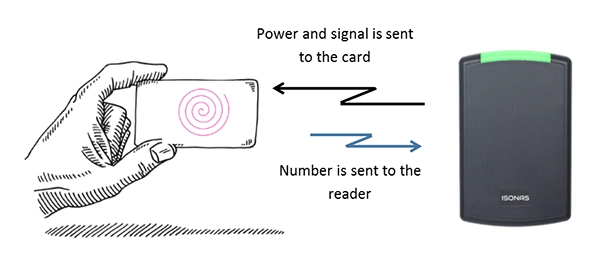
Now, a small card that easily fits into your pocket can protect your entire house. The proximity card is redefining the definition of security. Each of these cards has embedded chips and an antenna that wirelessly communicates with a reader when held just 2-6 inches away. No tension of tear and wear from swiping.
Let’s learn more about its convenience, human factor, and future access.
The Old Way of Thinking About Security
Before electronic access systems, the conversation about security was dominated by physical keys and locks. Although it was simple, there were many problems.. A lost key meant vulnerability. Rekeying an entire building was costly and slow. There was no way to track who entered and when.
Keys also created inefficiency. Employees waited for someone with the right key. Visitors lingered at the doors until someone let them in. It was clunky, insecure, and a constant drag on productivity. The old way relied on trust and manual oversight, both of which are unreliable at scale.
Why Proximity Cards Changed Everything
Proximity cards introduced a quiet revolution. Rather than carrying noisy metal keys, employees carry slim cards that communicate wirelessly with the reader. That simple exchange is loaded with possibilities.
- Permissions can be assigned instantly.
- Lost cards can be deactivated without rekeying locks.
- Access can be logged in real time, creating a digital record of movement.
- Different zones can be restricted to specific people, improving both security and efficiency.
The proximity card turned security into something adaptive. It gave businesses control without creating friction. It replaced static systems with dynamic ones, and in doing so, it redefined how organizations thought about safety.
Safety That Scales
The best thing about proximity is not how it works, instead how it scales. One office can use it to control a single door. A multinational company can use the same principle to secure thousands of entry points across multiple sites.
Scaling security used to mean adding layers of complexity. More locks. More guards. More oversight. Proximity cards make scaling simpler. The same card that grants access to one office can grant access to many, depending on the permissions set by administrators. What was once rigid is now fluid. Here is the image of how proximity cards actually work:
Convenience Meets Control
Employees didn’t even think of proximity cards as advanced technology. To them, it is a swipe and go. That’s the best part of it. The security feels invisible. People move freely while the system does the heavy lifting in the background.
Administrators, on the other hand, get unprecedented control. They can monitor entries, adjust permissions, and respond instantly to potential risks. That balance of convenience and control is why proximity cards became the default in industries where safety and efficiency cannot be compromised.
The Productivity Impact
Security is often framed as something separate from productivity, but the two are tightly linked. Clunky access systems waste time. Every delay at a door or reception desk chips away at focus. Proximity cards eliminate those micro-delays. They streamline the flow of people through a space, which translates into smoother operations.
Now it’s not just about passing the entrance faster, but it’s about creating a feel where people don’t even have to think about access at all. That mental clarity is a hidden productivity hack. Employees can focus on their work instead of worrying about logistics.
Why Businesses Trust Proximity Cards
The main reason businesses and organizations are relying on proximity cards is that they do work.
- Corporate offices use them to manage multiple floors and departments.
- Hospitals use them to ensure only authorized staff enter sensitive areas.
- Schools use them to balance safety with accessibility.
- Gyms and recreation centers use them for member entry and tracking.
The versatility of the card makes it adaptable to nearly any environment. It is not flashy, but it is effective.
DID YOU KNOW
Encrypted and authenticated, proximity cards reduce unauthorized access incidents by up to 50%.
Addressing the Human Factor
Now, keep one thing in mind that even the strongest system can fail, and people will misuse it. Proximity cards help reduce this risk by making safe behavior the path of least resistance. It is easier to swipe a card than to remember a code or hunt for a key. By aligning with natural behavior, proximity cards encourage compliance without force.
This matters more than most leaders realize. Security works best when it does not feel like a burden. Proximity cards achieve that balance.
The Future of Access
Technology is continuously evolving, and so are the proximity cards. Contactless systems are becoming faster and more secure. Integration with mobile devices allows employees to carry access on their phones. Biometrics add another layer of personalization.
But even as technology advances, the principle stays the same. Safety is about details that scale. And the card (whether physical or digital) remains the clearest expression of that principle.
Why Small Tools Matter Most
The tendency in business is to chase big solutions. Large systems, sweeping reforms, expensive technology. Yet the details often deliver the biggest impact. A small card that most employees barely notice has transformed how organizations think about security.
That is the paradox of proximity cards. They look insignificant, yet they are indispensable. They prove that safety does not always come in massive sizes. Sometimes it comes from a detail small enough to slip into your wallet.
Final Thoughts
Crimes and threats are increasing, and everybody needs the best security possible. Proximity cards provide a great way to add security not only at your business place, even in gyms, corporate offices, health institutions, and many more.
With them, there is no tension of changing locks or reissuing keys when they are lost or stolen. You can simply delete the previous code and reprogram the new token.
This is the detail that defines safety at a scale. For businesses that really want to build trust, protect their assets, and unlock productivity, investing in this is not just a want; it is a need.
Ans: Once you specify the first few digits, the cards are programmed with sequential numbering.
Ans: These cards use radio frequency identification (RFID).
Ans: All prox cards work in the same way: a copper circuit and an antenna embedded within your card, which stores your card data.
Ans: The industry’s most famous proximity card format is the 26-bit card, also known as H10301.