Understanding Laser Cladding and Its Role in Smart Manufacturing
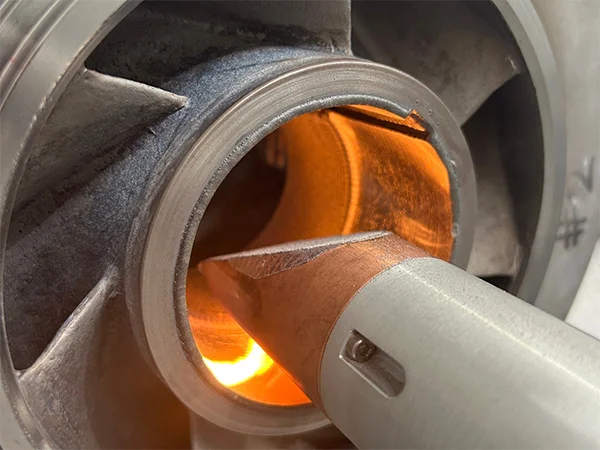
In general, manufacturers have to deal with a dilemma regarding the damage to equipment parts; they may be either repaired or replaced. Traditionally, the latter option was more popular and cheaper, resulting in unnecessary expenses. However, now laser cladding technology offers a way to make precise repairs without changing the entire part.
Moreover, this technology helps in making repairs that increase the efficiency and lifespan of the element. With the development of smart manufacturing, laser cladding has become a crucial tool in modern production processes.
In this article, I will provide all the details one should know about Laser cladding and its role in a smart manufacturing system.
KEY TAKEAWAYS
- Laser cladding is a technique used to repair damaged parts by adding material only to areas that have been worn down, without having to replace the entire piece.
- Manufacturers can reduce costs by applying expensive alloy only to highly worn-out parts instead of the entire part.
- Laser cladding increases the lifespan of machinery, therefore saving on downtime.
- Industries like oil & gas, aerospace, power generation, and heavy manufacturing benefit from laser cladding for increased wear and corrosion resistance.
What Is Laser Cladding
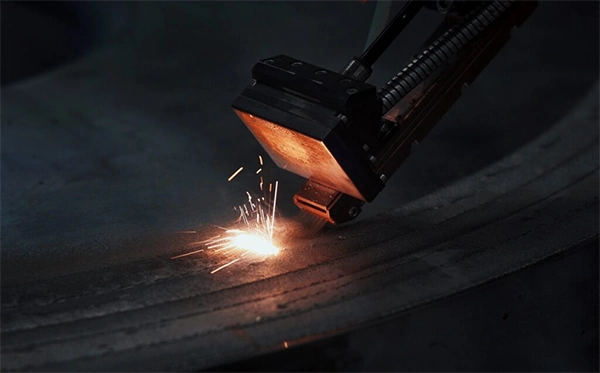
A laser cladding system directs an intense laser beam at a surface, melts a thin layer of metallic powder or wire right where it lands, and fuses it onto the part underneath.
During cooling of the melt pool, the deposited layer does not simply come into contact with the base metal. They bond at a metallurgical level, which is a fancier way of saying they become one piece of metal. Not a coating. Not glue. A real fusion.
That distinction matters. Older surfacing methods, arc welding and arc spray among them, dump a lot of heat into a part, and that heat can warp thin sections or change the metal’s properties in unwanted ways.
Laser cladding manages to control the heat-affected zone and input parameters, thus preserving the integrity of the underlying material. Fiber laser cladding pushes that precision further, swapping older disc or CO2 laser sources for fiber-based ones that deliver a tighter beam and hold a consistent coating thickness on awkward geometries.
This isn’t really a process most shops run in-house. It takes the right laser setup and enough metallurgy know-how to pick the correct alloy for the job, which is why a lot of this work gets outsourced to specialists.
Apex Engineering Technology Group offers laser cladding services built around exactly this kind of surface enhancement and repair, the sort of job where getting the process parameters wrong costs you the part.
Why Does This Matter for Manufacturing?
Laser cladding changes the formula for how parts get designed in the first place.
Imagine you’re building something that needs serious wear resistance, a wear ring or a guide vane, something that can withstand extreme wearing conditions for years. The old approach was to make the whole part out of an alloy tough enough to handle it, tungsten carbide or Stellite 6, say. This does the job, but it’s extremely costly once you’re manufacturing an entire large or oddly shaped component entirely out of premium metal.
Laser cladding skips issue. Design the bulk of the part from cheap structural metal, then clad only the surfaces that face wear, like the edge of a hydraulic shaft, taking the brunt of friction. You get the performance and precision where it counts without paying for it everywhere else.
The materials side is also getting very interesting. The common use of Nickel self-fluxing alloys, cobalt-based alloys, Inconel 625, and Inconel 718 shows up constantly in parts that need to survive heat and corrosion at once.
Selecting the correct metal powder or wire starting material is not something that can be done by looking at the specification sheet. It’s worth a real conversation with someone who knows metallurgy, because the wrong choice shows up months later as premature failure, not as an obvious mistake on day one.
Where Smart Manufacturing Comes In
This is where laser cladding stops being just a clever fix and repair process and starts becoming more of an infrastructure. On its own, the process is useful. However, it relies on sensors, robotics, and a feedback loop that can see what it’s doing, and it turns into something closer to a self-correcting system.
Automated Repair That Doesn’t Wait on a Human
Now, picture a six-axis robotic arm equipped with a laser cladding head, guided by 3D scanners that have already mapped where a part has worn down. Unlike an operator, the robot doesn’t need someone to trace the damage with a marker. It already knows where material is missing and rebuilds the part to its original geometry.
Well, this used to be a job for a skilled welder with steady hands and years of training. Now, a 5-axis laser cladding system handles a lot of that work overnight, and the human’s job shifts from repairing to checking that it was done right.
Building Parts Layer by Layer
Laser cladding isn’t only used for fixing what’s already broken. Through directed energy deposition, sometimes called laser metal deposition, the same setup can build a 3D metal part from nothing, adding layers one after another.
For irregularly shaped parts or anything with a genuinely complicated profile, this beats traditional machining outright. There is no need to cut a ready-made shape from a solid chunk and throw away all the excess parts. You’re adding only what you need.
Materials That Change Properties Mid-Part
Functionally graded materials let a system swap between different alloy powders mid-process, adjusting the laser’s power on the fly.
The result is one part with an exterior built to handle thermal stress and corrosion, and a core that stays ductile enough to absorb a shock without cracking. Such results are not achievable with cold spraying and HVAF spray coating technology.
Who’s Benefits From This
The energy sector utilizes laser cladding technology very often, especially when it comes to manufacturing downhole tools and threads that are exposed to high pressures, friction, and harsh conditions, such as corrosive fluids, all at once. Power generation is another big one. Boiler tubes and turbine components must survive thousands of hours at temperatures that would ruin most coatings, and laser cladding holds up where older methods give out early.
This, however, does not mean that laser cladding can replace everything that exists nowadays. The traditional hard chromium plating still earns its keep on simpler jobs where you don’t need laser-grade precision and don’t want to pay for it. But once you’re dealing with complex parts, strict OEM specifications, or a situation where cycle time and final surface quality both matter, laser cladding tends to be the better bet.
What’s shifting isn’t the laser technology itself. It’s the assumption that a worn part must become scrap. More shops are starting to treat repair as the default move instead of the fallback, and laser cladding is becoming more popular due to this change of paradigm.
FAQs
Ans: The thermal spray technology generates the mechanical bonding factor that secures the coating on the surface, while the laser cladding technique makes it possible to create the metallurgical fusion through the employment of a strong laser beam.
Ans: It is an extremely flexible technology, normally used in the process of coating of steel, nickel alloys, and cobalt alloys. But it is necessary to ensure that the chemical characteristics of the feedstock coincide with those of the base material in order to avoid cracking.
Ans: With laser cladding, companies can produce a large percentage of the component using the cheaper base metals and only apply costly alloys and metals on those surfaces that are subjected to corrosion and wear.
Ans: The use of fiber laser sources delivers the advantage of a much more powerful and uniform beam, working more effectively than the old types of lasers and ensuring the maximum efficiency of coating thickness.