Enhancing Digital Experiences in Manufacturing: Strategies for Success
Have you ever noticed why many of the manufacturing industries thrive in the market while many struggle to even compete better? This is because of the way industries consider their digital experiences. Enhancing digital experiences is a straight forward path to implement the modern innovative technologies into various aspects of manufacturing – resulting in enhanced capabilities, shortened time to deliver the product and more satisfied customers.
A planned coordination with a manufacturing website design agency can also smooth the experience of your websites for the users – supporting growth and competitiveness. Along with these, there are many pre-aligned benefits of leveraging digital experiences in manufacturing.
Ready to compete better in the manufacturing market? Keep reading this article that reveals the popular strategies to enhance digital experiences in manufacturing – leading to success.
Understanding the Importance of Digital Experiences
Digital channels have become the most fundamental for manufacturers planning to expand their business and enhance their operations. The largest number of manufacturers shared better customer satisfaction, increased sales and enhanced retention as the top motivators for upgrading their digital capabilities. Companies that take pride in digital engagement are seeing visible benefits – better conversion rates, loyal customers and stronger brand image. Especially as B2B buyers expect the same flawless experiences as consumers.
Manufacturers who invest in digital experiences are also better prepared to adapt to the changing market needs, on time communication with suppliers and distributors and fasten the product development process. Adopting digital strategies helps manufacturers to replace manual processes with automated ones, reduce friction in the buyer’s journey and present a strong and unified brand across multiple channels.
Implementing User-Centric Web Design
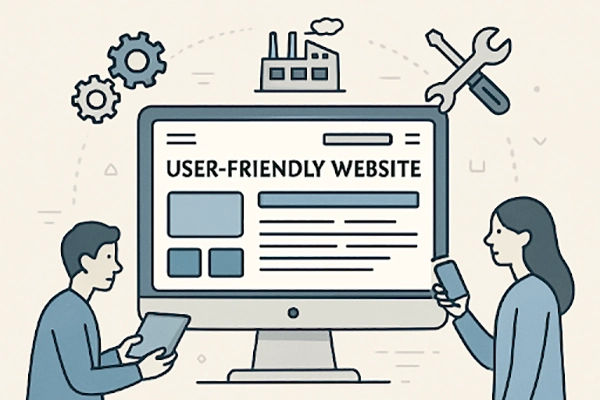
Premium digital experiences start with websites that are designed around user needs. Manufacturers are now considering visual layouts, easy-to-navigate menus and mobile optimization to ensure user comfort. A well-designed site doesn’t just look good — it’s built in such a away tat it helps a wide range of audience including technical buyers, engineers and supply chain teams to quickly locate products, download accepted documentation or request quotes without unnecessary complexity.
Main features for user-centric design in manufacturing include advanced search functions, detailed spec sheets, visual product user panels and multiple language content. Responsive design also ensures that the experience is equally practical on desktops, tablets, and smartphones, showing the global and mobile nature of the modern industrial workforce.
Leveraging Data Analytics for Personalization
Data-driven analyses are creating the next level of digital experiences in manufacturing. By utilizing website analytics, CRM systems and customer behavior tracking, manufacturers can deliver customized recommendations, planned content and working solutions at the right moment.
This specialized approach increases engagement and moves attendees more quickly through the sales funnel. However, the journey towards effective customization isn’t without problems. Closing these gaps requires an investment in universal data platforms and a commitment to breaking down internal restrictions.
Integrating Advanced Technologies
The integration of advanced technologies such as Artificial Intelligence (AI), Internet of Things (IoT), and Augmented Reality (AR) is reshaping the manufacturing customer experience. These technologies allow everything from real-time production supervision to intelligent customer support and interactive digital product demos. Industry research by Deloitte indicates that 70% of leading manufacturers are actively exploring or applying AI and IoT to achieve improved digital experiences.
For example, AI chatbots can handle technical queries 24/7, IoT-powered platforms deliver early maintenance alerts, and AR tools allow buyers to visualize equipment installations in their own facilities—all of which substantially increase the value and usability of digital touchpoints.
Overcoming Organizational Challenges
Despite clear digital opportunities, manufacturers are not ready for the internal challenges. Siloed data, increasing operational costs, and legacy systems can hold back progress and limit digital ROI.
Success in overcoming these barriers often hinges on creating a culture of cross-departmental collaboration and investing in integrated, scalable digital ecosystems. Companies that break down organizational silos and align teams around shared digital objectives are more agile, able to experiment and iterate faster, and deliver a more seamless customer journey.
Measuring Success and Continuous Improvement
Establishing clear metrics and regularly evaluating results are essential practices for digital transformation in manufacturing. Core KPIs include site traffic, conversion rates, lead quality, customer satisfaction scores, and repeat engagement indicators.
By continuously monitoring and analyzing these data points, manufacturers can spot areas for optimization, adjust to customer feedback, and deploy upgrades that drive long-term value. Regular performance audits, A/B testing, and customer feedback loops enable ongoing refinement of the digital strategy—ensuring that manufacturers can keep pace with evolving industry standards and changing buyer expectations.
Conclusion
As we read, the drastic benefits of enhancing digital experiences cannot be ignored in today’s digital landscape. With the growing demands of the customers, every industry needs to beautify its image to meet their customers’ needs. Either by investing in user centric design or by taking advantage of data to personalize their services, websites and products.
These customized experiences for the users will not only deepen industries’ relationship with their customers but will also increase efficiency in the production operation, reducing overall costs and staying competitive in the evolving market.
Ans: It is the implementation of digital technologies in the varying field of manufacturing – from the process of producing things to modernizing the supply chain.
Ans: No, this transformation is for every business that wants to thrive and evolve in this competitive landscape. It even provides a strong boost to new manufacturing companies.
Ans: As without clear metrics – industries will not be able to identify their gaps to improve and track how their tech adoption has benefited their processes.





© 2026 allinsider.net All rights reserved