SEO for E-commerce Websites: A Beginner’s Guide

If you want to be a successful online brand, having an e-commerce store isn’t enough. Because, no matter how beautiful your product pages look or how competitive your pricing is, it all comes down to one crucial factor – visibility.
And that’s where Search Engine Optimization (SEO) steps in.
If your online store isn’t optimized for search engines, you’re missing out on a huge chunk of potential traffic and sales. And that’s why SEO for e-commerce websites is so important.
Whether you’re optimizing product descriptions, improving site architecture, or speeding up
page load times, hiring professional SEO services can ensure you follow best practices and stay
ahead of algorithm changes.
If you’re new to SEO and need help getting noticed, this blog is for you. Keep reading to know more.
What Is E-Commerce SEO?
When someone searches for products you sell, you want your store to appear at the top of Google search. E-commerce SEO helps make that happen.
E-commerce SEO involves utilizing various techniques, such as keyword research, technical enhancements, content creation, and user experience improvements, to help an online store rank higher in search engine results pages (SERPs). Hiring an ecommerce seo agency can significantly accelerate these results, providing specialized expertise and dedicated resources to navigate the complexities of optimizing a large-scale online store for maximum visibility and sales.
Does E-Commerce SEO Matter?
Believe it or not, yes. According to Opensend.com, organic search drives nearly 53% of website traffic. If you’re not optimizing for search engines, you’re leaving a huge portion of your customers behind.
But besides this, SEO is cost-effective. Once you rank, traffic is essentially free. And while you’re working on ranking higher, you also boost consumer trust and improve UX. So it’s a win-win situation.
Best Practices for E-Commerce SEO
Let’s discuss some of the important SEO aspects you need to be focusing on.
Start With Keyword Research
Keywords are the foundation of all SEO campaigns. They’re the words and phrases your customers type into search engines when looking for products like yours. To ensure your name appears in search queries, you need to be using the right keywords.
Where can you find these magic keywords?
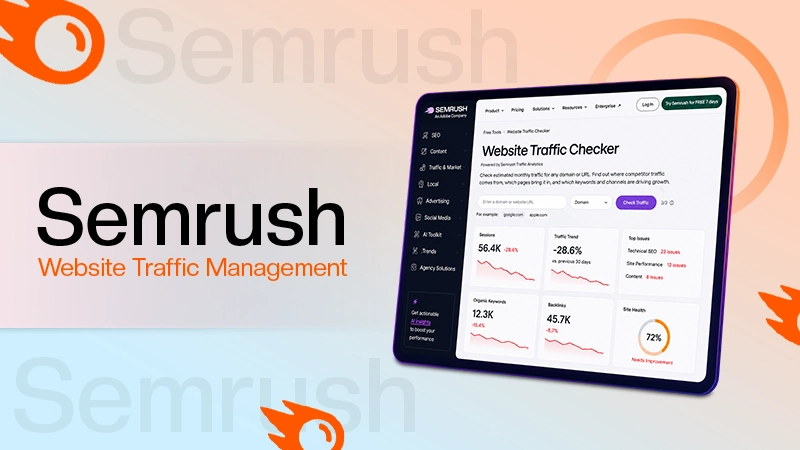
Tools like Google Keyword Planner, Ubersuggest, and SEMrush offer a list of popular keywords. Target long-tail keywords, as they typically have less competition and higher conversion rates. 82% of searches use long-tail keywords via voice search, especially to find local businesses.
Focus on Technical SEO
Every SEO campaign needs a healthy dose of technical SEO. By improving the technical side of a website, websites load faster, function better, and can be crawled more easily.
Why is this so important for e-commerce?
According to SellersCommerce, about 2.77 billion people are projected to make online purchases in 2025. That’s over 33% of the global population. By perfecting technical SEO, you can grow your bottom line.
So, how can you optimize technical SEO?
- Make your website mobile-friendly
- Improve site speed
- Compress images and files.
- Enable HTTPS and get SSL certificates.
- Create sitemaps to enable search engines to find, crawl, and index web pages.
To excel in these technical aspects, partnering with experts in your area is a good idea. Like if you are based in Florida, a safe bet would be to search for the best SEO companies in Florida and then team up with a reliable one. This will surely help in boosting your e-commerce visibility and sales.
Create Valuable Content
Like any other business, e-commerce brands also need to create high-quality content. Ideally, they need to provide content that addresses the needs of their target audience. For example, blog posts, videos, FAQs, product descriptions, and buying guides are great ways to attract traffic beyond product searches.
Optimize Product Pages
Each product page is a chance for you to convert more visitors into buyers. That’s why it’s necessary to optimize each one. Here’s how you can do that:
- Use attention-grabbing title tags to clearly convey the content’s subject matter. Since most browsers can only display text up to 60 characters, make sure to stay within the limit.
- Write a compelling meta-description that entices users to click and continue reading the content. Make sure to keep it descriptive yet concise. You’ve only got 160 characters to get your message across.
- Create unique product descriptions for each page using specific keywords. Avoid using manufacturer descriptions. They’re often duplicated across multiple websites, and that can harm your SEO efforts. Remember to use high-quality images and bullet points to describe features.
Improve Site Structure
A well-structured site helps users and search engines navigate the content with ease. This improves UX and enables users to stay longer on the site, signals that Google closely monitors.
To enhance SEO, create a simplified site structure. For instance, Home > Category > Sub-category > Product, the pages flow in a logical hierarchy. Customers can enjoy a smoother buying journey while search engines can crawl and index the site easily.
But that’s not the only thing you can do. An SEO-friendly URL also enhances clarity and readability. For example, a URL like www.yourstore.com/mens/hiking-boots is easier to understand than a generic one like www.yourstore.com/product?id=12345.
Lastly, a well-structured site is also well-linked internally. When pages link to other related products and blogs, users stay engaged for longer. Moreover, it helps distribute link authority, improving discoverability and ranking potential.
Localize the Website
E-commerce allows businesses to connect with consumers across the globe. However, surprisingly, a CSA Research survey reveals that 76% of online shoppers are more comfortable buying products with information in their native language.
What does that mean?
You’re going to need to modify your website according to the location of your customers. Let me explain from an SEO perspective. Localization makes your business more discoverable to search engines. When content appears in the local language, the site demonstrates relevance to customers in a particular location. This signals that it’s a good match, which leads to higher rankings in local SERPs and increased online visibility.
You can improve customer interactions by providing product details and prices in the local language. This builds a stronger connection with your customer base and improves the chances of a conversion.
Build High-Quality Backlinks
Backlinks (links from other websites to yours) are like votes of confidence in the eyes of Google. E-commerce sites can strengthen their backlinking strategy by prioritizing high-quality content. So, whether you post blogs on your own site or encourage guest blogging, focus on providing relevant, up-to-date information like how-to guides, product comparisons, infographics, etc. Also, consider collaborating with influencers or affiliates to earn valuable backlinks and boost search engine rankings.
Monitor and Improve
SEO is not a one-time task. You need to track your performance and make continuous improvements. Tools like Google Search Console, Google Analytics, SEMrush, and Ahrefs can help monitor the progress of key metrics, such as traffic, keyword rankings, click-through rate (CTR), conversion rate, bounce rate, page load time, and more.
Over to You
E-commerce SEO is an essential ongoing process that lays the foundation for sustainable, long-term growth. With the right techniques, you can attract more customers, boost online visibility, drive more sales, and generate more revenue.
Start small, track your progress, and stay on top of your SEO game.