What is Substack? Learn How to Use this Platform & Grow Your Reach as a Content Creator!
Jump To Key Section
- What is a Substack? How Does it Work?
- Prominent Benefits of Using Substack
- How Do You Get Started on Substack?
- Typical Users of the Substack Platform
- Tips for Growing Your Substack Newsletter?
- How Do You Make Money on Substack?
- The Comparative Analysis Among Substack, Ghost, Patreon, & Medium
- Conclusion
- FAQs
Substack is a platform for creators, especially independent writers, to generate valuable newsletters and share them with their target audiences. This platform is completely free to use, as there are no applicable platform charges.
In this article, we will be focusing our gaze on “What Is Substack?” and how it has been offering a great outlet for independent writers to express and earn following their passion! Let’s start the discussion.
What is a Substack? How Does it Work?
Answering “What is Substack?” is pretty straightforward, as it is an online content publication platform that allows all types of creative enthusiasts to convert their great ideas into worthy newsletters and then directly share them with the members of their target audiences.
This platform also enables publishers to make their content paid by requiring subscriptions from active readers. However, the option to make newsletters paid totally depends on the creators. If they want, their content can also be circulated for free.
When the content is available on a paid subscription, the creator has to share a portion of their revenue with Substack. This is how the platform earns its income and sustains itself. In short, that is all one must know about the Substack meaning.
Readers can engage in great stories and posts from their favourite publishers on Substack in three convenient ways.
- First, they can access the content on the Substack website.
- Second, the mobile application is also available, which can be downloaded directly from either the App Store or Google Play.
- Furthermore, a lot of readers don’t even go to the website because they can easily read posts or newsletters directly from their inbox. This is the third way Substack readers can access the most captivating reads from the platform creators.
Prominent Benefits of Using Substack
The Substack platform is completely free to use. You can create your account online on the go and start publishing right from the start.
There are several benefits of using this site, as listed below:
- User-Friendly Interface: The site is loaded with features to elevate user experience and ease navigation. A beginner will get enough aid while exploring the key aspects of the platform. From signing up to creating the first Newsletter, everything is easy to follow.
- Free of Cost: No creator has to pay to get access to this SaaS publication site. People interested in building a wide audience can sign up and start building from day one without any charges.
- Data Ownership: Each user of Substack holds full authority over their publications on the platform, along with the list of followers or subscribers. This strong sense of data ownership keeps the creator stress-free about their original work and its security.
- Monetization Available: Substack is also a means for writers to create a steady stream of income. They can monetise their content or periodic publications using the paid subscription option.
- Format Flexibility: Although it offers a great text-based aesthetic for posts, other format options are podcasts, discussion threads, and videos. This helps add a bit of variety to a publisher’s creativity.
- No Locked-in Situation: On this medium, creators never suffer from locked-in circumstances, as they can switch to any other platform at any time, along with their subscribers. Thus, even beginners can start their journey without having to worry if Substack is the right outlet for their creative moments!
On Substack posts, writers can insert images, videos, and audio to make their creative work media-rich, increasing the chances of community engagement and acquiring more active readers. This ultimately leads to a hike in the subscription-based income.
Read More: Twitter Name Change: Effortless and Elaborated Guide on How to Change Name on X
How Do You Get Started on Substack?
It is very simple to learn how to use Substack. A user just needs to complete the sign-up process before using the platform as a creative publication tool. This section elaborates on how to start as a beginner on Substack.
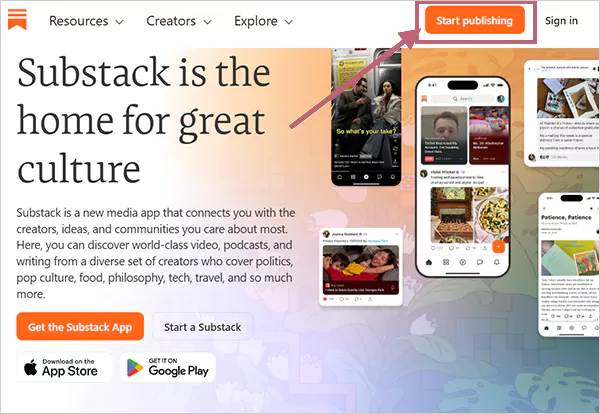
- Open the Substack website and click on “Start publishing”.
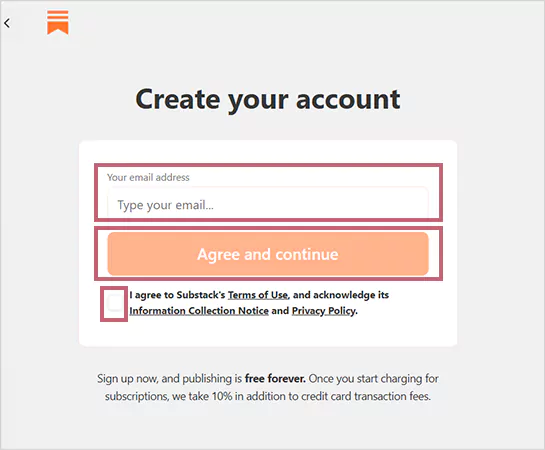
- Enter your email and tick the terms of use checkbox before hitting the “Agree and continue” button.
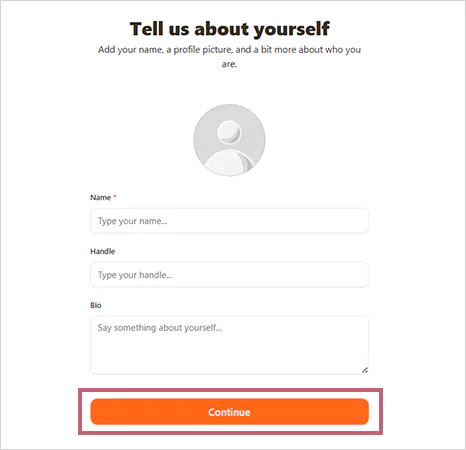
- Fill in the details and click on “Continue”.
- Choose your interests from the recommendations.
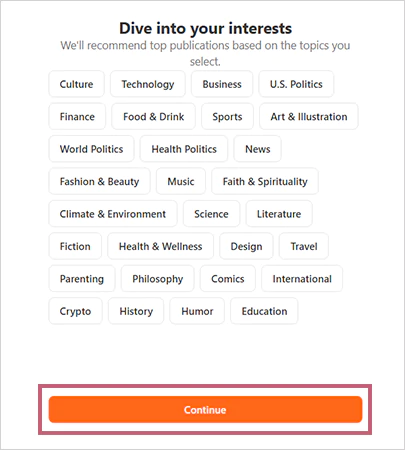
- You will be redirected to the Dashboard of the platform. Tap on the “Create” button and start your journey!
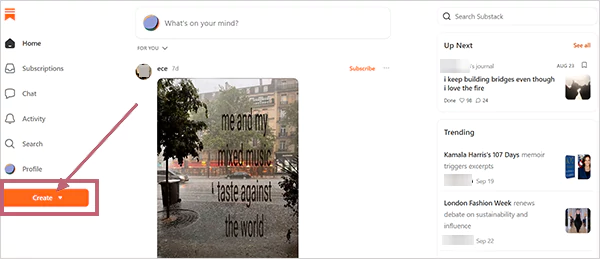
This is the way to get started on Substack. However, growing a loyal audience and then earning an income through paid subscriptions is an altogether different story.
For that, you will require experience, strategy, and unique creative inclinations, among other things, to stand out and provide value for money.
Read More: Sinkom: From Characteristic Features to Hidden Downsides, Learn About It All Here!
Typical Users of the Substack Platform
You might ask, “What is Substack used for?”, but the right question is “Who uses this platform?” Answering the latter would answer the former automatically. There are a variety of people who find Substack useful. Major names are listed below. Going through these user types will make it amply clear as to why people use this platform.
- Independent Writers: Some people with strong linguistic abilities love to express and create using the language in which they are comfortable. They craft compelling text and work independently of publishers.
For such solo writers, Substack is an ideal option, as they can directly drop their work into the subscribers’ registered emails. There is no one involved between an independent writer and a reader.
- Freelance Journalists: Professionals who pick up great stories from their surroundings and reveal hidden insights to broaden perspectives of the public also use Substack to expand their audience reach and circulate events and instances worth circulating.
- Thought Leaders: Some people have verbal competence with great leadership skills. Such thought leaders also use this platform to channelise their enthusiasm and help their audience work harder and better!
- Niche Experts: Many people are subject-matter experts, looking for ways to help people with their specialised knowledge. Such people use the platform to connect with other people who might be looking for answers they can solve better.
- Avid Readers: Substack is not entirely about creators, but readers as well. The ratio is 50/50. Readers are as valuable as creators. Thus, this channel is also utilised by readers and other users interested in the content and its value.
- Other Creators: Not just writers or journalists, Substack is also for podcasters, multimedia storytellers, such as people wanting to share great experiences via pictures, or even people who love to draw or paint!
This list also includes influencers or decently famous people from different societies. The same platform also allows creators to showcase their talent through video content and connect with their target audience to generate financial rewards
Regular people also use Substack for casual entertainment, utilising the platform’s free subscription feature. Everyone can access content that is not locked by the creator. Readers only have to pay when a creator has secured their creative work behind a paid subscription.
Tips for Growing Your Substack Newsletter?
If you want to grow your Substack newsletter, there are certain aspects you can pay attention to. The right strategy factors in all major considerations, such as niche, proper drafting, uniqueness, consistency, quality, and more, as elaborated below.
- Niche: Specify your expertise or niche to add weight and value to your posts. People love to consume online content from a trustworthy source so that they don’t have to cross-check the information shared. Always choose an area where you are most knowledgeable. While deciding on that, consider your educational background, your major hobbies, or what you are mostly interested in.
- Proper Drafting: Always draft a piece of content several times and devise a multi-layer proofreading session to ensure that your final content is grammatically and pragmatically fit to get the message across the table.
- Uniqueness: Don’t just share a monotonous angle, but also add a unique touch, like self-perspective in your posts, so that readers can engage better.
- Consistency: Always publish at frequent intervals so that you can maximise the opportunity to grab readers’ attention. Regular publications help sustain the audience long-term.
- Quality: Consistency is key, as mentioned above, but not by compromising on the quality. You can share a highly valuable read or content with your audience once a month, and that will be counted as consistent if you need time to keep the standard high, rather than a million trash posts a day.
- Marketing: Focus on the marketing angle as well to boost visibility. Share your newly published posts on social media or even market newsletters on your website if you own one to increase traffic. Working on marketing is a multipronged process; thus, if required, consult an expert.
- Subscriber Segmentation: Utilize this Substack feature to analyse the behaviour of the audience and how they engage with your content through metrics, such as open rates, subscription status, click rates, people who have quit the subscription, etc. It will help improve and use better strategies to attract new subscribers and retain the current ones.
- Call-to-Action: If your creations have value to add to readers or users on the demand side, a call-to-action must also be well-crafted to uplift the game. A compelling final word always forces the engaged person to take the desired action.
- Improvement Areas: Always keep looking for ways to improve your content creation, marketing, and call-to-action strategies, so that sneaky mistakes don’t ruin your Substack empire.
Along with that, there are always free support materials or tutorials available on the internet, which every Substack creator can leverage to grow their content reach and the resulting income from increased subscriptions.
How Do You Make Money on Substack?
Making money on Substack is very simple, as it only requires a creator to enable the paid subscription, and that is it! If a creative person already has a huge readership due to great content, they can monetise it by putting their content behind a layer of paid subscription. Hence, paid subscribers allow content makers to create a stream of income.
If you don’t own a Substack newsletter already, you will have to first register using a valid email ID. Then, think of a specified niche in which valuable content can be created. Once you have started acquiring free subscribers, it is the best strategy to be consistent in your publications and ultimately leverage the paid subscription option.
That is how creators on Substack make money, primarily through the platform. The only catch is that you have to give a portion of your income from each subscriber to the platform as a commission, which is usually 10%.
Read More: How Much Does TikTok Pay Per View?
The Comparative Analysis Among Substack, Ghost, Patreon, & Medium
Let’s discuss how platforms standing in competition with Substack differ from each other. This comparative analysis will also help you figure out which platform might suit your needs as an artist best.
| Feature | Substack | Ghost | Patreon | Medium |
| Main Purpose | Sharing newsletters with subscribers directly via email. | Web development and content management through practical tools. | Connecting prolific artists with generous art lovers (or supporters). | Providing space for ardent writers and readers. |
| Best for | Freelance & independent text-based content creators, i.e. writers, journalists | Writers, artists, businesses, journalists, and people wanting websites. | Multi-format content creator, relying on fans for monetary support. | All types of writing lovers |
| Audience Ownership | Owning the list of subscribers. | Full ownership over the website and published content. | Limited, as the platform controls the data. | Limited, as Medium, is a privately owned third-party platform. |
| Ease of Use | Simple, user-friendly, & easy to navigate. | Technical knowledge required for web set-up and hosting. | Simple setup, but complex membership management rules. | Very simple and good for beginners as well as seasoned writers. |
| Transaction Fees | 10% of the revenue from paid subscribers. | Zero | 5-12% out of monthly earnings from supporters. | Directly charges readers and then shares a portion with writers based on various factors. |
Although each rival has its own unique standing points, at the core, all of them support creators and help them generate income out of what they are passionate about.
Read More: What Is Twitter Card Validator and How Can You Use It: Everything Worth Reading About
Conclusion
The article has explored enough about what is Substack and how it works for content creators, especially new as well as seasoned writers. Its income model is creator-friendly, as only a meagre 10% is to be paid to the platform out of the revenue from paid subscribers.
For an idea, it is going to be $1 for every $10 subscription fee. Thus, whether you are a beginner or a well-established intellectual legend, Substack will provide a new dimension for your passion to grow and flourish, boosting income prospects.
FAQs
Ans: Substack is a private company that is owned by Chris Best, Hamish McKenzie, and Jairaj Sethi.
Ans: Yes, Substack is a completely free platform to use. There are no platform charges that users have to pay for content publication as well as consumption.
Ans: Yet, mainly, a blog is a privately owned website where a writer shares their views with the world on the internet, while Substack is a third-party platform that allows creators to share newsletters directly to subscribers’ emails.
Ans: Substack is a third-party newsletter platform that creators and readers can access via its website or the mobile app.
Ans: Substack doesn’t pay writers directly. Instead, it helps writers earn through paid subscriptions, so that it can earn 10% from each subscriber.
Ans: Yes, content available for free on the platform can be read without having to pay any charges.
Ans: Substack is completely free for its users, whether readers or creators. There is no platform fee applicable. However, if a creator doesn’t provide free content, you will have to pay the set subscription fee.
Source