Can Pregnancy Be Grounds for a Wrongful Termination Lawsuit?
Jump To Key Section
- What You Need to Know About Pregnancy Discrimination
- Key Laws Against Wrongful Termination for Pregnant Employees
- Signs of Wrongful Termination Due to Pregnancy
- Immediate Steps After Experiencing Wrongful Termination?
- Legal Options for Pregnant Employees Facing Termination
- Preventing Pregnancy Discrimination in the Workplace
- Conclusion

When working in any sector, a common question hovers over the minds, which is Can pregnancy be grounds for a wrongful termination lawsuit? Well, the answer is here.
According to the World Health Organization, as of 2019, adolescents aged 15–19 years in low- and middle-income countries (LMICs) had an estimated 21 million pregnancies each year, of which approximately 50% were unintended and resulted in an estimated 12 million births.
This article aims to explore all the details about pregnancy discrimination, Can you sue for being fired while pregnant, Legal options for pregnant employees facing termination, signs of wrongful termination, and more!
Let’s explore how being pregnant could legally support a case of wrongful discharge.
Key Takeaways
- Details about Pregnancy Discrimination
- Key laws against wrongful termination of pregnant women
- Signs of wrongful termination
- Immediate Steps After Experiencing Wrongful Termination
- Legal Options for Pregnant Employees Facing Termination
- Preventing Pregnancy Discrimination in the Workplace
What You Need to Know About Pregnancy Discrimination
Pregnant individuals have rights as employees to safeguard them, and one of them is their protection from pregnancy discrimination.
By virtue of the law, no unfair treatment should be meted out against any female employee from the time of her interview for employment, right up to her termination.
If you encounter situations requiring reasonable accommodations, such as :
- Remarks about your pregnancy
- document these incidents.
A right to a discrimination-free work environment serves to uphold your rights as a worker.
Key Laws Against Wrongful Termination for Pregnant Employees
Certain significant laws make anything regarding the firing of pregnant employees unlawful since the employer has to fulfill regulatory conditions to that effect.
The Pregnancy Discrimination Act (PDA)
This law bans any discrimination that a female employee may start encountering the moment a notice is given to her regarding her pregnancy, childbirth, or related medical conditions to protect her from any workplace discrimination.
Under the law, firing or demoting on the grounds of pregnancy is illegal.
The Family Medical Leave Act (FMLA)
This law allows qualified staff to take unpaid leave under some conditions. The employer is required under the law to advise the employee of her rights.
These laws facilitate and protect the rights of a pregnant woman discriminated against or devalued just because of their pregmnancy.
Signs of Wrongful Termination Due to Pregnancy
Pregnancy disclosure may cause undue termination of employment. Therefore, one is advised to watch for signs of discrimination, like exclusion from work, appreciable discussions or sudden shifts in workloads.
It involves losing all positive contact with your supervisor and coworkers, who will develop hostility toward you.
You should record the performance reviews that you receive after your pregnancy announcement because the reviews appear to be invalid and unjustified.
The employer will create a situation that makes you feel forced to leave your job, or they will tell you to take leave when you are able to work.
These actions are clear evidence that your wrongful termination case is connected to your pregnancy.
Immediate Steps After Experiencing Wrongful Termination?
The victims of wrongful termination must act without delay since their legal rights need immediate protection.
According to Miami wrongful termination lawyer Gary Andrew Costales, employees who believe that they have been wrongfully terminated should talk to an employment lawyer.
The lawyer might well look at the facts and reasons of the termination and decide whether the case is worthy of pursuit.
You can then follow a series of steps such as :
- Start by gathering all termination papers. This may include e-mails, performance reviews, and witness statements, necessary for your proof in court.
- Check the most recent copy of your employment contract and your company policy to see if anything has been violated.
- Obtain a letter from your previous employer confirming your termination. The letter should provide the reasons for your termination.
- It is very important to get the services of a good employment lawyer who has experience in dealing with wrongful termination suits.
- Union members should contact their union representative if they want to avail themselves of any additional assistance.
An investigation will commence after filing a complaint with the EEOC or your state labour board, and further proceedings will determine the judgment of your case.
Fun Fact
Despite the emphasis on due dates, only about 5% of babies actually arrive on the exact date predicted.
Legal Options for Pregnant Employees Facing Termination
It is important to know the legal aspects of your termination while pregnant.
- One should collect all documents related to the termination of employment as the first step. This may include e-mails, performance assessments, and various witness depositions.
Your case will receive support through the available evidence.
- A pregnant worker who faces firing should consult a lawyer specializing in labour and employment with this suit.
Your attorney will be able to explain your rights under the Pregnancy Discrimination Act and under the Family and Medical Leave Act accordingly.
- Put a claim in with the Equal Employment Opportunity Commission team or your state’s Labour Department. These steps will enhance your complaint and verify your entitlement to compensation and reinstatement.
The expiration period for your claims requires you to take immediate action.
Preventing Pregnancy Discrimination in the Workplace
The problem of pregnancy-related discrimination creates major challenges for both employees and their employers, which requires organizations to establish work environments that deliver ongoing assistance to all employees.
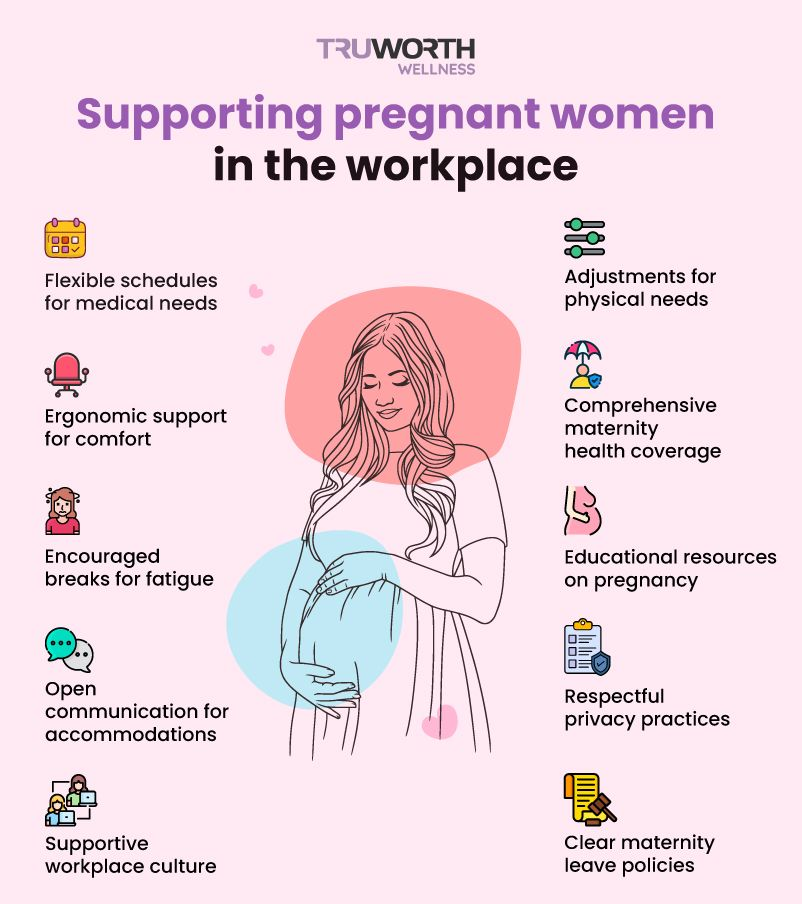
Here are key steps you can follow to prevent pregnancy discrimination in the workplace :
- Inculcate inclusive policies for everyone.
- The arrangement of orientation programs to educate employees about the rights of pregnant workers.
- This serves as an assurance that everything will be handled in a fair manner, regardless of their pregnancy status.
- All workers must treat everyone with dignity. The workplace should be a comfortable place for employees to share their personal concerns without being penalized.
- Implementing flexible hours for pregnant employees helps them balance their health needs and work requirements and caters their medical needs.
- By actively promoting a good environment for its workforce, employers can be assured that more work will be done.
In order to understand the actions to be taken to prevent discrimination in the workplace for pregnant women, you can refer to the infographic :
Conclusion
If you lose your job due to unfair means practised during your pregnancy, always remember it is the company that is at fault and not you.
Pregnancy is a biological phenomenon and is addressed by law for all pregnant women to ensure their rights are protected, and they are judged on calibre and nota medical condition.
So, in case you face any discrimination because of your pregnancy, document every act and take an active action to protect your rights.
Ans: Employers cannot discharge or terminate a woman during her maternity leave or due to reasons related to her maternity.
Ans: The leave applied for cannot exceed six weeks.
Ans: Section 11 allows termination of pregnancy to be carried out in the setting of a fetal condition likely to lead to death in utero or within 28 days of birth.
Ans: There are 2 types of abortion, medical or surgical.










© 2026 allinsider.net All rights reserved