What is a Dataset and Why it Matters in the Age of AI

In the developing era of tech and information, data is considered one of the most efficient resources.
From medicine to infrastructure and product reviews to social media platforms, everything involves the usage of data.
In a nutshell, data has become a fundamental element of the tech ecosystem. And to the core of these ecosystems lies the datasets.
This makes understanding data and datasets important for all those who wish to know about AI, technology, or anything that involves data.
Therefore, this article explores the meaning of datasets, how they are created, the different types of datasets, and why they are important in the age of artificial intelligence.
Key Takeaways
- Datasets are the building blocks of data science that help to analyse, study, and model the data
- Datasets come in various forms depending on the information they carry, such as: structured,unstrucuted and semi-structured
- Studying the ways and processes in which datasets are created through data collection, extraction, storage, etc.
- Encountering the challenges of data bias, storage, and collection problems, etc.
Building Blocks of Data Science
Starting with the basics, Datasets are the foundation of data science and analytics.
Without datasets, analysts and data scientists will have nothing to study, model, or interpret.
Data scientists use datasets to:
1. Find patterns and trends
2. Build predictive models
3. Test hypotheses
4. Train Machine Learning algorithms
5. Generate insights for decision making
For example, a retailer may analyze sales datasets to identify seasonal purchasing patterns, whereas A health care researcher can examine patient datasets to find risk factors for diseases.
In each case, the dataset provides the raw material for analysis and discovery, depicting it as the building block.
Types of Datasets
Datasets come in many forms, depending on the type of information they contain and how they are structured. Here are the three types of datasets you come across:
Structured Dataset
Structured datasets are highly organized and follow a predefined format, such as tables or relational databases.
These datasets are easy to store, search, and analyze using traditional tools like SQL or spreadsheets.
Unstructured Dataset
Unstructured datasets contain information that does not follow any rigid structure. This type of data often includes text, images, audio, or video.
Unstructured data makes up a large percentage of the world’s digital information, and analysis often requires advanced techniques such as natural language processing or computer vision.
Semi-Structured Dataset
Semi-structured datasets fall somewhere between structured and unstructured data.
They have some organizational properties, but do not follow a strict table format.
How Datasets are Created
Now the question arises, how are these datasets created?
Well, Datasets are generated through a variety of processes and sources.
In the modern digital landscape, organizations continuously collect data through both automated and manual systems.
Common methods of dataset creation include:
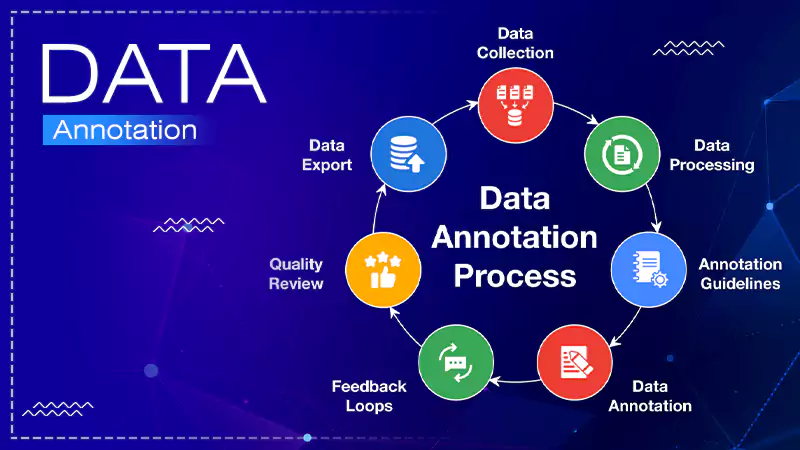
Data Storage
Data can be collected directly from users, devices, or systems.
Examples include website analytics, sensor readings, or user-generated content.
Data Collection
Organizations often combine data from multiple sources into a single dataset. This may involve merging internal company data with external market information.
Web Data Extraction
Many companies collect datasets from publicly available online sources such as product listings, reviews, and social media platforms.
Data Labeling
For machine learning applications, raw data often needs to be labeled or classified. For example, images in the dataset may be labeled as “cat,” “dog,” or “car” to help train an image recognition model.
Why Do Datasets Matter in the Age of AI?
Artificial intelligence systems rely heavily on data to learn and improve. Unlike traditional software, which follows explicit instructions, AI models learn patterns from examples given in the dataset.
This makes datasets one of the most important components of AI development emphasisng its value.
Training Machine Learning Models
Machine learning models learn by analyzing datasets that contain examples of the problem they are trying to solve.
For example, a spam detection system is trained using a dataset of emails labeled as spam or not spam.
The model analyzes these examples and learns to identify patterns that indicate spam messages.
Improve Model Accuracy
The size and quality of the dataset directly affect the performance of AI systems. Larger and more diverse datasets typically allow models to learn more robust patterns and make more accurate predictions.
Poor-quality datasets, on the other hand, can introduce biases or errors into AI systems.
Enabling AI Innovation
Many of the most important breakthroughs in AI have been made possible by the availability of large datasets.
Technologies like voice assistants, recommendation systems, and autonomous vehicles rely on massive datasets to function effectively.
Challenges in Working with Datasets
While datasets are incredibly valuable, working with them also presents many challenges.
Data Quality
Incomplete, inaccurate, or inconsistent data can lead to incorrect conclusions or poorly performing models. Ensuring high data quality is one of the biggest challenges in data management.
Data Privacy
Many datasets contain sensitive information about individuals. Organizations must ensure that they handle this data responsibly and comply with privacy regulations.
Data Bias
Datasets may reflect existing biases present in society or the data collection process. If not addressed, these biases can lead to unfair or discriminatory AI systems.
Data Management
Keeping large datasets accessible and useful requires sophisticated storage, processing, and governance systems.
Increasing Value of the Dataset
As AI adoption continues to expand, datasets are becoming strategic assets for organizations across a variety of industries.
Companies that collect and manage high-quality datasets can gain significant competitive advantages.
These benefits include:
- Better Customer Insights
- Improve operational efficiency
- More accurate predictive analytics
- Rapid AI innovation
Many businesses are now investing heavily in building data infrastructure and acquiring datasets to support advanced analytics and machine learning initiatives.
Conclusion
A dataset is more than just a collection of information. It is the foundation on which modern data science, analytics, and artificial intelligence are built. By organizing raw data into structured collections, datasets enable researchers, analysts, and AI systems to extract insights, identify patterns, and solve complex problems.
In the age of AI, the importance of datasets is continuously increasing. Simply put, datasets are the fuel powering the future of artificial intelligence.
Ans: Databases are the foundation of data science because they provide raw material for analysis and modelling. Without a well-organised dataset, tasks like training machines, learning models, identifying trends, etc becomes impossible.
Ans: A data set is a collection of examples(Expected inputs and expected outputs)used to train, test, and evaluate AI systems.
Ans: The four characteristics that matter most in the age of AI are: creativity, empathy, teamwork, and critical thinking, followed by critical skills and knowledge.
Ans: Datasets are essential for data analysis, machine learning, artificial intelligence, and other reliable, accessible data. It is typically organised in tables or arrays, or some specific formats.