How Is Artificial Intelligence Transforming SEO Strategies and Search Engine Algorithms in 2026?
Jump To Key Section
- How Should Businesses Adapt Their SEO Strategies in 2026?
- How Have Search Engines Evolved from Keywords to Contextual Intelligence?
- Why Are AI-Generated Search Results Reducing Organic Clicks?
- How Is Artificial Intelligence Redefining Ranking Factors?
- How Is Natural Language Processing Changing User Search Behavior?
- What Is Generative Engine Optimization and Why Does It Matter?
- How Is AI Personalization Changing Search Results?
- How Is AI Transforming Content Strategy in 2026?
- Why Is Brand Authority Critical in an AI-Driven Search Ecosystem?
- Conclusion
The search engines are no longer just about rankings, they are evolving into intelligent answer engines.
What if ranking on the first page of search results no longer guarantees traffic? It’s no longer a hypothetical scenario but a reality that businesses are actively navigating. Artificial intelligence has fundamentally altered how search engines operate, shifting the focus from traditional ranking mechanisms to intelligent answer generation. Search engines are no longer just gateways to information, but they are becoming the primary source of answers themselves. This transformation is forcing marketers, businesses, and content creators to rethink everything they know about SEO. As AI continues to evolve at an unprecedented pace, understanding its influence on search engine algorithms is critical for maintaining visibility, authority, and long-term digital relevance in an increasingly competitive landscape.
How Should Businesses Adapt Their SEO Strategies in 2026?
Adapting to SEO requires a completely new approach to digital marketing, which is focused on artificial intelligence and user intent. Businesses should create content that not only addresses the questions correctly but also proves to be authoritative and reliable. Leveraging AI-driven SEO solutions and using AI tools to conduct research, optimization, and performance tracking so that teams can learn about the trends and user behavior in real-time.
It is also essential to have a strong technical base, ensuring fast, mobile-friendly, and well-organized websites. The continuous refresh of the content, attention to quality over quantity, and authenticity will help businesses gain long-term visibility in a highly AI-focused search landscape.
How Have Search Engines Evolved from Keywords to Contextual Intelligence?
Search engines have moved far beyond the era of keyword dependency into a phase dominated by contextual intelligence. Prior algorithms were based on the search queries and their corresponding exact keywords, which often resulted in content that ranked well but lacked depth or relevance. Artificial intelligence enables search engines to interpret the meaning behind search queries by analyzing semantic relationships, user behavior, and contextual signals.
According to industry research, it is estimated that the majority of search queries are processed using semantic understanding rather than direct keyword matching. This implies that search engines will measure how effectively the content answers a query within its broader context. Consequently, content with topical authority, logical structure, and clarity always relies on repetitive use of keywords. Businesses now need to consider creating topic clusters rather than isolated pages to align with this shift.
Why Are AI-Generated Search Results Reducing Organic Clicks?
AI-generated search experiences have introduced a major shift in user behavior, particularly through the rise of instant answers. Instead of presenting users with a list of links, search engines now generate concise summaries that directly address queries.
How Are Zero-Click Searches Reshaping SEO Performance?
The increasing dominance of AI-generated summaries has led to a significant rise in zero-click searches. Recent reports indicate that more than half of all search queries end without a click, as users find the information they need directly on the search results page. This trend has redefined traditional performance metrics, making impressions and visibility within AI-generated answers more important than click-through rates alone.
For businesses, this means that ranking in the top position is no longer sufficient. Instead, the goal is to become a trusted source that AI systems reference when generating answers. Content must be structured in a way that is easily extractable, accurate, and contextually relevant.
How Is Artificial Intelligence Redefining Ranking Factors?
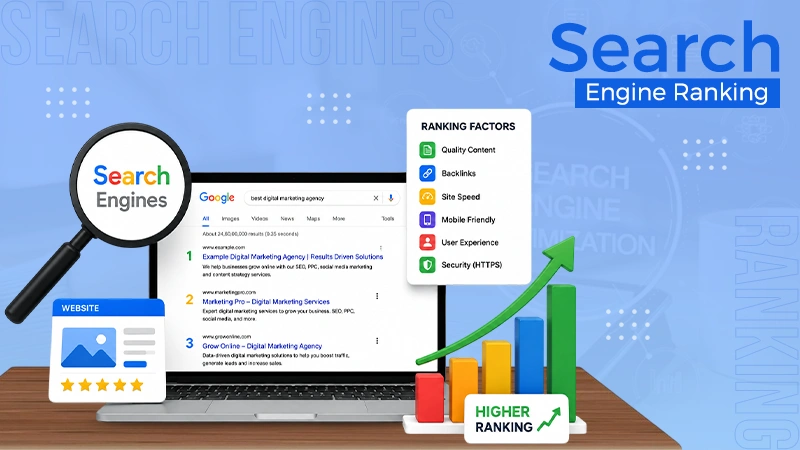
Artificial intelligence has changed the ranking factors from static signals into dynamic evaluation systems that constantly learn and adapt. The search engines are no longer based on predefined metrics, but instead use machine learning models and determine the quality of the content in real-time.
Content Quality and Authority
- Content quality is now the most critical ranking factor in AI-driven search algorithms.
- Search engines evaluate the depth, accuracy, and credibility to determine whether the content meets the user’s expectations.
- Expertise and credibility, often referred to as E-E-A-T contributes significantly to visibility.
- Effective content should not just be informative but also demonstrate real-world knowledge.
- AI systems need content that shows authority, offers real value, and provides useful insights.
- AI can easily detect superficial or low-value content, making it more difficult to rank it.
Content Freshness
- Content freshness has become increasingly important as AI technology now focuses on real-time relevance.
- Search engines keep on refining their knowledge on subjects, preferring content that captures the latest information and trends.
- Frequently updated pages are probably kept visible and perform well in rankings.
- Outdated content is losing prominence, despite its high ranking in the past.
- Continuous updates help demonstrate authority and reliability to both AI systems and users.
How Does Technical SEO Support AI-Driven Algorithms?
Technical SEO is still a pillar of this new landscape. AI systems are based on effective crawling and indexing in order to analyze the content. The speed of the page, mobile responsiveness, and structured data are some of the factors that are important in making the content of the site readable and comprehensible.
A technically optimized website not only improves user experience but also enhances the ability of AI algorithms to interpret and rank content accurately.
How Is Natural Language Processing Changing User Search Behavior?
Natural language processing is changing the way users’ queries and interactions with search engines, making queries more conversational and context-driven.
- Search queries are increasingly phrased in natural, conversational language rather than fragmented keywords.
- Users now tend to ask complete questions instead of short phrases.
- The widespread adoption of voice assistants and AI-powered search interfaces accelerates this shift.
- Content must provide direct, clear answers that match the conversational tone of queries.
- Maintaining readability and a natural writing style has become essential for SEO success.
- Search engines prioritize content that mirrors human communication patterns, improving relevance.
- Businesses that optimize for conversational search are more likely to appear in AI-driven summaries and voice search results.
What Is Generative Engine Optimization and Why Does It Matter?
Generative Engine Optimization represents the next phase of SEO, where success is measured not by traditional search rankings alone but by how often content is referenced in AI-generated answers.
This change focuses on clarity, context, and authority, and thus is essential for businesses to change their content plans.
1- Optimizing Content for AI Systems
The content has to be easily understandable by artificial intelligence to succeed in this AI-based environment. This includes clear structure, comprehensive context, and powerful authority signals.
Being mentioned in AI-generated summaries enhances visibility and brand awareness, often surpassing the impact of traditional ranking positions.
2- Types of High-Performing Content
Content that is structured, data-backed, and directly addresses user questions is most likely to be included in AI-generated responses.
Long-form, well-researched articles with actionable insights tend to outperform superficial content, as AI systems prioritize usefulness and reliability over mere keyword optimization
How Is AI Personalization Changing Search Results?
Artificial intelligence has introduced a new era of personalized search results, allowing content to be customized to specific user preferences, behavior, and previous interactions. Unlike traditional search, where queries are treated in a relatively uniform manner, AI-based solutions respond to queries by considering a large variety of indicators, such as search history, gadget use, location, and interaction patterns, to provide results that are uniquely valuable to the user.
For businesses, this move implies that the content should now cater to various phases of customer experiences by providing information that is not only opportune but also contextually relevant to the expectations of the users. Creating content that anticipates questions and provides value proactively is increasingly essential for maintaining visibility and relevance in AI-driven search results.
How Is AI Transforming Content Strategy in 2026?
Content strategy has undergone a fundamental shift as AI-driven algorithms prioritize value and relevance over volume.
Why Is Value-Driven Content More Important Than Ever?
High-quality content that provides clear, actionable insights consistently outperforms generic material. AI systems reward content that demonstrates depth, originality, and usefulness.
This means that businesses must invest in creating content that genuinely solves problems rather than simply targeting keywords.
Are Traditional SEO Practices Still Relevant?
Many traditional SEO tactics, such as keyword stuffing and mass link-building, have become ineffective in the AI era.
Search engines can now detect manipulation and prioritize authenticity. While foundational practices still matter, they must be integrated into a broader, value-focused strategy.
Why Is Brand Authority Critical in an AI-Driven Search Ecosystem?
In an AI-driven search landscape, visibility depends on how trustworthy and authoritative your brand appears, not just how well your content is optimized.
- Brand authority is a key factor in AI-driven search, where content is selected and summarized based on credibility rather than just keyword relevance.
- AI systems prioritize sources that demonstrate trust, consistency, and expertise, making established brands more likely to appear in generated answers.
- A strong brand presence increases the likelihood of being referenced across multiple queries and search experiences.
- Trust signals play a major role in how AI evaluates content quality and reliability.
- Factors such as consistent publishing, credible authorship, and positive user engagement indicate that content is valuable and trustworthy.
- User behavior signals like click-through rates, time on page, and interactions help reinforce content credibility.
- Additional signals, including backlinks from reputable sources and brand mentions, further strengthen authority.
- Businesses that consistently build these signals are more likely to achieve stable visibility and inclusion in AI-generated results.
Conclusion
Artificial intelligence is not just enhancing search engine algorithms, it’s redefining the entire framework of SEO. The success is no longer determined solely by rankings but by how effectively content aligns with AI-driven systems that prioritize intent, relevance, and trust. The shift toward answer-based search experiences has transformed user behavior, making visibility within AI-generated responses more important than ever. Businesses that embrace this transformation by focusing on quality, authority, and adaptability will be better positioned to thrive. As AI continues to evolve, the future of SEO will belong to those who understand not just how search engines work, but how AI itself shapes the way information is discovered.