Ad Network Selection Guide: Key Metrics, Formats, and ROI Benchmarks for 2026

Picking an ad network in 2026 isn’t just about getting cheap traffic visits. Of course, that fix still hooks a lot of people. A low CPC looks good on a dashboard. Big impression count = busy, productive. But performance marketers live with the uncomfortable truth that traffic that doesn’t convert is not cheap.
The whole market looks larger, more automated, and more cutthroat than it did even two years back. U. S. internet advertising revenue reached $259 billion in 2024, up 15% year over year, per IAB/PwC, while global marketers spent nearly $1.1 trillion on advertising in 2024, based on DataReportal’s recap of Statista figures.
So advertisers get more options, yet there is also more noise to slice through.
Key Takeaways
- Exploring why ad network choice matters more in 2026
- Analyzing how to choose formats as a funnel and not habit
- Assessing targeting and optimization tools
- Understanding payment models and business fit
Why Ad Network Choice Matters More in 2026
This means that the bulk of the attention and the budgets are going to the biggest platforms.
Reuters says Meta is expected to pull in $243.46 billion in global net ad revenue in 2026, while Google is projected at $239.54 billion.
That dominance is kinda why a lot of advertisers also experiment with independent ad networks, smaller sources, direct publisher inventory, push, pop-under, native placements, and other “do the job” performance formats.
A good ad network does more than bring visitors.
It gives control over the whole thing:
- ad formats
- Targeting
- clear reporting
- tracking support
- source tweaking
- fraud protections
- and payout rules that you can actually compare to real business results.
Formats: Choose By Funnel, Not Habit
Every ad format creates a slightly different user situation. That detail matters more than many buyers openly admit :
Push
Push notifications feel quick and direct.
They fit short offers, app installs, sweepstakes, utilities, dating, and other journeys where one brief message can nudge action. Push is great for quick testing but audience fatigue can creep up fast, sometimes before you know it.
Popunder
Popunder can move lots of traffic, and it tends to work best with simple funnel steps, pages that load quickly, and conversion goals that are plainly defined.
It really wants frequency control plus source-level tuning. If you use it badly, it becomes ambient noise.
Native
Native ads work when the offer needs a bit more context.
Finance, health, education, software, and higher-value lead generation often require a pre-lander or an advertorial, before someone is truly ready to convert.
Banners
Display banners still help with reach, retargeting, and publisher inventory. But banner blindness is real. Do not assume a weaker banner will rescue a weak funnel, because it won’t.
Direct link
Direct link traffic can be useful for publishers, redirects, tool pages, download buttons, and other click-driven environments, but it needs clean tracking and careful placement so results do not drift.
If you are weighing alternative performance sources, a platform such as Kadam ad network can be thrown in your shortlist when you test formats beyond classic search and social, especially when push, popunder, and performance traffic are part of the plan.
ROI Benchmarks For 2026: Use Ranges, Not Fantasies
Any serious buyer should not trust universal ROI promises.
Even so, you can lean on practical internal benchmarks while you run testing.
A useful 2026 testing framework looks like this:
- First 24 – 48 hours: check tracking, traffic delivery, obvious fraud, landing speed, and early source behavior. Do not judge ROI too early unless the data is clearly broken;
- First conversion window: compare CPA against target CPA, but also check lead quality or approval rate. Cheap leads that are never approved are not wins;
- Source filtering stage: cut sources with spend but no meaningful actions. Build whitelists from converting placements;
- Creative testing stage: test angles, not only images. Different promises attract different users;
- Scaling stage: increase budget only after ROI is stable across more than one small pocket of traffic.
For ecommerce and shopping advertisers, Tinuiti’s Q3 2025 benchmark report showed how even automated formats can nudge economics in unexpected ways.
The takeaway is useful well past Google: a higher conversion rate does not automatically translate into stronger ROI, especially when expenses rise faster.
Targeting and Optimization Tools
A solid ad network should let advertisers steer targeting through GEO, device, OS, browser, language, source, schedule, frequency, and bid.
Still, targeting alone is not the whole story. Optimization tools decide if the campaign can improve after going live. Prioritize blacklists, whitelists, source-level reports, bid adjustments, postback support, auto rules, and clear statistics.
Without postback tracking, you are basically buying blind, and yes, that sounds dramatic, but it is true.
Fraud and Traffic Quality
Traffic quality is one of the biggest differences between networks, and this is usually where the “cheap” offers start to look expensive.
Before scaling up, check bounce behavior, conversion delay, duplicate patterns, abnormal device distribution, click speed that looks suspicious, and source-level ROI. Fraud prevention is not only a security issue. It hits campaign economics in a direct way
A network that helps you block bad sources fast is often more valuable than one that only promises the lowest price
Payment Models and Business Fit
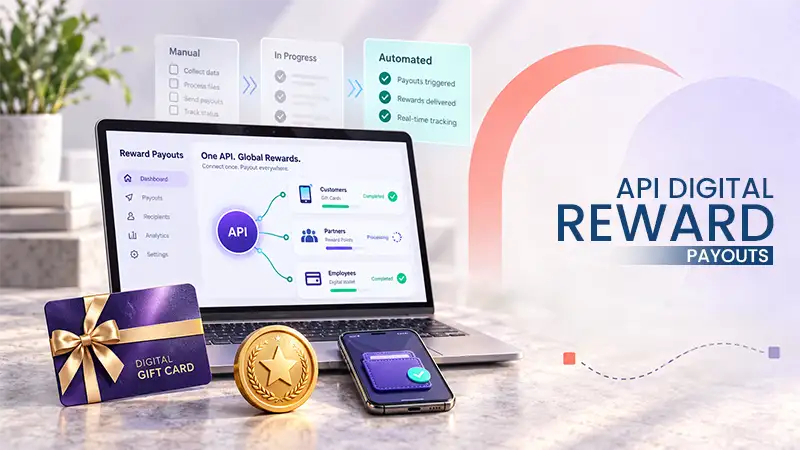
CPC, CPM, CPA, SmartCPM, and hybrid pricing models can all work in practice.
The real question is which option matches your risk tolerance and how quickly you can respond when quality changes
CPC gives more predictable click cost, but CPM can work when the traffic quality is strong, and your CTR is truly under your control.
CPA models reduce the upfront risk, though sometimes they limit overall volume or they ask for stricter approvals. Smart bidding may help a lot; still, it only pays off if tracking is clean and consistent.
Conclusion
The best ad network for 2026 isn’t the one with the cheapest traffic, or the loudest promise really.
Performance marketing still means buying users in a way that turns profitable results. The change is that the margin for lazy experiments is shrinking.
Choose the network carefully, track starting from the first click, evaluate ROI by real outcomes, and scale only when the numbers earn it.
FAQs
Ans: But if you dump too many RSAs into one ad group, things get messy. Google’s systems might struggle to collect enough performance data on each one.
Ans: AD contains two groups primarily: the security group and the distribution group.
Ans: There are technically 7 different types of Active Directory. Each of them are deployed in different way, places and for different purposes.
Ans: Meta’s rule states that 20% of your image ad cannot be covered with text.