What is Proactive Computing? Future of Automated Systems
In human-computer interaction over the past decades, there has been a reactive pattern where an individual gives an instruction to the computer and waits for the response.
With the advancement of digital spaces becoming increasingly integrated and smart, there is a trend in technological development whereby the need for user instruction is being phased out.
Understanding the working mechanism of a proactive system helps one to understand the future of automated decision-making and integrated computing technologies.
Fundamentals of Proactive Systems
Now, what is proactive computing? It can be defined as a design philosophy whereby applications and networked devices foresee what a user needs and do the needful by acting appropriately without requiring any human interaction.
Proactive systems do not just rely on human intervention, but they also continuously assess the environmental context, past behavior, and current sensor data to solve emerging problems.
The following are some of the attributes of proactive systems that distinguish them from other systems:
- Anticipatory Action: Systems predict future needs and act appropriately without human instruction.
- Environmental Context: The software takes into consideration the location, behaviors, and the current environment to make decisions.
- Automation: Algorithms perform the tasks of optimization and solving problems in the background.
The above features transfer the control from the human to the background environment.
Understanding How Proactive Computing Operates
To design computing platforms that can work independently, some sophisticated technologies must be integrated into both software and hardware:
- Constant Monitoring and Data Acquisition
Data is collected all the time using sensors, IoT devices, and various software tools in order to provide the system with information on real-time conditions in both physical and digital environments.
- Pattern Detection and Machine Learning
Predictive models process collected data to detect recurring user behavior patterns, environmental changes, and possible bottlenecks in order to predict needs based on these factors.
- Automatic Task Execution
After certain needs have been predicted, pre-written playbooks or automated actions are executed to perform tasks independently.
Applications for Different Industries
Proactive software algorithms have started reshaping the interaction of technology and users in different practical areas of our lives:
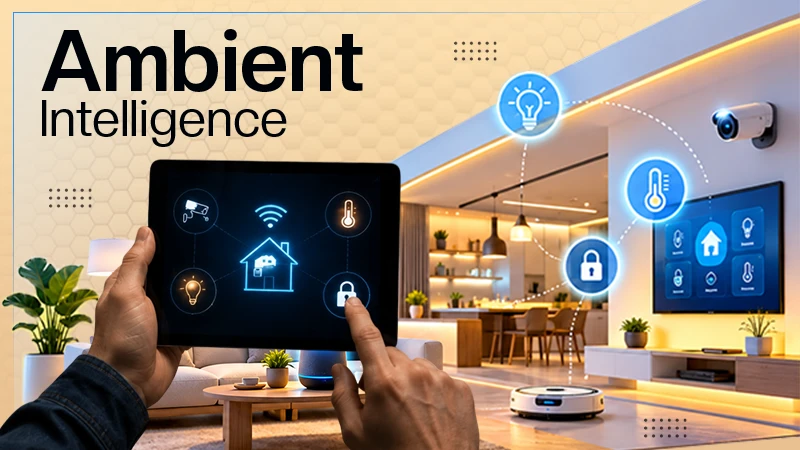
- Smart Home and Healthcare: Home systems change settings of lights and temperature depending on the user’s routines, monitor a person’s health, and send signals in case of emergency situations in advance.
- Proactive System Security: Cybersecurity technologies detect any unusual activity in advance and automatically isolate the affected network nodes.
- Resource Management in Enterprise: Cloud systems monitor traffic patterns and scale server capacity accordingly.
- Proactive Data Search: Intelligent software assistants find and provide users with information such as necessary documents, appointments, or flight schedules at the moment when it is really required.
Through constant analysis of real-time data and patterns of operation, such architecture enables the prediction of performance issues and cyber attacks that may result in interruptions of service.
Failover and resource allocation make sure that there is no interruption in availability. Finally, through anticipatory features, brittle systems become dynamic and self-correcting networks.
Key Challenges and Future Considerations
Even though automated agency provides a high level of convenience, there are particular difficulties and issues in creating an anticipatory environment:
- Guaranteeing Action Precision: If the prediction turns out to be wrong, it may interfere with the workflow or perform unwanted automated action, thus requiring an appropriate alternative control method.
- Ensuring Control by a Human User: It is necessary to maintain a balance between automated agency and human supervision, allowing users to override any decision made automatically.
- Providing Privacy and Security: Constant monitoring implies that proper encryption and control mechanisms must be used to ensure the protection of the information collected about a user.
Also Read: Edge Computing vs Cloud Monitoring: Which Fits Industrial Equipment Data?
Conclusion
The shift from reactive commands to intelligent automation is a major step in the history of human-computer interaction. Discussing proactive computing demonstrates how today’s technologies use context data and predictive algorithms in order to resolve issues independently.
Frequently Asked Questions
Ans: Software that can predict the needs of the users and perform actions automatically.
Ans: Proactive computing performs actions automatically, whereas reactive computing waits for a command.
Ans: It assists algorithms in predicting needs accurately in a real-time environment.