How Companies Measure the Success of Technology Initiatives

Every technology project starts with a promise. It might be related to lower costs, smooth operations and stronger security advantage. But once work is done, implementation is completed and things start working. A common question arise is: Did it actually serve a value?
The answer to that question is not that straightforward. Modern technology often drives various parts of a business at the same time, making it tough to capture through a single unit.
Continue reading to learn how companies measure the success of technology initiatives.
Key Takeaways
- Success related to the technology is rarely measured by a single metric.
- Employee ease in routine work and adoption are one of the clear signs about the right investment.
- For different departments, the success might be different, as the objective might differ.
The Numbers Everyone Wants to See
Executives often begin with the most obvious metric: money.
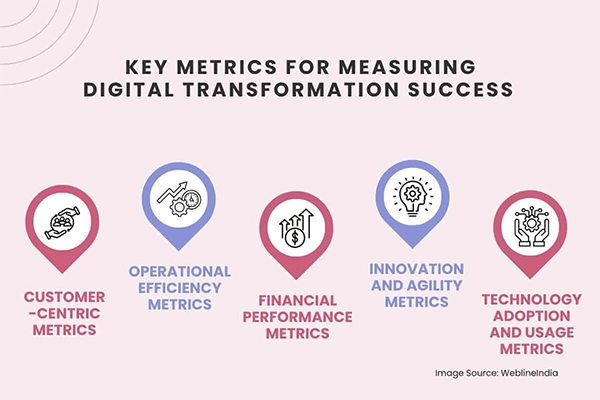
Considering which, whenever an investment is made by any business, their vision is normally stuck on the financial return. Now this might be related to various aspects such as more sales, lower cost of operations and quick delivery on objectives.
A company might spend millions strengthening its data infrastructure and see little direct impact on quarterly earnings. At the same time, investors spend hours discussing topics like a bitcoin 2030 price prediction because future value is often harder to define than present progress. Corporate technology policies face a similar problem. The largest benefits may not become clear until years later.
Because of this, many organizations have become more careful about scoring success too fast.
Efficiency Often Matters More Than Revenue
Not every project is meant to increase sales.
A warehouse automation system may be judged successful if workers can fulfill orders faster. A customer support system might lower average answer times. A new cybersecurity plan may never yield a dollar of revenue directly, yet executives may still judge it one of the company’s most helpful investments.
This sparks an important debate inside organizations. Finance departments naturally seek hard numbers. Operations teams often focus on technique updates. Technology leaders often argue that avoiding future problems is just as valuable as gaining new income.
As a result, success is often judged through a pair of indicators rather than a single metric.
Employee Behavior Tells a Story
Companies have picked up a tough lesson over the years: buying technology does not promise people will use it.
Many costly systems have failed simply because employees were still working the way they always had. New software might offer excellent qualities, but if workers avoid it, the planned benefits never show up.
That is why intake rates have become a major factor. Leaders want to know whether employees are logging in, using key features, and blending the tools into their daily routines.
In some cases, internal usage data can be more important than technical guidelines. A platform coated with advanced features means little if the workforce only uses a small part of it.
Customer Reactions Can Reveal More Than Reports
Some of the most valuable tips come from outside the workplace.
Businesses increasingly study customer behavior after introducing new technology plans. They watch how visitors deal with websites, how mobile app activity changes, and whether customer trust scores improve.
Interestingly, customer replies often show weaknesses that internal teams fail to notice. A system that seems successful during testing may annoy real users. Features that looked innovative during development may turn out to be ineffective.
Technology investments are often rated through the lens of customer experience because customers mainly judge whether updates create real value.
The Growing Importance of Speed
One change that has become more obvious is the focus on time.
Organizations no longer define projects just by final outcomes. They also judge how quickly those verdicts arrive.
A solution that returns moderate profits within three months may gain more praise than a larger project that takes three years before showing results. Market conditions change fast, and executives are increasingly aware that delayed benefits can lose their value before they ever appear.
This spotlight on speed has tempted companies to favor smaller experiments, pilot programs, and phased rollouts rather than massive revisions that take years to execute.
Success Is Often a Moving Target
Perhaps the most neglected reality is that companies rarely agree on what success means.
A chief financial officer may focus on margins. An operations manager may care about quality. A customer service leader may value satisfaction scores. The technology team may focus on reliability and scalability.
All of these opinions can be valid at the same time.
That is why reviewing major projects often becomes part judgment and part negotiation. Different departments view results through different lenses, and the final report is rarely shaped by a single metric.
The organizations that execute this best seem to avoid searching for one perfect measurement. Instead, they wait for patterns. Are employees serving more effectively? Are customers happier? Are costs under control? Is the business more robust than it was before?
Those queries often show more than any spreadsheet ever could. Technology spending may start with budgets and projections, but its true impact usually shows in the endless small changes that shape how a company works every day.
The same driving technology is marinated through AI. Learn how personal AI assistants will replace traditional apps.
Conclusion
At the end of the day, measuring the success of a technology initiative is not just about one number. While the results connected to the finances hold a separate importance, but still they just share one segment of the whole story.
The effective technology investments are seen easily in the routine operations. Employees feel ease at work, customer experience enhance and long term business goals are met. For these reasons, businesses go beyond ROI and see the full picture.
FAQs
Ans: Most of the organizations use a mix of financial result and other factors such as operational ease and customers feedbacks.
Ans: Return on Investment (ROI) is important but the not only measure of success in every case.
Ans: They help to understand whether the technological advancement is actually helping to improve the experience of the user or not.