From Crash to Claim: What Does a Rideshare Accident Lawyer Actually Do?
Jump To Key Section
- First, They Find Out Who Was Responsible
- They Check the Driver’s Rideshare Status
- They Sort Through Insurance Coverage
- They Document Injuries and Losses
- They Deal With Insurance Companies
- They Address Disputes in the Claim
- They Build the Claim for Negotiation or Court
- What Should You Keep After a Rideshare Accident?
- More Than Filing Paperwork
- FAQs

After a rideshare accident, the first and simplest question is figuring out who was at fault. The more complicated question can be which insurance coverage applies and how the driver’s ride-hailing status affects the claim.
You may not know, but a driver who is logged out of a rideshare app may be in one insurance situation. Meanwhile, one waiting for a ride request, heading to pick up a passenger, or carrying a passenger might be in a totally different insurance situation. Add another driver, multiple insurance policies, injuries, and lost income, and what initially looks like a straightforward car accident can become a complicated claim.
Crashes are preventable. But determining what happened and who should pay for the resulting losses can require much more than filing a report.
A rideshare accident lawyer helps in that. He/she does everything from investigating the collision and establishing responsibility to identifying applicable insurance coverage, documenting losses, negotiating with insurers, and preparing a case for court if necessary.
First, They Find Out Who Was Responsible
The inquiry starts with the information and facts around the collision. A lawyer may review the police report, driver statements, witness accounts, photographs, traffic footage, and vehicle damage. Road conditions, signals, lane positions, and vehicle movements can also count.
Responsibility may involve the ride-hailing driver, another motorist, or another party depending on the facts. Comparing sources helps show whether the evidence backs one account or raises questions.
They Check the Driver’s Rideshare Status
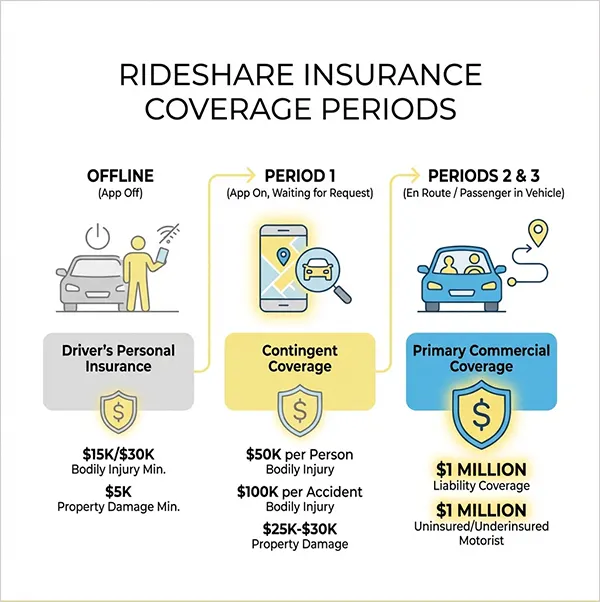
The driver’s status at the time of a crash matters a lot. It directly affects the insurance questions surrounding a claim. The driver may have been offline, available for a ride, traveling to pick up a passenger, or already carrying a passenger.
Lawyers may review trip information, app records, and documents to establish what the driver was up to. This detail can help identify which insurance coverage may be relevant to the accident.
They Sort Through Insurance Coverage
Ride-hailing insurance can involve more than one policy. A driver’s personal auto insurance may apply in some situations, while rideshare company coverage may apply in others. If another driver contributed to the crash, that driver’s policy may also have a stake in the claim.
A lawyer carefully reviews the policies and the facts of the accident to decide upon the applicable coverage. This can be a confusing part of a rideshare lawsuit.
They Document Injuries and Losses
Medical records document reported injuries and treatment. Lawyers may gather:
- Emergency records
- Test results
- Doctor’s notes
- Therapy records
- Prescriptions
- Bills
Besides medical expenses, financial losses may include:
- Lost wages
- Reduced earning ability
- Transportation costs
- Property damage
Receipts, payment records, repair estimates, and documents can help show these losses.
In fatal accidents, the legal investigations are even more extensive.
They Deal With Insurance Companies
Insurance companies may request accident details, medical records, statements, and other details during a claim. A lawyer can manage these communications and organize documents supporting the reported losses.
Settlement offers may also become part of the process. A lawyer can review a proposal alongside medical records, expenses, insurance information, and other evidence.
They Address Disputes in the Claim
Rideshare claims can involve disagreement. Maybe the drivers are telling different narratives around the crash. Or, it can be an insurer questioning who caused the accident. There may also be questions about the driver’s status, insurance coverage, or whether injuries are connected to the collision.
Evidence can help handle these disputes. Photographs, witness statements, vehicle damage, trip records, medical documents, and traffic footage may each provide part of the answer. A lawyer compares these sources rather than relying on one’s word.
They Build the Claim for Negotiation or Court
Once the main facts are gathered, the lawyer organizes the evidence into a claim. The advocate clearly brings together:
- Accident records
- Insurance information
- Medical documents
- Financial losses
Settlement discussions may follow, and a demand may be made based on the documented claim. Not every case goes to court. If no suitable resolution is achieved, a lawyer may prepare the matter for litigation.
What Should You Keep After a Rideshare Accident?
Keeping basic records can make the claim review more organized. Useful materials include:
- Trip details or screenshots
- Police and accident reports
- Pictures and videos from the scene
- Driver and insurance information
- Medical records and bills
- Onlooker names and contact details
- Wage records and receipts
- Messages from insurance companies
These documents can preserve details that may become difficult to locate later.
More Than Filing Paperwork
A rideshare accident lawyer does more than submit a claim form. The work can include:
- Identifying parties
- Checking ride-hailing status
- Reviewing coverage
- Investigating the collision
- Documenting losses
- Handling insurer communications
- Addressing disagreements
For people dealing with a rideshare crash, these details can make the claim difficult to sort out alone. A lawyer can review the facts and organize them into a clearer claim. Each claim is different based on the evidence and circumstances.
FAQs