What is Digital Forensics? Investigating Cyber Crimes
Many people want to learn and thus ask, “What is Digital Forensics?” If you haven’t found the right material yet to quench your curiosity, we have brought you this quick read. Learn how digital forensics can help the world beat cybercrime for better virtual experiences. Key steps, major types, famous tools, and more are included in the following discussion.
What is Digital Forensics?
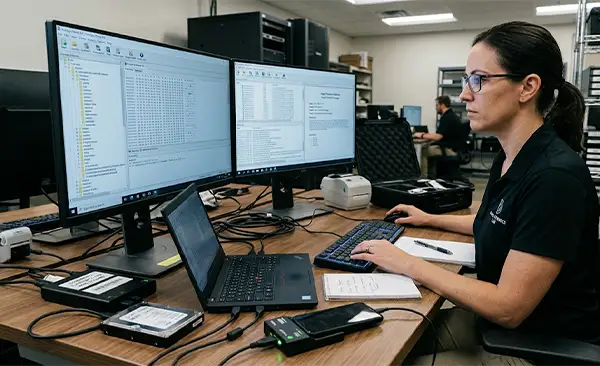
Do you wonder, “What is digital forensics?” It is the process of collecting and analyzing digital evidence. Professionals have to make sure that the key steps involved are conducted in a precise and highly effective way so that evidence doesn’t lose its integrity. In other words, evidence is preserved without any damage. Secondly, it is also made sure that all data collected is admissible in a court of law.
Working of Digital Forensics
Now, let’s deal with the working of digital forensics. It involves data acquisition, preparation & extraction, identification, analysis, reporting, and case review. Data acquisition is the initial stage that sets everything in motion. Key information is collected and then prepared for extraction that could serve as evidence. Finally, findings are validated through peer review and re-examination.
These steps are crucial for all types of digital forensics. However, the multilingual challenge in scaling AI also proves to be a major issue here.
Types of Digital Forensics
In our discussion on “What is digital forensics?”, major types of this process are also included. These are computer forensics, mobile device forensics, network forensics, and email forensics.
When data is investigated from computers, it is called computer forensics. The same logic applies to other forms as well. For example, the investigation of key information from networks and email is termed that way.
Digital Forensics Tools
Key digital forensics tools are as follows.
- Autopsy – Open-source tool for disk and file analysis
- FTK Imager – Best for data acquisition
- EnCase – For advanced forensic investigation
- Wireshark – Ideal choice for network traffic analysis
- The Sleuth Kit – A Complete Forensic Analysis Suite
- Cyber Triage – Best if you need a live forensics tool
- Bulk Extractor – For the extraction of crucial information from disk images
Note: Such tools help maintain the high standards of cyber resilience. If you are new to this discussion, you must first navigate the new era of cyber resilience amid the rise of cybercrime.
Also read: 10 Cybersecurity Brands Leading Zero Trust Innovation in 2026
Conclusions
The short and simple answer to “What is Digital Forensics?” is that it is the process where digital data is investigated to find virtual evidence. This type of proof is then used to promote and strengthen cybersecurity.
FAQs
Ans: It is like a crime scene investigation for computers, phones, and digital devices.
Ans: No, both terms are used for two different concepts. However, they are closely related in the sense that digital forensics helps beat cybercrimes and promote cybersecurity.
Ans: No. It will just automate the key repetitive tasks so that the work can be completed faster than usual.