Navigating Machine Learning and Agentic AI Development in Corporate Environments
Data is the most important and abundant resource in modern business, but they are still not utilized as it should be. Organizations are collecting millions of data points from customer interactions and operational metrics daily. And if there is no intelligence architecture, then this data is just noise.
Transforming these raw data into strategic foresight requires a good, disciplined machine learning methodology. As algorithms grow more sophisticated, companies are exploring agentic AI development to automate complex decisions and execute autonomous workflows safely.
Moving Beyond Deterministic Software
To grasp the value of intelligent systems, one must look at how traditional software runs. Standard applications depend on explicit instructions coded by a human developer. If a specific condition occurs, the software triggers a predetermined response.
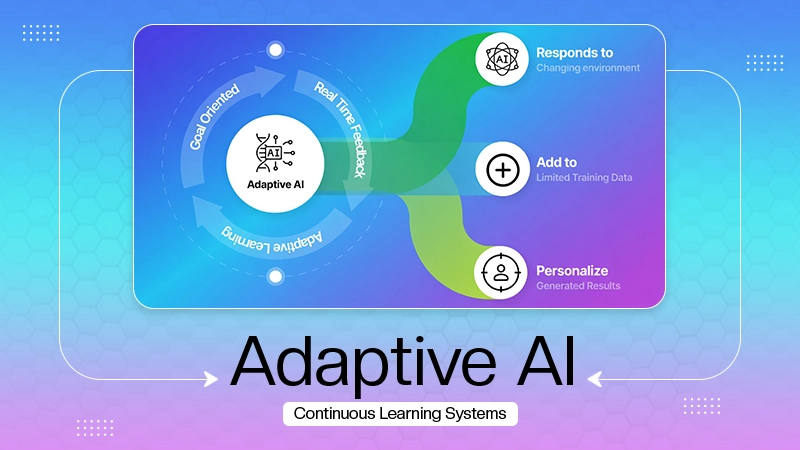
Machine learning discards this fixed structure. Engineers build frameworks capable of learning directly from historical data. The resulting models calculate probabilities instead of following absolute rules. This adaptability is the main principle behind enterprise AI automation. An intelligent system adjusts its behavior dynamically when exposed to changing market trends or unexpected consumer behavior.
Core Drivers of Economic Value
The financial impact of algorithmic integration extends far beyond general task automation. These models optimize whole operational pipelines.
In manufacturing, predictive systems evaluate sensor vibration to schedule machinery maintenance before catastrophic failures happen. Retailers use sophisticated recommendation engines to personalize the buyer journey, analyzing seasonal context and browsing history to enhance conversion rates. In these environments, intelligent decision logic shortens response times and removes manual analytical bottlenecks. Over time, businesses shift from reacting to past events to anticipating future outcomes.
Technical Foundations of Automated Intelligence
The ecosystem of artificial intelligence involves several specialized disciplines. Recognizing these distinctions helps teams deploy the right solutions.
- Pattern recognition: Supervised learning uses labeled datasets to predict specific outcomes, making it great for financial credit scoring. Unsupervised learning groups unlabeled data to reveal hidden consumer segments.
- Behavioral adaptation: Reinforcement learning agents connect with digital environments, learning the best possible actions through trial and error. This strategy drives autonomous robotic navigation.
- Complex data processing: Deep learning utilizes layered neural networks to get meaning from highly complex sources. This is important for interpreting high-resolution video feeds.
- Language and semantics: Natural language processing processes human speech and text. This technology allows the creation of sophisticated AI workflows that can summarize legal documents or draft technical reports.
Real-World Infrastructure Requirements
Turning a theoretical algorithm into a functional corporate asset needs a diverse group of specialists. Data scientists explain the mathematical approach and tune the algorithms. AI data engineers construct the pipelines that pass information securely from legacy storage to active processing environments. Finally, MLOps specialists manage the deployment and ensure the system remains stable in a live production setting.
Data governance is equally essential. Models are entirely dependent on the quality of their training material. If an algorithm learns from outdated or biased records, it will surely produce flawed business insights. Establishing fixed protocols for data collection and sanitization is mandatory.
The Hidden Costs of Internal Development
Many executives think they can build predictive models entirely in-house. While possible, this path is fraught with financial and technical hazards.
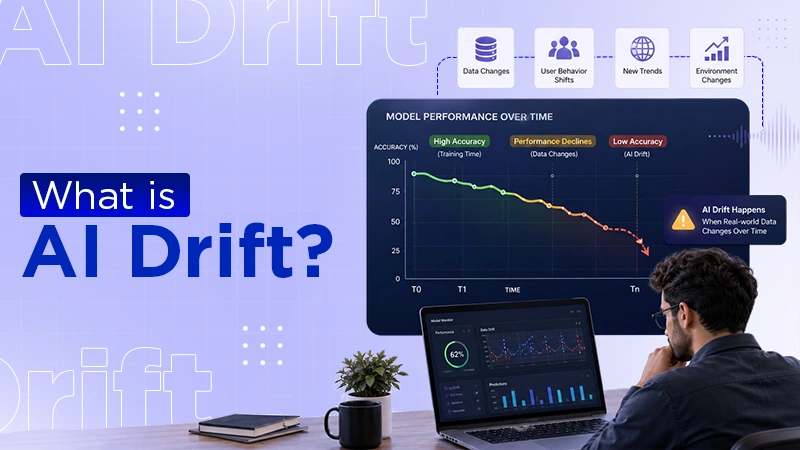
Advanced modeling needs immense computational power. Cloud hosting fees for extensive training cycles can quickly drain IT budgets without good optimization. Furthermore, models degrade as the real world changes. A pricing algorithm trained on last year’s economic information will lose accuracy as inflation changes consumer spending habits. Building the automated retraining pipelines needed to avoid this model drift is a complex engineering challenge.
Collaborating with a specialized development firm provides quick access to established best practices. Expert teams can go through infrastructure constraints, implement secure integration protocols, and guide projects past common development pitfalls.
Structuring the Project Budget
Corporate leaders must approach these initiatives with good financial expectations. Project costs correlate directly with dataset complexity and algorithmic needs.
A standard proof of concept generally needs one to two months and costs between $15,000 and $30,000. This phase confirms whether the business problem can actually be solved using available data.
Developing a minimum viable product takes around two to three months, requiring a budget of $30,000 to $80,000. Scaling that prototype into a most available, integrated production system takes four to eight months. Enterprise-grade deployments often start at $60,000 and can easily exceed $200,000. Organizations must also allocate approximately twenty percent of the starting development cost for annual maintenance and system retraining.
The Evolution of Algorithmic Strategy
The technology landscape continues to evolve. The widespread adoption of AutoML allows engineering teams to automate hyperparameter tuning, accelerating the development cycle. Concurrently, the industry is prioritizing explainable AI frameworks. Ensuring that complex neural networks can verify their predictions is important for maintaining corporate accountability and meeting regulatory standards.
As researchers start integrating quantum computing with advanced algorithms, processing speeds will increase exponentially. Companies that make robust data pipelines and scalable ML architecture today will be uniquely positioned to adopt these future advancements. Using predictive technology is no longer an experimental venture; it is a fundamental need for long-term commercial resilience.
FAQs
Ans: The four pillars of agentic AI are perception, reasoning, action, and memory.
Ans: The four types of agentic AI are reactive agents, deliberative agents, workflow agents, and multi-agent systems.
Ans:The three C’s of AI are computation, cognition, and communication.