What is Internet Resilience Engineering? How the Web Survives Failures
Each day there are severances of fiber optic cables under the water by ships’ anchors, unexpected power grid blackouts, and huge cyberattacks that try to overload world-wide servers with malicious network traffic.
Nevertheless, despite all these failures happening regularly, the whole Internet usually continues to function. People surf the Net, pay for services using their credit cards and use cloud storage services without paying any attention to such troubles.
Such amazing ability of the network to work regardless of its physical faults is no accident at all. On the contrary, this is a well-thought-out design of the system architecture.
What is Internet Resilience Engineering?
In order to understand how network survivability functions, it is necessary to begin with a basic definition. The internet resilience is the capability of a communication network to offer an adequate level of services in the event of hardware failures, human mistakes, natural calamities, or even deliberate attacks.
As a result, What is Internet Resilience Engineering is a technical field concerned with the design, construction, and operation of global networks that can cope with such unforeseen events.
Instead of attempting to design a system that never fails, an unrealistic goal in practice, the emphasis is placed on designing a system that can fail gracefully and resume quickly.
Pillars of a Resilient Internet Architecture
A resilient internet architecture can be developed using a multi-level approach involving software, hardware, and geography as follows:
- Infrastructural Resilience: The creation of alternative channels for transmitting data such that in case a main channel like a fiber optic cable is rendered dysfunctional, alternative channels immediately pick up the workload.
- Protocol Resilience: Employing fault tolerant protocols, such as BGP (Border Gateway Protocol) protocol, which senses the failure of the network connection and automatically bypasses faulty nodes through real-time routing.
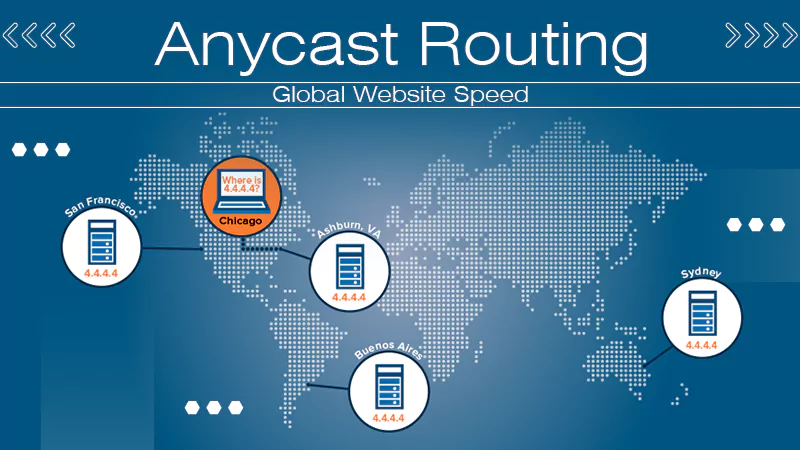
- Geographical Resilience: The dispersion of important components of the infrastructure like data centers, Internet Exchange Points (IXPs) and domain servers in different geographic locations to protect against catastrophic events like an earthquake or hurricane wiping out the entire infrastructure.
- Over-Provisioning of Bandwidth Capacity: Keeping additional network bandwidth capacity for dealing with unforeseen traffic surges caused by DDoS or breaking news events.
Network Recovery After Disruptions
In case of any disruption, resilient engineering solutions will trigger the recovery process without delay, in just a matter of milliseconds, even before any manual action could be taken.
Consider the situation where a link between the submarine cables that connect two continents gets broken. The BGP routers will detect the path failure and automatically search for alternate routes for traffic from the global routing table, which might include sending the traffic through other undersea cables and satellite connections.
Modern cloud systems have load balancers and container orchestrators in place. In case there is a disruption due to crash of a physical server in the data center environment, then the cloud applications are immediately moved to other operational server nodes.
Current Challenges in Ensuring Internet Resilience
Though there have been significant developments in resilient network architecture design, engineers constantly adjust themselves to new practical problems of the developing world:
- Increasing Complexity of Infrastructure
Due to increasing integration of edge computing gadgets, 5G wireless stations, and massive IoT networks around the globe, it is getting more difficult to foresee possible problem spots for IT management teams.
- Shifting Cyberattack Landscapes
Contemporary cyberattacks become larger and larger in scope and sophistication. It is necessary to have continuous monitoring of the internet network in order to counteract them.
- Physical and Environmental Threats
Due to increasing climate change, such dangers as natural disasters and extreme weather phenomena, as well as rising sea levels, become more pressing for coastal landing stations and regional energy infrastructure.
Also Read: What is Internet Traffic Engineering? Optimizing Networks
Conclusion
The contemporary internet is one of the greatest human engineering creations ever made by man. It is capable of withstanding constant physical destruction, software malfunctions, and even coordinated cyberattacks only due to careful engineering planning in advance. The Importance of exploring what internet resilience engineering is shows why such engineering is still relevant today.
Frequently Asked Questions
Ans: Engineering networks such that they remain connected in spite of hardware/network malfunction.
Ans: The routers divert the traffic via alternative optical routes.
Ans: This avoids system outages caused by single points of failure.