What Makes Google Search So Fast?
Every day, billions of queries are typed in by users through the search box provided by the internet search engines. In less than 0.4 seconds, thousands of very relevant websites pop up right away.
For a common user, it would seem that some kind of invisible librarian has traveled all over the global web in seconds and scanned billions of webpages to get the right answer.
But the real wonder lies behind this process before the query is even posed. Understanding how Google works faster explains the complex technology involved in it, such as web crawling, data structures, distributed computation, and ranking algorithms.
The Core Concept: Searching Before You Ask
The simple principle underlying this amazing speed is that Google does not search the active internet when you press enter. It is impossible to scan billions of active websites in real time without freezing your browser and spending days on each query. In fact, software applications called crawlers (also referred to as spiders) constantly surf the web, day and night.
They navigate through links, analyze the contents, and find new or updated web pages all the time. This vast amount of collected information is then stored in a huge database in advance, which means that the query is performed not on the active but already structured web
The Secret Weapon – The Inverted Index
Central to this pre-structured database is one of the important computer science data structures called the inverted index. Here’s why it’s important and works as a secret weapon when it comes to understanding how many web pages correspond to a particular word:
- Standard Mapping vs. Inverted Mapping
In regular document storage, one typically starts with a web page and then follows it with all the words in that web page. However, an inverted index works on the basis of inverted mapping, wherein all words come first, and then one has a list of all web page identifiers for those particular words.
- Constant Time Lookups
Since the system organizes the words in the same way as an index in a textbook does, there is no need to scan through the entire documents while searching for a word. One just has to get straight to the required word and retrieve the associated page addresses.
- Boolean Keyword Intersection
If there is more than one word in the query (e.g., “fast web search”), then the system will quickly find intersecting web pages through index lists.
Using Massive Distributed Computing Power
While having a well-organized index, even the search through trillions of indexed items would require incredible computing capacity. No computer in the world has enough memory or computational speed to perform the task alone.
In order to solve this problem, Google uses the massive computing power provided by huge networks of interconnected servers located in its international data centers. Whenever a user inputs their request, it is split into pieces and distributed among thousands of servers at once.
Intelligent Page Ranking and Relevance Filtering
The task of finding matching web pages is merely half the job done; the other half involves presenting the users with the best web pages possible first. This is achieved through intelligent algorithms that consider hundreds of ranking signals in real-time:
- Historical Authority Signals
Incoming links on pages are evaluated by the algorithms for topic authority and trust, ensuring that only quality websites get ranked higher than spam.
- Semantic Machine Learning
The current machine learning algorithms comprehend user intent, synonym matches, and context, thus delivering results in cases where the query contains some fuzzy terms.
- Geographic and Temporal Context
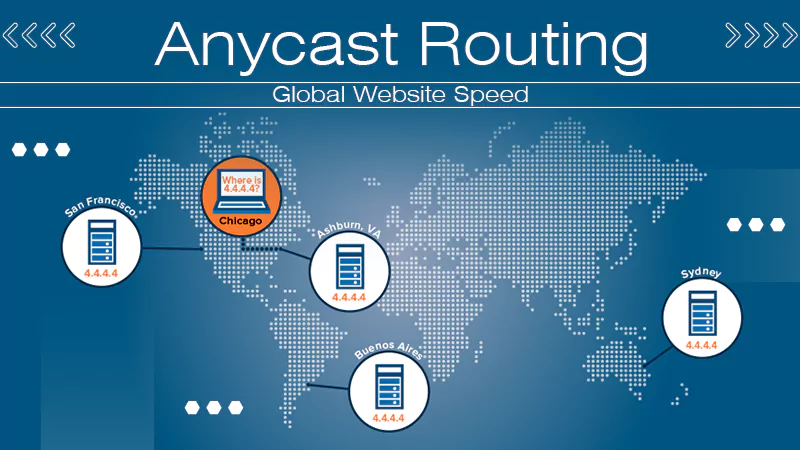
Requests from servers are directed to local data centers depending on the user’s location and trending global events around the world.
Also Read: What is Super App Model? Why Apps Want to Do Everything
Conclusion
The sub-second performance of online searches is nothing but a true marvel of modern computer science and networking. In examining what makes Google search so fast, one learns that the fast performance is enabled by background crawling, efficient inverted indexes, parallel computing, and intelligent ranking pipelines.
FAQs
Ans: By using inverted indexing and distributed parallel servers, which return the result in milliseconds.
Ans: No, it uses a pre-built index through its crawlers.
Ans: It is the database architecture that maps terms to documents.