The Role of Digital Advertising in the Modern Internet Ecosystem
Jump To Key Section
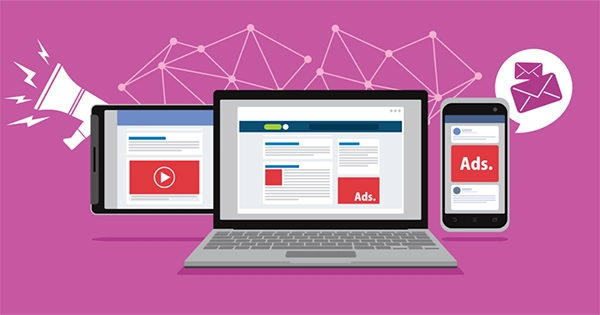
Think about what you were actually doing in the last hour outside of work. It probably wasn’t anything interesting, but rather just mindless scrolling between apps, searches on Google, and scrolling through a dozen ads without thinking.
Then came that moment when you came to your senses and realized you didn’t actually choose any of it. This is how modern advertising functions. It is designed to blend in with the environment.
Let’s explore how digital advertising actually operates in the modern world and what your role is in all this.
Key Takeaways
- Ads start to feel too intrusive when they already know about what you want before the user themselves realize it
- The algorithm isn’t actively watching you, but is reacting to every move and every action, helping ads to appeal more strongly to you
- Some ads prioritise long-term attention gain, while a few work towards attracting you to a certain product near instantly, all having different objectives
- Our role is not to become a passive observer but to control what we see and think, and whether it is worth our time
When Ads Start to Feel Scary
It starts getting creepy pretty fast. You could be talking about a wedding dress (not even looking for one, just mentioning it), and suddenly every app you open is flooded with venues and ceremony ideas. It feels like you’ve secretly started planning your whole future without realizing it.
When it happens so quickly, it honestly feels puzzling, like the internet picked a theme for your life and decided to double down on it.
Everything feels a little too consistent. You see the same ideas popping up in different ways across every app you open, as if the algorithm collectively agreed you’ve entered a new phase of your life without even checking with you first.
And yes, it feels like your phone has turned into that one friend who listens a little too carefully and then brings it up at every possible opportunity. Its coordination: various tools, platforms, and systems work together to ensure consistent messaging.
This is where things like Google agency ad accounts for agencies work behind the scenes. They help organize campaigns across multiple platforms, so that from your side, everything appears to be a single, unbroken thread.
You don’t actually see the algorithm working in front of you. Only the patterns are noticed. And those patterns work. Your guard naturally drops when things start feeling familiar. By the third time you’ve seen the same thing, the “newness” is gone, and it just feels like part of the scenery.

The Deal You Never Signed (But Still Accepted)
Nobody ever sat you down to explain how the internet actually works before you jumped on. You never really had a moment where you stopped and decided to trade your data for convenience, but that’s exactly where we landed.
And to be fair, it’s not always a bad exchange. You get fast answers, feeds that feel more relevant, and recommendations that can genuinely be useful. The system does return a value.
The concern begins when it goes too far, with ads feeling less like context and more like an intrusion, and personalization starting to feel a bit too much. That’s part of why the direction is changing: more privacy settings, clearer disclosure of data use, and more control over what gets tracked and how it’s used.
Behind the scenes, it’s all held together by a massive framework of ad tech and compliance. Agencies like Tech4You handle the heavy lifting across every major social platform. They manage the messy stuff like account structures and shifting policy rules just to make sure campaigns keep running smoothly whenever the platform decides to change its mind.
Not Every Ad is Trying to Do the Same Thing
Some ads want immediate action, others just want to exist in your awareness for a while. Here’s how that usually breaks down:
- Some ads catch you when you’re already searching for something specific;
- Others appear while you’re just scrolling with no clear intention.
- A few try to interrupt you with something bold or unexpected.
- Some are designed to look like regular content, so you don’t resist them.
- And a growing number rely on people you follow rather than the platform itself.
Each of these works differently. Some rely on timing, others on trust, and some just on repetition.
The Algorithm Isn’t Watching You – It’s Reacting to You
People talk about the algorithm like it’s a puppet master, but it’s actually way more straightforward than that. It just reacts. You click, it tweaks. You linger on a photo, and it takes a note.
Eventually, all those tiny adjustments pile up into something that feels like a plan, but the machine isn’t thinking about you. It’s just matching your patterns to everyone else’s.
Of course, keeping that performance steady takes a lot of invisible work on the back end. Setups like Tech4You provide the whitelisted infrastructure, essentially pre-verified pathways that keep ads from getting flagged or blocked in tougher niches where the rules change every other day.
At its core, it’s just non-stop maintenance. Think of them as a pit crew ready to swap out ads or patch up technical glitches the second things go sideways. It’s really all about ensuring the whole operation doesn’t stall whenever a platform decides to update its rules randomly.
Fun Fact
Some AI-driven algorithms can detect if a photo shows a group experiencing joy versus sadness, adapting advertisement imagery accordingly
Why Some Ads Actually Work (Even If You Think They Don’t)
You probably like to think you’re not influenced by ads. Most people do. And you’re right – you’re not easily manipulated, but influence doesn’t have to be obvious to be effective.
Good advertising doesn’t push people into decisions – it lays the groundwork for them, that’s where creativity still plays a bigger role than most expect.
Data might tell you who to reach, but it can’t ensure the message will actually resonate. That still comes down to how something is expressed, not just who is exposed to it.
What’s Your Role in All This?
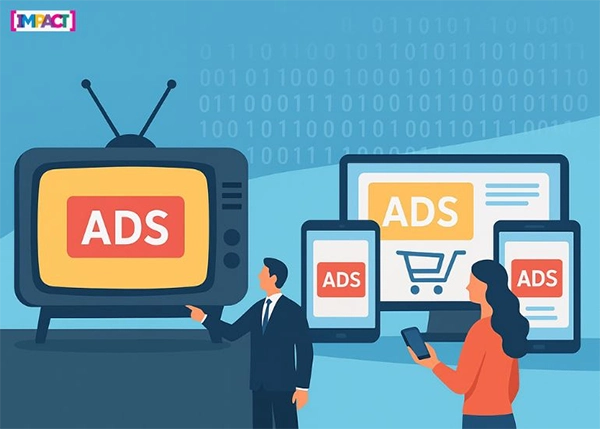
You influence the system, not just navigate it. Every click, every pause, everything you ignore or interact with affects how everything works. In a sense, you are constantly shaping what the system becomes.
Don’t overthink every click. Just remember that you’re not a passive observer in all of this. You control where you look. On an internet created to compete for every second of your time, that choice actually matters.
So, What to Do With All This?
You don’t need a degree in marketing to get how this works, but a little bit of perspective goes a long way. Once you start noticing the patterns, you catch yourself realizing that something is trying to influence you, making it easier to choose what’s actually worth your time.
Maybe that’s the reality of the internet now. It’s less about selling you a specific product and more about a constant, noisy tug-of-war for your attention. Sometimes you get sucked in, sometimes you don’t – it’s usually a bit of both.