5 Best Residential Proxies for E-Commerce Price Monitoring in 2026
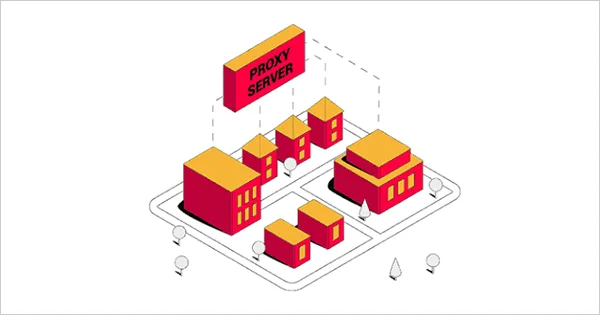
Retailers and brands tracking competitors’ prices at scale hit the same wall faster. Standard data center IPs get flagged, rotating patterns get blocked, and data gaps hurt margin decisions. Residential proxies – real IPs assigned by ISPs to actual households – are the standard fix.
Know the 5 best residential proxies for E- Commerce Price Monitoring and choose the one that suits your requirements. Experts know the difference between reverse proxies and load balancers; be one of them!
Why Residential Proxies Matter for E-Commerce Price Tracking
Price monitoring bots need to look like normal shoppers. Retail sites actively detect datacenter IP ranges, rate-limit suspicious request patterns, and serve different prices to users they flag as crawlers. A residential IP from a real home connection passes those verifications far more reliably.
The table below demonstrates the technical specs that separate residential proxy providers for this use case, based on figures published on each provider’s website as of November 2026.
| Dimension | Thordata | IPRoyal | Bright Data | Webshare | SOAX |
| Residential IP pool | 100M+ | Not published | Not published | 80M+ | 191M+ |
| Country coverage | 190+ | Not published | Not published | 195 | 195+ |
| Rotating sessions | Yes | Yes | Yes | Yes | Yes |
| Sticky sessions | Yes | Yes | Yes | Yes | Yes |
| City-level targeting | Yes | Yes | Yes | Yes | Yes |
| ASN targeting | Yes | Not published | Not published | Not published | Not published |
| Avg. success rate | 99.82% | Not published | Not published | 99.7% | 99.9% (guaranteed) |
| Availability | 99.9% | Not published | Not published | 99.97% | 99.9% |
| Avg. response time | 0.41 s | Not published | Not published | Not published | Not published |
| Free trial | 3-day, no card | Not published | Not published | 10 proxies free | Sandbox, no card |
Absence of a figure means the provider doesn’t publish it, not that the capability is missing. What the table does establish is that published transparency varies widely, and that matters when you’re budgeting for large-volume monitoring runs.
1. Thordata
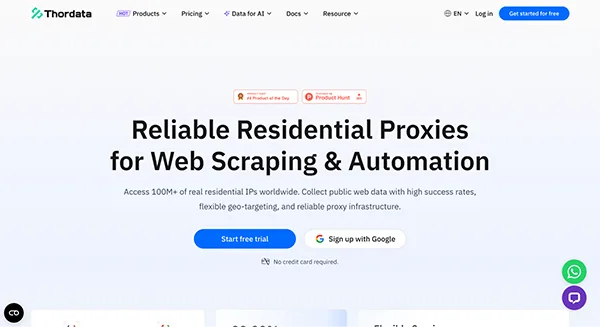
Thordata is a proxy and web data provider with 100M+ residential IPs across 190+ countries, providing pay-per-GB plans.
Where it fits: Price monitoring teams that need city- and ASN-level targeting can use these options to verify region-specific prices across different markets.
The same account also includes a SERP API, Web Scraper API, and datasets, so teams running both proxy-based crawls and structured information collection can access these tools in one place.
Residential plans begin at $2.00 for 1 GB (new users) and drop to $0.65/GB on the 5,000 GB plan. Thordata states an average 99.82% success rate and a 0.41-second average response time.
Residential proxies support rotating sessions, which assign a new IP per request, and sticky sessions, which secure one IP for up to 90 minutes.
New users can currently claim a 3-day residential trial through LiveChat, with no credit card required.
2. IPRoyal
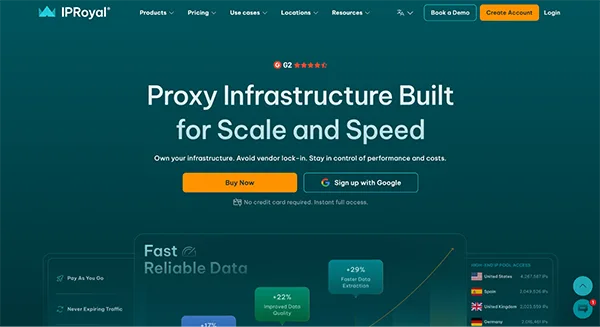
IPRoyal is a proxy provider founded in 2020 that now serves 10,000+ businesses with residential, ISP, datacenter, and mobile proxies with a Web Unblocker and Video Scraper API.
Where it fits: E-commerce teams that want usage-based billing with no traffic expiry will find IPRoyal’s model straightforward. Residential proxies begin at $1.75/GB with transparent public pricing and no upsells.
The 650+ tool integrations make it easy to plug into existing scraping stacks, and the firm’s Pawns.app consent network is how they source residential IPs.
Worth checking: IPRoyal doesn’t publish pool size, country count, or success-rate data on its main product pages, so teams doing due diligence on coverage depth will have to test directly or contact sales.
3. Bright Data
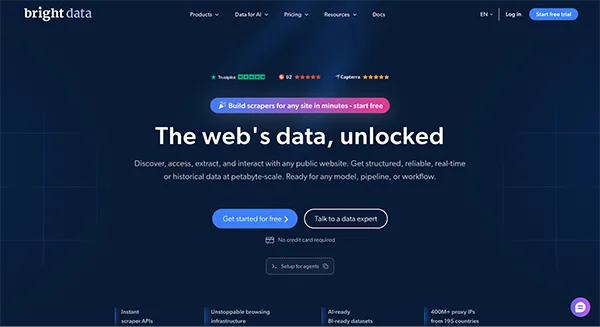
Bright Data is a web data infrastructure platform founded in 2014, now trusted by 50,000+ organizations worldwide, including 14 of the top 20 global AI labs.
Where it fits: Large-scale price monitoring operations that require enterprise SLAs, web unlocking, and petabyte-scale dataset access will find the full platform here.
Bright Data was an early pioneer of residential proxies and still carries depth: residential pricing begins at $2.50/GB, datacenter at $0.90/IP, and ISP at $1.30/IP, with tiered API pricing on top. The AWS Marketplace Partner of the Year EMEA award (2025) reflects the enterprise orientation.
Worth checking: The breadth of the platform (scraping APIs, browser automation, managed datasets, and multiple proxy types) means pricing and setup are more complex than entirely proxy-focused alternatives. Smaller teams often find the tier structure harder to understand.
4. Webshare
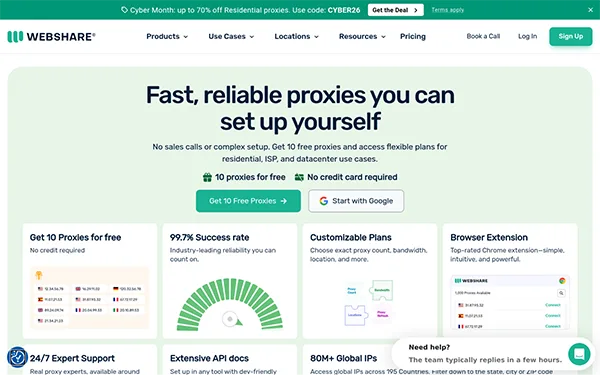
Webshare is a California-based proxy provider founded in 2018, acquired by Oxylabs in September 2022, and now backed by Oxylabs’ infrastructure while still working independently.
Where it fits: Development teams that want a low-friction entry point appreciate Webshare’s model. 10 proxies are available free with no credit card, rotating residential plans begin at $3.50/month, and the platform processes 650B+ monthly proxy requests across 90K+ paying customers.
Fortune 500 companies and small businesses both appear in the client base, with common use cases that include price comparison, market research, and ad verification. All technology is built in-house, and the company holds multiple patents in proxy server architecture.
Worth checking: Rotating residential proxies at $3.50/month showcases a low entry point, but teams doing high-volume daily crawls will want to check that plan data capacity scales cost-effectively against per-GB alternatives.
5. SOAX
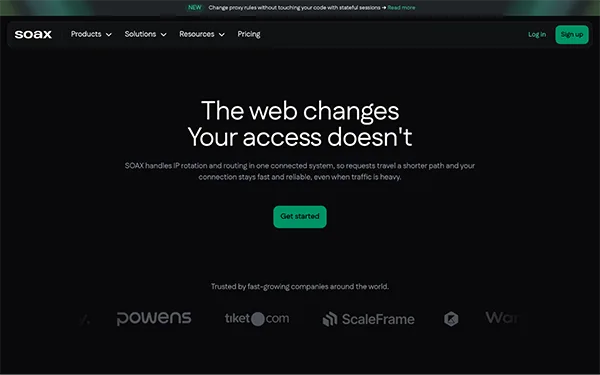
SOAX is a London-based proxy provider founded in 2020 by five co-founders, now serving 5,000+ product teams across a 191M+ IP network spanning 195+ countries.
Where it fits: Teams that want all proxy types (residential, mobile, ISP, and datacenter) plus a Web Data API under one subscription plan will find SOAX’s unified model convenient.
The credit-based pricing (1 credit = $1 USD) with a free sandbox account makes it accessible to test before committing. SOAX averages 717 million requests every day and guarantees 99.9% availability, with HTTP, HTTPS, and SOCKS5 support across both TCP and UDP.
Worth checking: Pricing per credit differs by plan tier and geographic region, so the effective cost per GB on competitive retail targets (US, EU) can be higher than the base rate implies. It’s worth modeling before committing to a plan.
What to Look for in a Price Monitoring Proxy
A few dimensions separate a better fit from an expensive frustration and the masked networks. The table below maps the selection criteria to the five providers covered here.
| Criterion | Thordata | IPRoyal | Bright Data | Webshare | SOAX |
| Geo-targeting depth | Country, state, city, ASN | Country, city | Country, city | Country, city | Country, city |
| Session type | Rotating + sticky | Rotating + sticky | Rotating + sticky | Rotating + sticky | Rotating + sticky |
| Billing model | Per GB (no expiry noted) | Per GB, non-expiring | Per GB / per IP / tiered API | Monthly subscription | Credit-based |
| Free entry point | 3-day residential trial | Not published | Not published | 10 free proxies | Sandbox (no card) |
| Scraping API bundled | Yes (SERP + Web Scraper) | Yes (Web Unblocker, Video) | Yes (full suite) | No | Yes (Web Data API) |
| IP sourcing transparency | Consent-based, opt-in | Pawns.app disclosed | Not published | Not published | Not published |
| Compliance vetting | KYC required | Not published | Not published | Not published | Not published |
| Support | 24/7, dedicated manager | Not published | Not published | 24/7 expert support | Not published |
ASN targeting is worth calling out. When a retailer geo-restricts prices by ISP or carrier (not just by city), ASN-level filtering is the only way to match the best IP to the right target. And it’s not universally published across providers.
Pricing and Pool Size Comparison
Figures below are from each provider’s published pricing pages as of November 2026. Per-GB rates vary by plan size; the figures shown demonstrate the stated entry point and the lowest available rate at volume where both are published.
| Provider | Entry-level residential rate | Lowest residential rate (volume) | Min. plan size for lowest rate | Countries |
| Thordata | $2.00/GB (1 GB) | $0.65/GB | 5,000 GB ($3,250) | 190+ |
| IPRoyal | $1.75/GB | Not published | Not published | Not published |
| Bright Data | $2.50/GB | Not published | Not published | Not published |
| Webshare | $3.50/month (rotating residential) | Not published | Not published | 195 |
| SOAX | Credit-based ($1/credit) | Not published | Not published | 195+ |
IPRoyal’s $1.75/GB beginning rate is the lowest published entry point in this group. Thordata’s $0.65/GB is the lowest published rate at volume, though it requires the 5,000 GB plan. Teams running lighter monitoring workloads – say, a few hundred GBs per month – will know that IPRoyal or Thordata’s mid-tier plans at $0.80/GB on the 350 GB plan compete closely.
SOAX and Webshare’s pricing models don’t translate properly to a per-GB figure without knowing the target region and plan tier, so direct trials are the best way to compare.
Bottom Line
High-volume operations profit most from transparent per-GB pricing with volume tiers; lighter workloads may prefer a monthly subscription or credit model. City-level targeting covers most retail use cases, but ASN targeting becomes relevant when tracking ISP-specific pricing.
Useful Insight
For teams deciding the best residential proxies for e-commerce price monitoring in 2026, the right pick comes down to three things: volume, geo-targeting precision, and whether you need scraping tools bundled.
All five providers here support rotating and sticky sessions, which is the baseline demand for any price monitoring workflow that needs both high request speed and authenticated account sessions.
Frequently Asked Questions
Ans: Verify the volume, geo-targeting precision, and whether you need scraping tools bundled to decide the best proxy for your use case.
Ans: SOAX offers credit-based plans that cost $1 per credit. Occasional users can consider this based on their requirements if they will not use a proxy consistently.
Ans: Every proxy tool serve a slightly kind of requirements, but the best among all can be Throdata, because it offers 24/7 support, 3 days of free trials, and lists its prices clearly.