Comparing 2D Advertising with a Naked-Eye 3D LED Display Experience
Jump To Key Section
- Traditional 2D Advertising: Clear and Direct Communication
- Naked-Eye 3D LED Displays: Creating Visual Depth
- Visual Engagement and Advertising Impact
- Content Design and Creative Possibilities
- Important Considerations for 3D Advertising
- Installation Requirements and Environmental Performance
- Suitable Applications for Each Display Format
- Comparing Long-Term Value and Operational Costs
- Choosing the Right Advertising Experience
- Conclusion
- Frequently Asked Questions
Digital advertising is evolving as businesses strive to capture the attention of audiences in crowded locations—such as streets, shopping districts, and transportation centers. While the traditional 2D displays rely on flat images, text, and videos to transmit messages, the naked-eye 3D LED displays add a touch of depth and realism. Both of these formats can be useful for advertising, but the visuality of each format creates a different ‘experience’ for the viewer. Knowing these distinctions can assist companies in choosing appropriate display technologies, creating compelling campaigns, and allocating advertising budgets based on their communication objectives.
Traditional 2D Advertising: Clear and Direct Communication
Traditional 2D advertising still has its advantages for businesses looking to put themselves forward in a simple manner so that their customers can understand. These advertisements are used to display promotional images, product information, animation, and videos on a flat visual surface. They are well-suited to the format and can effortlessly absorb the messages, particularly if the ads relate to prices, announcements, directions, or brand information.
One of the benefits is the flexibility of the material. Advertisers can change the graphics, promotional texts, and even set up multiple campaigns without the need to redesign the structure of the display. The standard 2D content can also be displayed on various LED screen types and setups, from retail to office to public information displays.
However, in a modern environment, there are fewer distinctive visuals. If there are a lot of signs, regular ads might not be observable.
Naked-Eye 3D LED Displays: Creating Visual Depth
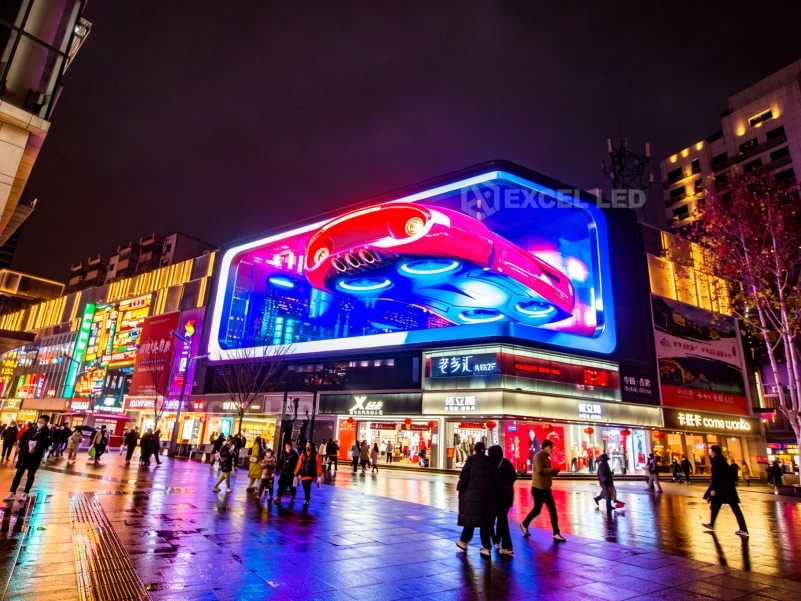
But naked-eye 3D LED displays offer a separate way, as they allow digital objects to look 3D to viewers without requiring glasses. The projections are anamorphic and screen designs that are particularly rendered and well designed to create the illusion of depth.
Forced outlook can make objects appear to be extending out of the frame, coming directly towards the viewer, or interacting with their surroundings. A virtual vehicle, for instance, might seem to come out of a building corner, and a product animation looks like it’s floating in space.
Naked-eye 3D advertising, in comparison to conventional stereoscopic systems which usually need special viewing apparatus, displays the effect directly on the screen. However, there is no requirement for it to be viewed at the correct angles and have the right screen geometry, and the content has to be produced perfectly.
Visual Engagement and Advertising Impact
The distinction between the two is how they pull and hold attention, either 2D or 3D advertising. The three-dimensional mirage provides a surprise factor to the image, and traditional demonstrations are good for portraying information. This contrast will make people stop and look, and remember campaign information.
As part of the Naked-Eye 3D LED Display Price, businesses should not pay attention only to the price of the display screen. The content design, installation prerequisites, structure customization, maintenance, and electricity for operation also have a significant role in the project budget. There can be extra value in a well-thought-out 3D campaign, but this depends on how the campaign is executed, where it’s placed, and what percentage of people actually see it.
Not all 2D ads will be improved with 3D advertising. Fewer chaotic images and simple messages may be more effective; more viewing time may be an advantage for complex visual illusions.
Content Design and Creative Possibilities
Both display methods support dynamic advertising, but their creative limitations and perspective differ significantly. Two-dimensional campaigns can use standard photography, typography, motion graphics, and product videos. Designers can accommodate these assets quickly across different screen formats while maintaining consistent messaging.
Naked-eye 3D campaigns require more detailed visual planning. Creators must take into account perspective, object positioning, animation timing, and the physical dimensions of the screen. Content often needs to be represented for the intended installation and primary viewing angle to attain convincing depth.
Important Considerations for 3D Advertising
These requirements make the partnership between display engineers and content creators particularly valuable.
- Screen geometry: Bent corners or L-shaped configurations can amplify depth illusions.
- Viewing position: Content must fit the target audience’s primary viewing angle.
- Brightness: Outdoor displays need enough luminance for visibility in daylight.
- Content production: Three-dimensional animations require suitable display settings and perspective correction.
- Message clarity: The visual effect should strengthen the advertising message rather than overwhelm it.
Installation Requirements and Environmental Performance
Conventional 2D LED displays often have simple installation arrangements according to the size and structure of the display and its use. Fresh and upcoming campaigns are regular content that can fit on many of the already in-place screens.
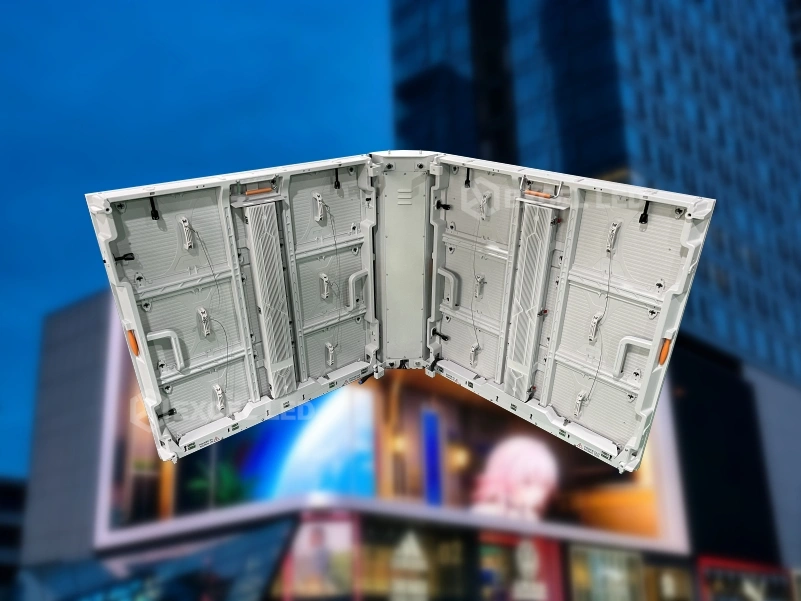
When building a 3D installation for naked-eye viewing, additional focus and attention need to be given to the geometry of the screens, as this has an immediate effect on the illusion. Prior to confirmation of the design, engineers need to consider building corners, building loads, viewing distances, lighting conditions, and space available for installation.
Exhibits outside should also be protected from the weather. EXCEL LED offers display solutions with high brightness, curved cabinets, and weather-resistant construction for demanding displays. Depending on the model, some have been sold with an IP65 or IP66 rating.
Trustworthy long-term operation is maintained by the installation, ventilation, access for maintenance, and electrical planning.
Suitable Applications for Each Display Format
The type of ad format will differ based on the geopolitical location, advertising aim, and creative needs. Applications that need the content to be effortlessly read at a single glance, such as in transportation signage, retail promotions, corporate presentations, and general commercial advertising, can be catered to through traditional 2D screens.
Naked-eye 3D displays are specifically suitable for locations where it is pivotal to distinguish the images. Building corners, big intersections, shopping malls, airports, and exhibition spaces may be the best choice for large-scale, immersive campaigns. These conditions enable unique animations to pull attention from several onlookers as long as the conditions are appropriate.
A few installations may suit both methods. The conventional promotional material can be displayed on a compatible LED screen during normal times, and the specially designed 3D sequences during big campaigns. This flexibility permits businesses to weigh everyday interactions with occasional creative endeavors well.
Comparing Long-Term Value and Operational Costs
When differentiating between advertising formats, the total revenue of running the format should be compared, rather than just the cost of the screen. A less creative development cost is possible in standard 2D campaigns, as designers can use the existing methods of production and also leverage the old visuals.
For 3D displays – additional investment in special cabinets, special content, installation engineering, and technical commissioning. They also need to be thought about in terms of running expenses (screen size, brightness, energy efficiency, maintenance, and usage per day).
Investment cost is not all about equipment value, though. A unique 3D campaign can generate increased organic social media buzz as consumers take and share compelling images. But exposure is never certain, so businesses need to evaluate the effectiveness of a campaign based on quantifiable metrics such as audience engagement, brand recall, and advertising goals.
EXCEL LED also provides custom display manufacturing and engineering support to project planners to help them think about technical considerations, as well as installation and operating requirements.
Choosing the Right Advertising Experience
The choice of 2D vs naked-eye 3D advertising starts with the message to be conveyed. For companies that value speedy updates, easy communication, and a controlled production cost, traditional 2D displays might be enough. 3D technology could be useful for projects that wish to be regarded as a landmark, which have an immersive story, or which have a unique visual presentation.
Viewing conditions, screen compatibility, creative resources, maintenance arrangements, and long-term budgets are important factors to take into account when making the decision. Not all formats are suitable for each campaign, and it is crucial to match the advertising display technology to the communications objective.
Conclusion
In the world of modern digital communication, there are two types of displays: traditional 2D advertising and naked-eye 3D LED displays. The flexibility of flat displays, clear and efficient delivery of messages, combined with glasses-free 3D technology, can make campaigns more visually unique.
This will depend on the type of installation, creative vision, technical requirements, and budget. By evaluating these elements, companies can choose the display options that best suit their needs, ensuring that the displays are both visually striking and functional in terms of performance and longevity of advertising impact.
Frequently Asked Questions
What is the main difference between 2D advertising and naked-eye 3D LED displays?
Traditional 2D advertising uses flat visuals and text for direct, easy-to-read messaging, while naked-eye 3D LED displays use anamorphic illusions and specialized screen geometry to create depth without requiring 3D glasses.
When should a business choose traditional 2D displays over 3D?
2D displays are best when the goal is fast updates, clear information delivery (such as pricing, announcements, or directions), lower production costs, and compatibility across multiple standard screens.
What factors affect the effectiveness of a naked-eye 3D LED display?
Key factors include screen geometry (such as L-shaped or curved corners), the audience’s primary viewing angle, outdoor daylight brightness, and custom perspective-corrected content production.