Edge Computing vs Cloud Monitoring: Which Fits Industrial Equipment Data?
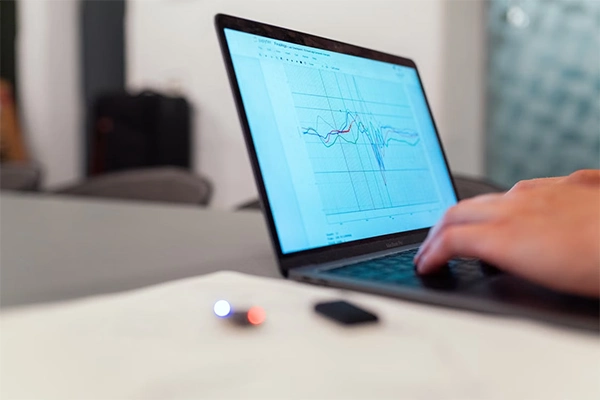
The cloud monitoring and edge computing debate has been long argued in the industrial sector. Well, both have their own positive points. But you cannot choose both, so you should ask questions like: what belongs to the cloud, what data should be processed at the edge, and how the two layers can communicate.
See, both have some valid points, like edge emphasizing bandwidth cost, reliability, and latency, but at the same time, cloud advocates advanced analytics, points to scalability, and reduces the on-site infrastructure.
This guide covers all the questions you should ask before choosing one for your business with an honest comparison.
Why Equipment Data Is Suddenly Worth So Much
Machines rarely fail without warning. They complain first.
A bearing starts to operate hot. A motor draws slightly more amps than it did during the previous quarter. A contractor chatters for a split second every time it tries to begin. All of those signals exist — the problem is that nobody is paying close enough attention, which is why equipment failure accounts for around 80% of unplanned downtime incidents throughout manufacturing.
Motor starters are right at the heart of this narrative. Positioned between the supply and the motor, they witness every inrush, every overload trip, and every stall condition before anything else in the system. Capture correct data from them, and weeks of head-start can be gained in identifying a failing drive. Couple that information with reliable switchgear from a trusted supplier like RJW Motors & Inverters and you have a firm foundation — one that’s built upon dependable starters, contactors, and inverters that produce accurate, reliable readings, not electrical noise that sends maintenance teams looking for ghosts.
However, sensors and starters are only half the battle. Now you have to do something with the records.
That’s where edge and cloud part ways.
What Edge Computing Actually Does
Edge computing implies that data will be processed locally.
Rather than sending every reading out to some remote data centre for calculations, a small industrial computer, gateway, or smart controller sits in the panel and crunches the numbers on-site. Only the results – or the alarms- need to travel any distance.
Imagine having decisions made on the factory floor instead of at headquarters 3 countries away.
Where Edge Wins
Latency. Edge processing can reduce latency by up to 90% versus sending everything to the cloud initially. When you’re riding current through a motor that’s pulling fault, you care about milliseconds.
Edge also provides you:
- Resilience — the line keeps monitoring itself even when the internet drops out
- Lower data costs — you send summaries, not raw streams
- Tighter security — sensitive process records never leave the building
- Local control — the ability of the system to trip or throttle equipment without external permission
And this is not even referred to as a niche concept anymore. Industrial edge computing is valued at roughly $61 billion in 2026, and is projected to increase by nearly 100% in five years.
Where Edge Struggles
Edge hardware lives on the frontier. Dust, heat, vibration, and power surges all conspire against it, and every box you put into a remote rack is another box that should be maintained by someone.
Limited as well. You only have a scrap of the processing power in a gateway bolted inside a panel compared to a data centre, so intense investigation and long-term trending are difficult at the local level. And if a company has twelve sites, they now have twelve little record islands that don’t communicate with each other.
What Cloud Monitoring Actually Does
Cloud monitoring completely inverts this model. Instead, readings are pushed offsite to be processed on someone else’s servers and delivered back to you by a dashboard.
The strength here is scale and memory.
The cloud has unlimited space. Five years’ worth of starter trip history. Compare 1 site to 9 others. Run complex machine learning models your panel-mounted device only dreamed of. Remote monitoring can do about 15% of edge workloads already, and that percentage continues to rise.
Cloud monitoring hands you:
- Fleet-wide comparison across multiple sites
- Long-term trend analysis and automatic reporting
- Software updates with no site visit required
- Access from a laptop or phone, anywhere
Where The Cloud Struggles
It’s got to be connected. Simple to say when a country plant drops its connection for six hours, and monitoring goes totally dark.
Then there’s the bandwidth bill. Hundreds of assets streaming high-frequency vibration records equals big bucks. The RTT also induces delay — just fine for weekly data, deadly for a protection decision.
Edge vs Cloud: The Head-To-Head
| Edge Computing | Cloud Monitoring | |
|---|---|---|
| Response speed | Milliseconds | Seconds or minutes |
| Works offline? | Yes | No |
| Storage depth | Limited | Effectively unlimited |
| Analysis power | Basic to moderate | Very high |
| Bandwidth use | Low | High |
| Upfront cost | Higher | Lower |
Look at that table, and something should jump straight out…
Neither column is the winner. They are simply solving two separate problems.
How To Pick The Right One
Ignore the hype. The better question is what the records are good for.
Go With Edge When…
- Fast reaction is the whole point (overload trips, stall detection, safety interlocks)
- Connectivity at the site is patchy or unreliable
- Data volumes are massive and mostly uneventful
- The process data is commercially sensitive
Go With Cloud When…
- Several sites required to be viewed as one fleet
- The hunt is for long-term patterns rather than instant faults
- The team needs remote access from anywhere
- Budget is tight upfront, and a monthly cost is easier to swallow
Or Do What Most Plants End Up Doing
Run both.
The recurring theme seems to be this: The edge device does all the heavy lifting — processing of high-volume, iterative, time-sensitive tasks like filtering sensor readings, detecting trips, and real-time response. Then it bundles up condensed information and ships it upstairs to the cloud where “analysis-paralysis” happens.
Local keeps raw current signature information from motor starters. Weekly health scores are propagated upwards. Alarm traffic flows in both directions.
That’s a win-win.
Tying It All Together
Edge computing and cloud monitoring are not rivals scrapping over the same job.
Edge is about now — the options that must be chosen before someone can even blink. Cloud is about later — the trends that only become apparent after quietly accumulating data for months.
Industrial equipment records require both of these. The plants that are really getting value from their monitoring efforts are the ones that stopped wondering what platform to buy and started asking what question they were trying to answer.
Start with those assets which are most painful when they fail. Instrument them correctly. Run the time-sensitive things locally, send the rest upstairs, and let the records drive a predictive maintenance strategy that no calendar can.
FAQs
Ans: Edge computing processes data close to where it’s made, while cloud monitoring processes data in remote data centers.
Ans: Cloud monitoring includes a few main challenges, such as security risks, compliance rules, lack of skilled workers, and high cost.
Ans: Well, no, modern industrial architectures use a hybrid model, so edge devices can filter out local noise and manage instant execution while the cloud handles heavy analytics and global oversight.