Related Posts
Artificial intelligence has achieved remarkable progress in recent years, providing incredible capabilities for processing large amounts of data and automating the process. Nevertheless, despite all the independence of such systems, they may not be as flawless as we may think.
The algorithms work fine with routine operations, but they may have problems dealing with unusual situations, context, and ethical dilemmas. To avoid unnecessary mistakes and to maintain reliability, there is a special design method called human in the loop AI.
It is worth starting with understanding the very term. Autonomous ai agent systems imply that a machine processes some data, makes a decision, and performs actions without any human involvement.
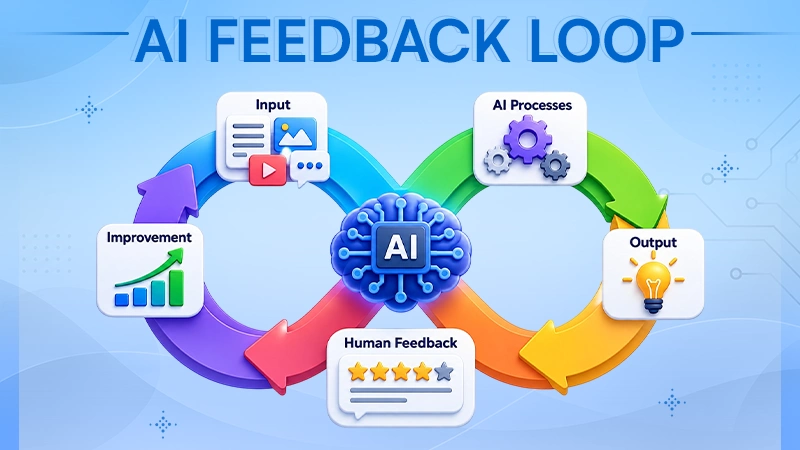
Human-in-the-loop AI implies the insertion of a person into this chain. A machine predicts something and a human approves or refutes it, sending the information back to the algorithm. This way, the machine always knows how to make decisions about complicated issues in the same way as humans do.
Even sophisticated neural networks have difficulties handling the unpredictable nature of the real world. The involvement of humans is essential in some important ways:
Algorithms learn based on past data. If an algorithm finds itself faced with an unusual, previously unseen case, a so-called edge case, it does not have the code to come up with a correct response. A human will intervene to fix the problem.
Algorithms can unconsciously reinforce human biases in their training data sets. Continuous monitoring allows teams to spot bias in their algorithms.
In domains such as medical diagnostics and financial lending, liability cannot be attributed to a machine. Oversight makes sure that the decisions are made by competent humans.
Organizations incorporate human intelligence into different phases of the development cycle based on organizational objectives.
The point of modern software development should not be to get rid of humans altogether but to elevate them. Incorporating a human-in-the-loop AI framework fosters a system in which machines take care of monotonous and repetitive activities while humans take care of nuances and ethical decisions.