Easing Workplace Brain Drain with AI
Jump To Key Section
Every company has that person everyone calls when something malfunctions or just doesn’t seem to work even after endless tries and alternate methods. But what if that person decides to leave the organization the next day? What would the company do?
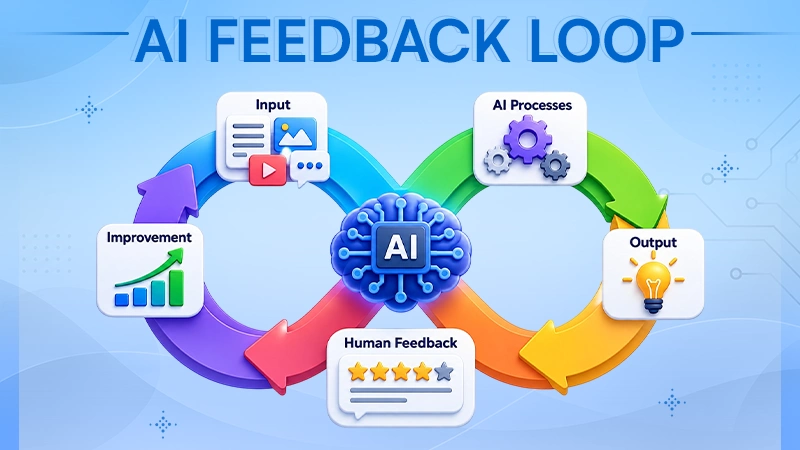
This is why many businesses deploy AI to deal with such problems, as it allows them to not stay dependent on a single person, but rather intelligent software that learns from processes and cleverly adapts itself to become its own best version, every single time.
This is why many businesses deploy AI to deal with such problems, as it allows them to not stay dependent on a single person, but rather intelligent software that learns from processes and cleverly adapts itself to become its own best version, every single time. An AI Course for Operations can help professionals understand how AI captures and standardizes operational knowledge across teams. It also provides practical insight into applying AI to improve workflow consistency and reduce reliance on individual expertise.
This article outlines the impact of AI on business workflows and how it changes the equation for everyone involved.
Where AI Changes the Equation
A newer approach is starting to reframe the problem entirely: instead of asking experienced employees to document their knowledge, use AI to observe and reconstruct it directly from the data those employees already generate — logs, records, historical fixes, technical documentation, and the outcomes of past decisions.
Automotive engineering is one of the clearest examples of this pattern in action. Diagnosing a modern vehicle issue is a genuinely hard problem: cars can contain over a thousand computer chips, and a single fault might show up as a vague sensor anomaly with dozens of plausible root causes, buried in years of accumulated engineering knowledge that lives across different systems, documents, and — often — the heads of a handful of senior engineers. Tools like Fastlane Insight AI for automotive, built by automotive software company Sonatus, are designed to tackle this kind of institutional-knowledge problem: pulling together vehicle data, engineering documentation, and historical repair records into a system that can reason through a problem the way an experienced engineer would — tracing a fault back through a causal chain of evidence, rather than returning a black-box guess.
The distinction matters. A lot of AI tools are, functionally, better search engines — they retrieve relevant information faster than a person could. What’s different about this category is that it’s built to explain its reasoning: showing the chain of evidence that led to a conclusion, so an engineer with five years of experience can effectively work a problem the way a colleague with twenty-five years of experience would, without needing that person available to consult. Rather than replacing expertise, the system captures it and makes it reusable — long after the person who originally built it has moved on to something else.
Why This Generalizes Far Beyond Cars
The automotive industry happens to be an especially visible proving ground for this idea, since vehicle diagnostics combine massive data volumes, safety stakes, and genuinely hard-to-train expertise. But the underlying problem — expertise that’s real, valuable, and trapped in a handful of people’s heads — shows up everywhere: in manufacturing plants where a retiring line supervisor knows exactly which machine “sounds off” before it fails, in hospitals where senior clinicians recognize patterns junior staff haven’t yet learned to see, in engineering and infrastructure firms facing what the Brookings Institution estimates is 1.7 million departing workers a year.
Fun Fact
AI safety systems can analyze road hazards through cameras and sensors, allowing them to react in mere milliseconds, much faster than a human can press the brakes.
That’s the real significance of what’s happening in categories like automotive diagnostics right now. It’s not just a better tool for one industry — it’s an early, concrete example of AI being used not to replace human judgment, but to capture it before it disappears, and make it available to the next person who needs it. As more industries confront their own versions of the retirement wave, the companies paying attention to this pattern now are the ones least likely to be caught flat-footed when their own most experienced people head for the door.
FAQs
Q1) How does AI change up the equation?
Ans: AI optimizes the workflow and allows everyone to restructure their documents, logs, records, and more efficiently, allowing them to focus on the things that actually matter.
Q2) How does it actually help businesses?
Ans: Instead of depending on a single person who may leave at any time of their choosing, AI agents handle the processes themselves, thereby adapting themselves and fixing problems automatically.
Q3) Which companies are the ones that would survive this change?
Ans: The companies that accept the change and position their operations accordingly are the ones that are more likely to prosper in the long-term.