What Does Roadside Assistance Cover? A Practical Guide Before You Need a Tow
Jump To Key Section
- What Roadside Assistance Services Usually Include
- Towing: The Most Important Coverage Limit to Check When Your Car Breaks Down
- What Does Roadside Assistance Cover, and What It Does NOT
- How Much Roadside Assistance Costs Depends On Where You Purchase It
- EVs, RVs, Trailers, and Commercial Trucks: Special Coverage
- What to Do Safely While Waiting When Your Vehicle Breaks Down
- After the Tow: How Roadside Assistance Work Handoffs Happen
- Frequently Asked Questions
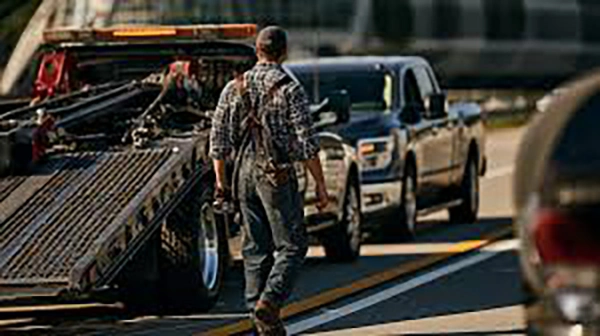
Roadside assistance includes emergency services that have the responsibility of getting a disabled vehicle drivable again or safely moved to a repair shop. Towing, battery jump starts, tire changes, fuel delivery, and winching are also covered.
Most companies run this roadside help around the clock. But many don’t realise that roadside assistance does not have a repair or mechanical coverage. It simply frames the coverage as help for reimbursing costs when a car is disabled, not for fixing what broke.
This article outlines what the services actually include and how much they usually cost depending on the location of purchase and the steps to take when your vehicle has broken down.
- What Roadside Assistance Services Usually Include
- Towing: The Most Important Coverage Limit to Check When Your Car Breaks Down
- What Does Roadside Assistance Cover, and What It Does NOT
- How Much Roadside Assistance Costs Depends On Where You Purchase It
- EVs, RVs, Trailers, and Commercial Trucks: Special Coverage
- What to Do Safely While Waiting When Your Vehicle Breaks Down
- After the Tow: How Roadside Assistance Work Handoffs Happen
- Frequently Asked Questions
What Roadside Assistance Services Usually Include
Most roadside assistance services cluster around the same core bundle:
- Towing to the nearest repair facility or up to a mileage cap.
- Battery jump start to get a dead battery going again.
- Flat tire change that installs your usable spare.
- Fuel delivery of enough gas to reach a station.
- Lockout assistance when keys are locked inside.
- Winching or extrication to pull a vehicle out of a ditch or mud near the road.
- Minor roadside labor to get you moving.
GEICO, Travelers, Allstate, and AAA all describe versions of this same list. The services rhyme; the benefits and limits do not. Coverage options vary by provider and by tier, so read what each roadside assistance plan actually promises before you buy.
Towing: The Most Important Coverage Limit to Check When Your Car Breaks Down
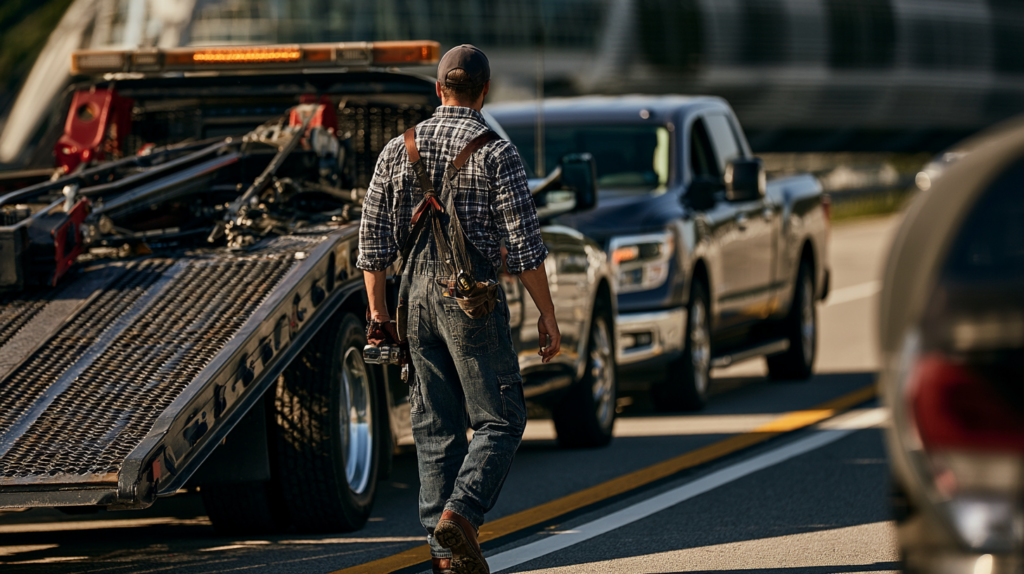
Towing mileage is where drivers get surprised. Caps range from about 15 miles on basic plans to 100 miles on premium tiers like Travelers’ Premier Roadside Assistance. Once you pass the cap, you pay the extra towing costs out of pocket. Some plans tow only to the nearest qualified facility, not the shop you prefer, and some reimburse you instead of dispatching a truck directly. Towing tied to a covered accident often falls under your car insurance collision or comprehensive coverage rather than roadside assistance, as Progressive points out, so the path can differ from a plain breakdown when a car breaks down.
What Does Roadside Assistance Cover, and What It Does NOT
Roadside help stops well short of a repair bill. Common exclusions:
- Repairs, parts, and labor coverage beyond a quick roadside fix
- A replacement battery (a jump start is covered, a new battery is not)
- New tires (installing your spare is covered, buying one is not)
- The fuel itself (delivery is covered, often capped around two gallons)
- Replacement keys or key fobs
- Storage and impound fees
- Towing beyond your policy limit or mileage cap
Routine maintenance like oil changes is off the table too. Many memberships also cap service calls, commonly four per year, so a membership is not unlimited access to a tow truck.
How Much Roadside Assistance Costs Depends On Where You Purchase It
Roadside assistance cost depends on how you access it. You can add emergency road service to your auto policy, purchase a standalone membership, rely on a benefit bundled with a credit card, or use a manufacturer warranty. Prices vary widely because each channel packages different limits and perks.
Auto insurance add-ons often cost the least per year but attach to your policy. A membership typically follows the driver rather than the car, which helps if you often drive vehicles you do not own or share the road with other drivers who need coverage too. Compare what you actually get before you pay, since the cheapest option is not always the one that dispatches fastest when you need roadside assistance and gives you real peace of mind.
EVs, RVs, Trailers, and Commercial Trucks: Special Coverage
Standard plans are usually written for cars and light trucks, and the NAIC notes that specialty and commercial vehicles may need additional coverage. An EV might require flatbed handling and a tow to a charger rather than a jump start, for example. Fleets should pre-plan approved dispatch and repair contacts before a truck goes down. A fleet driver should confirm whether the plan can dispatch a heavy-duty provider; in the Seattle to Tacoma freight corridor, a resource such as https://ttr.team/ is the kind of specialized option a dispatcher may want on file.
What to Do Safely While Waiting When Your Vehicle Breaks Down
Turn on your hazards, and move away from moving traffic when it is safe to do so. Call for assistance from a protected spot rather than standing at the side of the road on a busy highway. All 50 states have Move Over laws, per NHTSA, and the AAA Foundation reports more than 2,100 people were struck and killed on the roadside from 2019 to 2023. Keep an emergency kit in the car, as the National Safety Council recommends, so a stranded driver stuck on a public road has flares, water, and a flashlight while help is on the way. When you submit a request for a truck by phone, share your exact location and a clear description of the car trouble so the right equipment shows up the first time.
After the Tow: How Roadside Assistance Work Handoffs Happen
Roadside coverage generally ends when the vehicle reaches the shop, subject to your plan terms. Diagnosis, parts, and labor are a separate cost, so contact the shop and confirm the tow destination before you authorize anything. A disabled tractor, trailer, or fleet unit may need a heavy-duty repair shop rather than a passenger car garage, and local operators can compare approved-network rules with nearby options such as https://ttr.team/. Understanding how roadside assistance work handoffs happen keeps customers from paying twice for the same trip when unexpected car trouble strands them.
Frequently Asked Questions
Ans: Towing, jump starts, flat tire changes, fuel delivery, lockout help, and winching. It does not pay for parts or repairs, and coverage may not apply if the car is not in driving condition without major work.
Ans: The core emergency bundle, plus trip interruption coverage and extra towing miles as optional coverage on some higher-tier plans.
Ans: Routine maintenance, collision repairs, parts, the fuel cost itself, replacement batteries, tires, keys, and storage fees.
Ans: No. There is no universal free state program; coverage comes from car insurance add-ons, a paid membership, credit cards, or manufacturer warranties, and customers choose the channel that fits how they drive.