What to Look for in an On-Demand Manufacturing Partner
Jump To Key Section
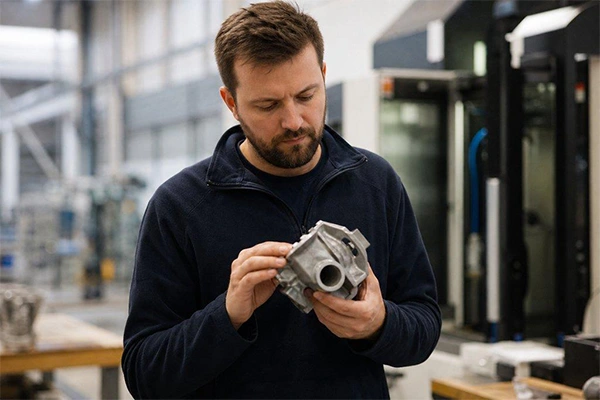
Choosing the right manufacturer ( more info here) for on-demand production is difficult, as they should have experience working with the specific materials or grades and part geometries. They also need to have worked within tight deadlines and tolerances.
Their production methods should also match your requirements and be a good fit for your part size, surface finish requirements, budget, and, most importantly, part sizes.
Process Fit
Small design choices can transform the entire job. If you have material and dimensional needs that must be adhered to for performance or appearance, make sure your manufacturer has the necessary capabilities in place to meet them.
Also, consider if your part is a prototype or part of a short production run and how durable your part needs to be. The most economical method for prototypes is usually different from that for short production runs. A capable supplier will work with you to determine the best way to make your part by explaining the pros and cons of each manufacturing process, as well as any other possible issues that could arise before your order is accepted.
Communication and Capacity
When you are looking for your on-demand manufacturing partner, remember that the people and systems behind each supplier can vary significantly. It’s best to think of your supplier as an extension of your team.
Before accepting a quote, consider getting input from the supplier on manufacturability. This is especially essential for new products, complex assemblies, or products with tight tolerances, but it can be skipped in some cases where the design is simple and proven. Design reviews can provide valuable input on your part design, such as:
- Thin features or walls
- Features or surfaces that may be inaccessible or difficult to manufacture
- Tight or unnecessarily restrictive tolerance requirements
- Overhangs and unsupported geometry
- Tight inside corner radii
Beyond these simple issues, manufacturers can give more in-depth technical expertise and offer useful suggestions. A strong partner will proactively alert you if a certain material is not available at the time, offer alternatives, and ask for clarifications if necessary.
This level of technical feedback can change the course of your project – more on 3D printing service if you want that route. If you are having trouble deciding between two suppliers, reach out with questions about your part design and see how they respond.
Ask about lead time, but be wary if a quote does not give a realistic lead time. True lead times should take into account the time needed to review your design, resolve engineering questions, order materials, schedule machines, manufacture and finish your work, complete quality checks, and prepare for delivery. If you have a hard deadline, be sure to explain that.
Capacity is finite. If a supplier promises that they can always accommodate expedited delivery or large quantities, ask for more information, like how they would actually execute on that. Reliable suppliers will notify you of potential problems that could impact production and lead time instead of letting you know once the deadline has passed. Your quote will give you an idea of the communication and responsiveness you can expect if you want to revise your design, if your preferred material is unavailable, or if another issue arises during production.
Quality Systems
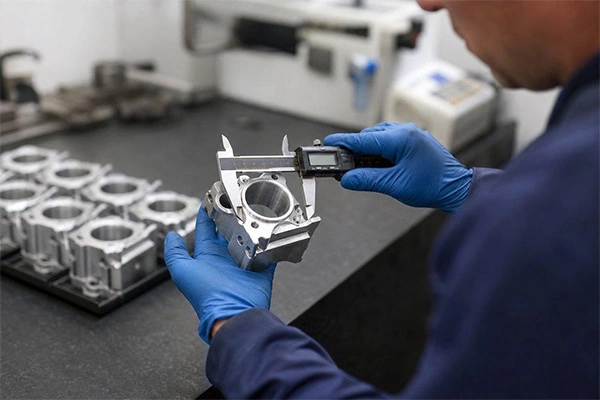
Before sending production parts to a supplier, inspect their quality systems – more info at this link: https://www.nature.com/subjects/quality-control. Quality systems are critical for ensuring consistency. You should not base your decision on a manufacturer based only on a one-time sample. The real question is what processes and controls are in place for the manufacturer to replicate your sample consistently.
Ask questions like
- How do you ensure that we are getting the material we are asking for? Do you keep track of batch numbers?
- Can you provide inspection reports for our dimensions?
- How do you handle a nonconforming product?
Based on part criticality, you might only require a visual inspection for a noncritical part. In other situations, you might require first article inspection reports, material certifications, or measurement reports. Your supplier should be able to accommodate a variety of inspection needs. If a part comes back nonconforming, what happens next? Ask about their process for reviewing evidence, recreating parts, or providing credits for rejected parts.
In certain projects, revision control and file security deserve as much attention as machining and inspection.
Understand the supplier’s procedures for storing CAD data and limiting access, particularly if the project has proprietary features or will go through frequent revisions. Be sure the supplier has controls in place to identify the current approved revision and procedures to keep obsolete versions of drawings from ever making it into production in the shop.
It’s also wise to check how a supplier adheres to a confidentiality agreement and how long it retains files after your project is over. If questions arise in the future, you and the supplier will be glad you have documentation proving exactly what was approved and built.
Production Files
When it comes down to money, consider the overall cost to produce your parts. This includes not just the price per part but also setup fees, material waste, inspection, finishing, revisions, and other possible fees. A good supplier should be transparent about what affects the final cost of your parts.
There may be ways to avoid unnecessary costs being added to the process. Sometimes reducing quantities per order or batch, adjusting surface finish requirements, or switching materials could reduce cost. A quote with a cost breakdown can be useful for you to make better decisions and understand which requirements are driving up cost and where you can make cost-effective trade-offs.
It is usually a good idea to send a small production run to a new supplier for validation. This can be used to test part quality, fit and function, finish needs, quality documentation, and delivery/packaging requirements.
Finally, if there is more than one supplier interested in your project, make sure that your design files and requirements are complete so that an accurate and apples-to-apples comparison can be made. Send suppliers:
- Up-to-date drawings
- Material requirements
- Target part quantity
- Dimensions with tolerance callouts
- Surface finish requirements
- Inspection documentation requirements
- Packaging requirements
- Hard deadlines, if any
FAQs
Ans: Ask questions about their experience and capabilities, then costs and terms, and lastly about the production, logistics, and legal aspects.
Ans: It is a production model where parts are manufactured only when ordered, eliminating the need to store large physical inventories
Ans: Production typically takes between 1 and 8 days depending on the part’s complexity and finish, followed by integrated logistics and shipping.