Why DeepSeek Harness Could Matter More Than the Next AI Model
Jump To Key Section
The development of AI is usually defined by the emergence of the new generation of models with such qualities as improved logic, faster coding, reduced costs, or expanded context windows. However, having a better model does not necessarily mean that it is able to accomplish tasks without any problems. It still requires proper equipment and a suitable environment.
In this way, the DeepSeek Harness appears to be an interesting project because, instead of improving the performance of the AI itself, it tries to create a system that is able to make the model perform different actions.
Such actions include checking the files, planning actions, executing commands, and using various instruments.
A Powerful Model Is Only One Part of an Agent
A language model works by receiving context and generating a response. In a normal chat, that response is usually the end of the process. If the model suggests changing a file, checking a database, or running a test, someone still needs to carry out those steps.
An agent works differently. It can take an action, observe the result, and decide what to do next. To make this possible, the model needs access to a controlled environment.
That is the role of a harness.
The harness dictates which files the model can access, which tools can be called by it, how task state is stored, and when confirmation from a human is required. It also feeds tool responses to the model.
This means two agents using the same model may perform very differently. One may have poor context, limited tools, and no reliable way to check its work. The other may have a clear plan, useful integrations, and automatic validation. The model is the same, but the outcome is not.
DeepSeek Harness Changes the Basic AI Workflow
Most AI conversations follow a simple pattern:
Prompt → Answer
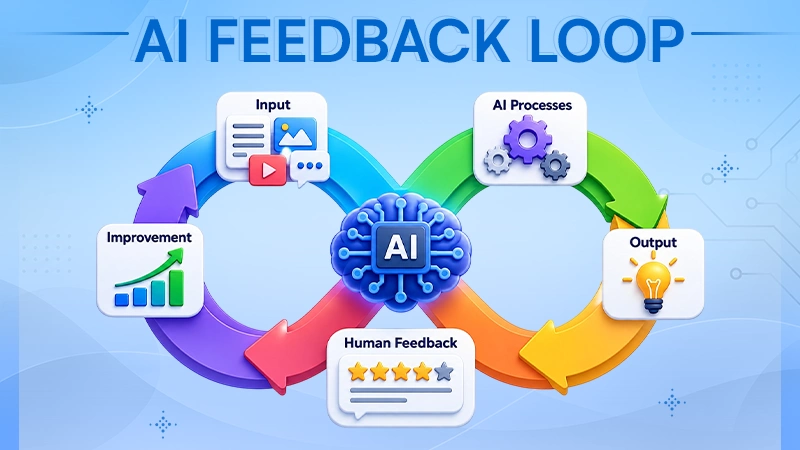
DeepSeek Harness turns that pattern into a working loop:
Goal → Plan → Action → Result → Review → Next action
This may look like a small change, but it completely alters what the model can accomplish. Instead of explaining how a task should be done, the model can take part in doing it.
Think about asking an AI assistant to identify the cause of a broken feature. A normal chat depends on the code and error messages you manually provide. DeepSeek Harness can work inside a selected project, search related files, inspect dependencies, propose a plan, make modifications, and run a check.
The same approach can support many other tasks when the right tools are available. An agent could organize information, prepare content, interact with online services, or carry out repeatable business processes.
Running such agents still requires infrastructure, permissions, and ongoing maintenance. A managed platform such as MyClaw can reduce that setup work by providing a hosted environment for OpenClaw-based automation.
The Real Advantage Is Continuity
One of the biggest limitations of generic AI chat is the gap between advice and action. Even when an answer is correct, the process often stops at the moment when real work should begin.
A harness solves this problem.
It keeps the task, workspace, tools, and recent results together. When one action finishes, the agent receives the result and can use it in the next decision. If a command does not work out, the model can examine the error. If a file change creates a new problem, it can revise the plan.
This continuity is extremely useful for tasks that cannot be completed in one step. Software work is an obvious example, but the concept is much broader. Research, document processing, reporting, system monitoring, and content operations all involve sequences of connected actions.
The execution of actions reliably requires maintaining sufficient context between them. DeepSeek’s thinking mode also supports multi-step tool calls, allowing the model to reason, call a tool, receive a result, and continue within the same task.
Open Systems Make the Harness More Valuable
DeepSeek Harness is open source and follows a plugin-first approach. This is necessary since no company would be able to foresee all the utilities an agent might require.
Plugins can connect the harness to new services or give it new capabilities. A development team might add testing and deployment tools. A content team might connect publishing and analytics systems. A support operation might connect tickets, documentation, and customer records.
An open architecture also reduces dependence on a particular workflow. The harness can evolve as requirements change.
Another example is OpenClaw, where AI models are linked to tools, channels of communication, and automation processes. Anyone exploring this approach can begin with an OpenClaw install and then decide which model and integrations best match the task.
This flexibility suggests that the future may not belong to one model or one interface. Instead, different models may operate inside adaptable agent environments.
Better Tools Do Not Remove the Need for Control
Giving an AI agent more capabilities creates more responsibility. An agent that can edit files or run commands can save time, but it can also make incorrect changes much faster than a chatbot.
A useful harness, therefore, needs both tools and limits.
DeepSeek Harness includes permission policies that can need approval before certain operations. This ensures that simple and harmless operations can be done swiftly without having risky operations controlled by humans.
Good instructions also remain essential. A vague request such as “improve this project” gives the agent too much room to decide what improvement means. A focused request should describe the problem, expected outcome, allowed scope, and required checks.
Other basic safeguards include using version control, reviewing proposed changes, limiting workspace access, protecting credentials, and testing new workflows away from production data.
The idea here is not to replace human discretion; rather, it is to leave repetitive execution to the agent and keep the decision-making process transparent.
The Harness May Become a Competitive Advantage
Model performance is becoming easier to compare and, in many cases, easier to access through APIs. The real challenge lies in transforming intelligence into reliable output.
A well-designed harness can improve performance without changing the underlying model. Better context selection may reduce confusion. Better tools may eliminate manual steps. Stronger planning can help with longer tasks. Validation could spot mistakes before task completion.
This creates a new area of competition. AI products will not be judged only by the quality of a single response. They will also be judged by how well they manage tasks, recover from errors, use tools, protect data, and fit into existing workflows.
DeepSeek Harness proves that DeepSeek understands this shift. Its plugin-based design treats the model as one component inside a larger operating system for agents.
What to Expect Next
DeepSeek Harness is still in developer preview, so rapid changes and compatibility issues should be expected. It is better suited to experimentation and controlled projects than to unattended work involving important systems.
Even so, its direction is significant. Future improvements may make agents easier to customize, safer to operate, and more effective across long tasks. A larger plugin ecosystem could also connect the harness to more specialized workflows.
The most important development may not be one new feature. It may be the growing understanding that model intelligence alone is not enough.
Conclusion
DeepSeek Harness matters because it shifts attention from what an AI model can say to what an AI system can complete.
Model gives the reasoning ability; Harness gives the capability of providing tools, memory, permissions, planning, and feedback. Together they make a space for the AI system to proceed with a task rather than end with an answer.
FAQs