How Do Security Cameras Fail To Prevent Assaults?
Jump To Key Section
- Camera Coverage Leaves Blind Spots
- Recording Alone Does Not Prevent Violence
- Georgia Law Tests Foreseeability And Security Measures
- What Footage Can Prove After An Assault
- The Property Layout Can Change The Analysis
- Evidence Can Disappear Before A Claim Takes Shape
- The Strongest Analysis Connects Risk To Action
- FAQs
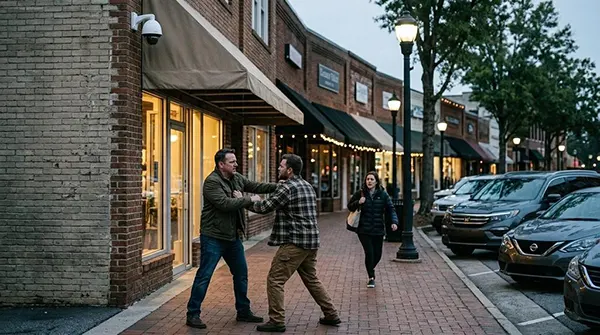
A camera can record an assault but not stop a fight from happening. Duluth operates a municipal camera-monitoring program, with city records tracking cameras and camera-monitoring personnel in prior years. Those findings prove huge numbers, suggesting large surveillance capacity, but not guaranteed prevention.
Federal research reviewed 76 CCTV studies and found no statistically significant reduction in violent offenses across 29 studies. The security claim analysis prioritizes whether the foreseeability and requirements are met and whether negligent care by the owner causes the injury or not.
This article highlights what footage can prove after an assault and how evidence can disappear before a claim takes shape.
Camera Coverage Leaves Blind Spots
Camera placement oversees what footage can show. A camera may watch over a parking entrance while missing a stairwell, rear exit, hallway, or narrow walkway. Private businesses and apartment complexes may operate surveillance systems separately from the City of Duluth, so municipal camera coverage does not by itself establish what cameras covered a private interior. The technology also develops a timing problem.
Recording Alone Does Not Prevent Violence
A working camera does not always ensure a timely response. A confrontation can start outside the camera’s field of view, move through a poorly lit area, or finish before a monitor recognizes the event. Lighting glare, blocked views, low resolution, and overwritten files can also limit the recording.
“A camera placed on a wall provides passive recording, but it cannot actively intervene in a violent confrontation. Property owners who depend on unmonitored surveillance without enough physical security or lighting fail to address immediate safety hazards,” noted Peter Jaraysi, a Duluth negligent security lawyer and founder of Slam Dunk Attorney, a Lead Counsel Verified firm, BBB Accredited Business with an A+ Rating, and 2025 Best of Gwinnett Winner.
Duluth’s municipal system showcases the distinction. The FY2018 city budget indicated that the Police Dispatch Unit was responsible for monitoring the City’s camera surveillance system, which operated 24 hours a day, and a March 2022 city publication reported 162 cameras. Those figures do not define how a private property owner positioned cameras, retained footage, or responded to warnings.
Georgia Law Tests Foreseeability And Security Measures
O.C.G.A. § 51-3-51 governs negligent-security claims involving invitees under Georgia’s 2025 statutory framework. The statute requires proof that third-party wrongful conduct was reasonably foreseeable and that a physical condition created a much larger risk, among other elements. The statute locates substantially similar prior wrongful conduct on the premises, adjoining property, or otherwise within 500 yards as a single basis for the foreseeability analysis when the statutory knowledge requirements are met.
Georgia’s 2025 tort legislation changed the framework. The new Article 5 does not treat every assault on property with cameras as negligent security. Section 51-3-55 also states that owners do not have to provide extraordinary care or assume government law-enforcement responsibilities. A camera defect therefore matters just within the broader statutory analysis.
What Footage Can Prove After An Assault
Video can establish sequence, location, movement, lighting, access, and employee response. The complete recording holds more importance than an isolated export. A clip that begins after the first blow may identify an assailant while leaving the preceding events unresolved.
A system’s retention configurations may cause older footage to be overwritten or deleted unless the relevant recording is preserved. A complete camera map may help identify nearby cameras that may have captured the approach, exit, or surrounding area.
Georgia’s 2024 crime report recorded 24,849 reported aggravated-assault incidents statewide and 7,888 aggravated-assault arrests. GBI states that UCR data arrives from law-enforcement reports and excludes incidents that weren’t even reported. Statewide statistics can provide context, but they cannot establish what a Duluth property owner knew about a specific location.
The Property Layout Can Change The Analysis
Physical layout can impact foreseeability and the practical value of surveillance. A property may differentiate pedestrian access from parking, depending on its layout. Downtown businesses may use public sidewalks while maintaining separately controlled interior spaces. Parking areas near major road access points may connect to multiple pedestrian or vehicle exit routes, depending on the property’s design. Those physical details can impact whether a camera captured identification and whether a known access point remained unmonitored.
Medical records can add a separate timeline. Northside Hospital Duluth may document injuries, treatment dates, and clinical observations that can be compared with recorded events. The comparison matters when footage captures only part of the incident.
Recovering damages after being injured on an unsafe property depends on securing security camera footage, incident logs, and local police call records before evidence disappears. If you want to explore your legal options in Duluth, Georgia, Slam Dunk Attorney provides cost-free initial consultations. Contact their team at (678) 329-9750 or visit 2250 Satellite Blvd, Ste. 120, roughly a 9-minute drive from Southeastern Railway Museum, 3595 Buford Hwy.
Evidence Can Disappear Before A Claim Takes Shape
Video retention develops a practical deadline. A recording system may overwrite older footage according to ordinary settings, so preservation should locate the date, approximate time, precise location, and surrounding cameras. A short clip may remove the minutes that show prior warnings or the property’s response.
Other records can matter too. Maintenance logs can display whether a camera malfunctioned. Incident reports can reveal prior complaints. Security contracts can determine monitoring duties. Dispatch records can document reported threats. Georgia’s 2025 statute directs factfinders to consider existing security measures, the need and practicality of additional measures, and whether additional measures would have prevented the injury.
The Strongest Analysis Connects Risk To Action
Surveillance failures alone do not lead to negligent security liability. To validate an invitee claim under O.C.G.A. § 51-3-51, plaintiffs must prove statutory foreseeability, demonstrate owner negligence, and establish proximate causation. Plaintiffs satisfy this burden when they identify specific warnings, highlight similar prior crimes, and find neglected physical conditions.
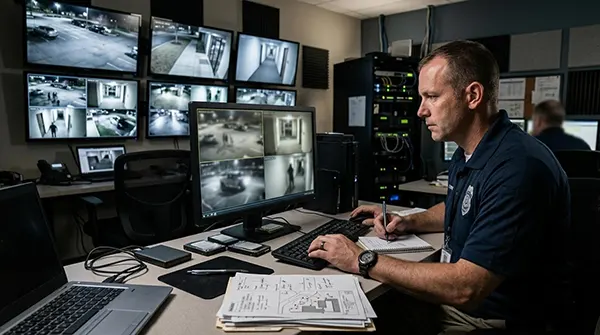
Meanwhile, O.C.G.A. § 51-3-52 dictates a distinct, lower duty of care for licensees. Federal research shows cameras oversee activities, preserve vital evidence, and identify offenders, yet fail to stop violent crime. For assaults near Duluth or Buford Highway, investigators request complete video chains, review incident reports, and scrutinize security contracts. These documents reveal security gaps, clarify owner responses, and establish liability.
FAQs