Related Posts
Artificial intelligence systems require vast cloud computing resources, powerful GPUs, and a constant internet connection. Nevertheless, an innovative engineering solution is emerging to change the paradigm of using intelligence. What is TinyML (Tiny Machine Learning)?
It is a unique field within machine learning that puts the predictive models right onto the chip with extremely low power consumption and minimal computational resources.
In summary, TinyML is a combination of machine learning and embedded systems. The conventional architecture of deep learning cannot be used in a chip that has little memory and computation power.
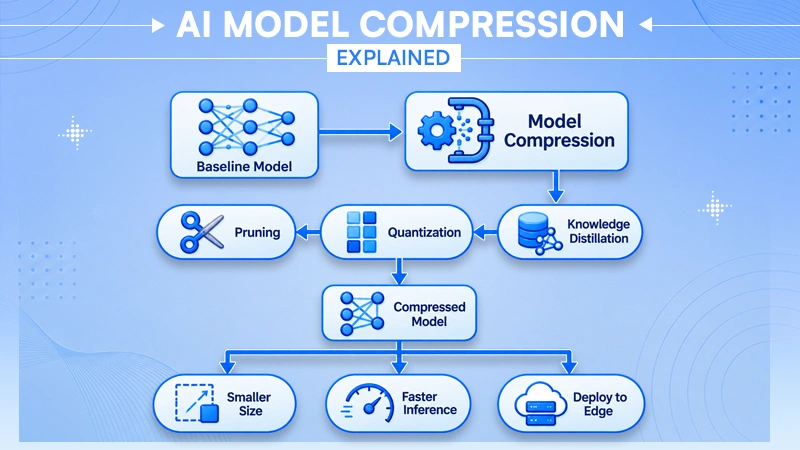
TinyML makes use of quantization to optimize the neural network and thus enable the microcontroller to offer immediate results at the network edge. The basic scheme includes several key steps:
Thus, the devices work independently from the cloud computing and use little amount of electricity, even working on coin cells for many months or years.
Using lightweight artificial intelligence technology provides definite benefits compared to cloud computing solutions:
Tiny machine learning is currently transforming everyday consumer devices and industry:
The development of artificial intelligence is heading towards ubiquitous and highly efficient computing. Discovering what is TinyML makes us imagine a future when our everyday devices will be smarter and autonomous.
With the use of tiny algorithms together with small microcontrollers, we can add intelligence to anything around us.