Selecting the Right Laser Tube Cutting Service for Your Project
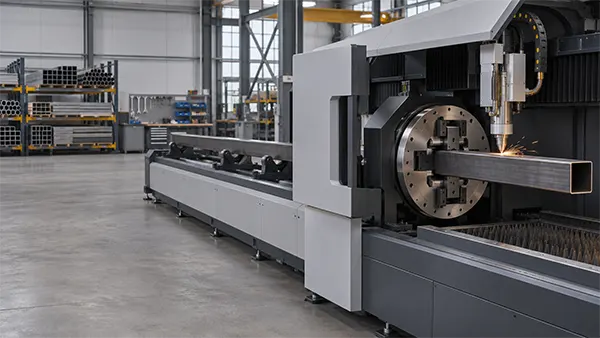
Lasers help in cutting a slot into a tube. But most people think that they will all be able to supply your required product. You can send over a drawing to a company and find out they can’t cut your required product due to tube size, a hole too close to a corner, etc. Also, you have to do some extra work to rework your product or pay a premium to get them to cut the parts and do additional work.
Many factors play a role in that come into play when choosing a laser tube cutting service. We have broken it down for you below, starting with your product.
Start With Your Product
What are you asking your supplier to cut? Note down all the specifications for your required product.
Only because a product is a steel tube does not mean that it can be treated like any other tube. There are many sizes, thicknesses, and types of tube that can appear similar but can cause problems for a laser cutter.
Know your product’s spec, material, profile, size, thickness, and length. Any finish needs should be made clear as well. Asking for a stainless tube will not offer enough detail to give you the best quote.
Another thing to know about your product is whether your supplier carries the tube.
They might have a laser that can cut your product but not have the tube in stock. Ask them if they can buy the tube, if they can cut your supplied tube, or if they have to commute the product for you. This will affect your price and lead times.
Also know what the max length your supplier can cut a product to; it may vary from their max length of tube.
Have these questions answered before you request a quote.
Know Your Tubes Cutting Capabilities
Not all tube lasers can cut your product similarly.
If your product only needs cutting to length with some holes, your options open up. If your product requires different profiles cut at the end, slots on various faces, or chamfered ends for weld prep, your options may be limited.
By using tube laser cutting, we can combine different operations into one. However, your supplier may not have the ability to cut your product with the features you need. Always ask your supplier if they can cut your product.
What happens at the corners of a square tube or near a weld seam? Your tube will never be a perfect square or perfect diameter; you may even have variations in your wall thickness and flaws that run down your tube.
You should ask your supplier how they deal with differences in your product. A good response would be, ” We check our material, we use supports, measure, etc… Saying our laser will give you perfect accuracy may not be important to you if they have no idea what they are cutting.
Discuss Accuracy
When requesting a quote, you should ask your supplier if they can meet your tolerance needs, not if their laser is accurate.
There are many different types of accuracy; maybe you want a hole for a bolt, you may not care how accurate that hole is; however, you may care about the location of that hole. Spot your drawing with the dimensions that you care about.
Using ASME Y14.5 can help you dimension and add tolerances to your drawings. You do not have to go in depth, but it is useful to let your supplier know what you need to be held together and how close they need to be held.
You should also ask how your supplier checks their product: do they check the first piece, randomly check, or inspect every feature that is needed? What will happen if the piece is not within your specified tolerance?
Laser accuracy is only part of what will make a product good. According to Dun & Bradstreet, 31% of survey respondents stated that they had issues with quality control due to the complexity of their supply chain. Make sure your supplier knows how to check your product.
Also, your product will most likely need some post-processing, laser cleaning, deburring, etc. Make sure you are aware of what your product will look like when it comes to you, not just what the cut will look like.
Cost Per Part May Not Tell The Whole Story
A low price may not be as cheap as you think.
There are many charges that can go into producing your product: material, programming, deburring, shipping, packing, etc.
When you get your quotes, you should ask your suppliers the following:
- Material: Do they provide material? If so, what type of material?
- Prep Work: Are they going to set the part, set up, modify your drawing, etc.?
- Post Processing: What will your product look like when it is delivered? Deburred, cleaned, cut, etc.?
- Shipping: Do they offer shipping? If so, what are their packing methods, shipping, rush fees, etc.?
Once you have all of this information, ask yourself, what else will I want to do once my product arrives?
If you have to spend time filing slots on your product, you might want to pay more for them to be done. Having your tube delivered without any ID on them may take away from the time you saved by paying a lower price per part.
If you have multiple orders, make sure your supplier can hold the files and know what revisions are current; ordering old revisions can be expensive as well.
Lead Times & Additional Support
A good quote is not always equal to the best lead time.
You should know how soon your product can be shipped. Is the lead time based on your uploaded drawing, approval, or when they have the material? Does their lead time cover any post-processing? Once you know this, you can decide if the lead time is good for you or not.
What if you have to change your design? Do they offer support with your drawings? Someone who can review your product before cutting, and what do they do if a piece is not up to your tolerance? These are all good questions to ask, mostly if you have a prototype that you will be mass producing in the future.
You may be able to get a quick quote online, but how do you know if they have ordered material or scheduled your product on a machine? Know when your product will be produced. If your supplier wants to order your tube, they should let you know if it will affect your lead time.
Are your tubes being sent out to be welded, powder coated, or other operations? Understand who will be doing what, and when your supplier should update you with statuses on your order.
How to Request A Better Quote
By giving your suppliers the right information, you can expect better quotes back from them.
Here is some information that will help you get better quotes:
- Send your 3D Model, along with a drawing that shows the main dimensions.
- Specify your tube, material, wall thickness, profile, size, and length.
- How many do you need, and do you anticipate placing more orders?
- Specify any holes, products that will mate with your product, weld prep, etc.
- When do you need the product, and where will your product be sent?
Once you know what file types your supplier accepts, you can send them your 3D model. You might need to break your model into parts. If you have your product designed as one model, it may be better to send individual parts.
Always request a sample of your product. If you have a tight-fitting product, you may need to modify your design. By requesting a sample, you can see what needs to be changed and place a full order.
Trust me, this will save you headaches.
Summary
Finding the right supplier to cut your tubes can feel overwhelming. By knowing your product, your supplier’s cutting capabilities, what accuracy you want, and what your product will look like when it is delivered, you can start to find the supplier that will meet your demands.
FAQs
Ans: The right laser depends on what material you want to cut, your budget, and your workspace setup.
Ans: The five types of lasers are solid-state lasers, gas lasers, liquid lasers, semiconductor lasers, and fibre lasers.
Ans: Theodore Maiman is considered the father of the laser.