Automation Solutions for Container Terminal Operations: What Ports Need to Know
Jump To Key Section
- What Are Automation Solutions for Container Terminals?
- Why Are Container Terminals Moving Toward Automation?
- What Areas Can Be Automated?
- Autonomous Transport Is Becoming a Key Part of Terminal Automation
- Automated RMG and RTG Systems
- Why Integration Matters More Than Individual Equipment
- Key Technologies Behind Modern Terminal Automation
- How Should a Terminal Evaluate an Automation Project?
- Comparing Different Levels of Terminal Automation
- The Business Case for Terminal Automation
- Common Challenges in Terminal Automation
- A Practical Roadmap for Automation
- FAQ
- Conclusion
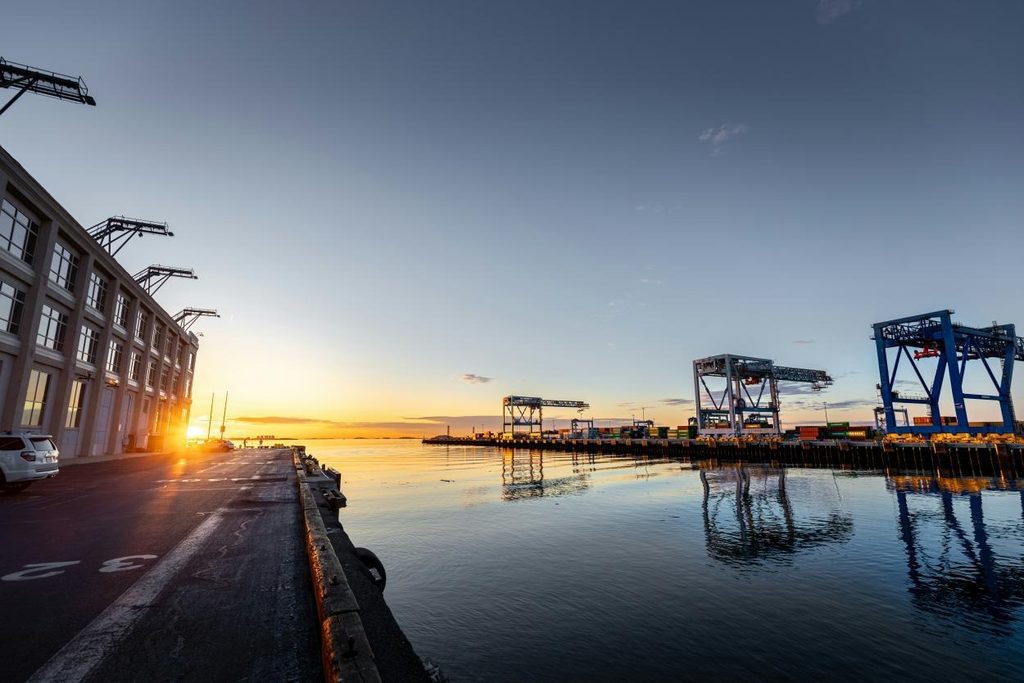
The automation solutions for container terminal operations have gotten very important as a way to replace manual labor and create a manageable flow of containers.
They remove the need to automate just one piece of equipment for one task and connect transportation, stacking, handling, and operational data into a more coordinated workflow.
Read the blog to understand more about Automation Solutions for Container Terminal Operations.
What Are Automation Solutions for Container Terminals?
Automation solutions for container terminals are technologies and operational systems made to automate or help the movement, handling, storage, and coordination of containers within a port.
Depending on the terminal’s size and operating model, automation can include:
- Autonomous or automated container transport
- Automated stacking cranes
- Remote-controlled cranes
- Automated RMG and RTG systems
- Terminal operating and control systems
- Fleet management
- Yard management
- Real-time equipment monitoring
- Automated scheduling and dispatching
- Data-driven operational coordination
The level of automation does not have to be the same across an entire terminal. Some ports may automate container transportation first, and others may focus on yard cranes, gates, or tool coordination.
The important point is that automation should solve an operational problem, not just add new technology.
Why Are Container Terminals Moving Toward Automation?
Container terminals work under many constraints at the same time. Cargo must be moved between vessels, yards, gates, and other transportation modes, and storage space stays limited.
Manual operations can also make productivity rely on workforce availability, traffic conditions, tool utilization, and communication between different teams.
Automation can solve these challenges by creating more predictable operating processes.
1. More Consistent Container Movement
Automated transport equipment can follow predefined routes and operating rules. This can make container movement more consistent, particularly in repetitive yard transportation tasks.
Instead of relying entirely on manual decisions for every movement, an automated system can coordinate tasks according to predefined priorities and operational data.
2. Better Equipment Utilization
Container terminal equipment is expensive, and low utilization can have a direct impact on operating efficiency.
Automation systems can see tool status and coordinate assignments based on current workloads. This can help lower unnecessary empty movements and improve the use of available vehicles and cranes.
3. Reduced Dependence on Manual Operations
Automation does not really remove the need for people. Instead, it can move workers away from repetitive or difficult operating environments and toward supervision, maintenance, planning, and exception handling.
This can be very useful for terminals operating around the clock.
4. Improved Operational Visibility
Modern automation depends mainly on operational data.
When tool, container movements, and yard activities are joined by digital systems, terminal managers can get a view of what is happening in the operation.
This makes it easier to find bottlenecks and change operations when conditions change.
What Areas Can Be Automated?
A container terminal is made up of many connected processes. Automating one area can improve performance, but the best benefits come when multiple processes work with each other.
| Terminal Area | Typical Automation | Potential Operational Benefit |
| Container transport | Autonomous terminal tractors and automated vehicles | More consistent transportation |
| Yard stacking | Automated RMG/RTG cranes | More predictable stacking operations |
| Quay operations | Automated or remotely operated cranes | Improved control and operator safety |
| Dispatching | Fleet management and task allocation | Better vehicle utilization |
| Yard management | Digital yard planning | More efficient container positioning |
| Equipment monitoring | Real-time equipment data | Faster identification of issues |
| Gate operations | Automated identification and processing | Reduced manual processing |
| Operational control | Centralized control systems | Better coordination between processes |
The exact mix depends on terminal size, infrastructure, cargo volume, existing tools, and the level of automation already in place.
Autonomous Transport Is Becoming a Key Part of Terminal Automation
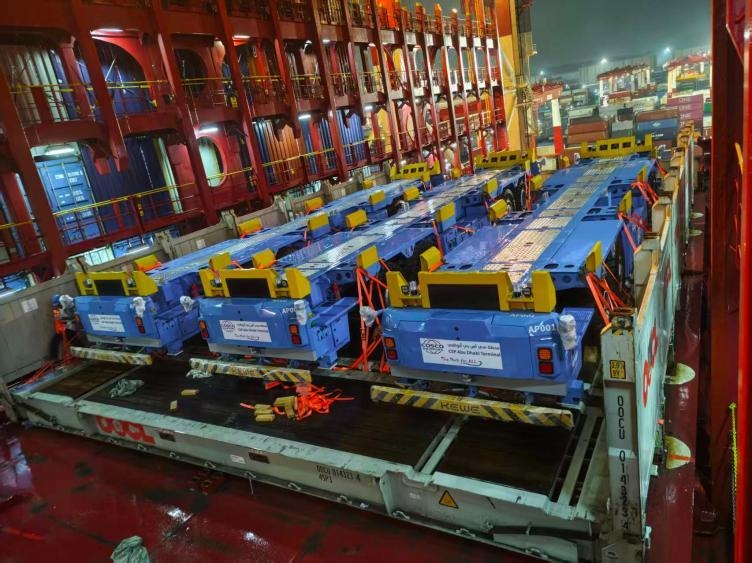
Transportation between the quay and yard is one of the most repetitive activities in a container terminal.
Terminal tractors or other transport vehicles are operated by hand. With autonomous technology, vehicles can be used for transportation tasks and navigate defined operating areas with limited direct intervention.
An autonomous transport system normally needs more than an automated vehicle.
It may also require:
- Route planning
- Vehicle dispatching
- Traffic management
- Obstacle detection
- Positioning technology
- Communication systems
- Fleet monitoring
- Safety controls
- Integration with terminal operations
This is an important difference when checking automation solutions for container terminal operations, often when planning automated port container terminals. A vehicle that can drive autonomously is only one part of the whole solution. The terminal still needs to decide which vehicle should do each task, where it should go, and how its movement affects cranes, containers, trucks, and other equipment. In an automated port environment, these things need to work together as part of a coordinated operational system and not function as isolated technologies.
Automated RMG and RTG Systems
Rail-mounted gantry cranes (RMGs) and rubber-tired gantry cranes (RTGs) are central to many container yard operations.
Automation can let these cranes perform repetitive stacking and handling tasks with better consistency. Automated systems can also coordinate crane movements with container positioning and yard planning.
For terminals handling large volumes, this can be very useful because small inefficiencies can accumulate across thousands of container movements.
Automation can help with functions such as:
- Container positioning
- Crane movement
- Stacking and retrieval
- Yard task assignment
- Collision avoidance
- Remote monitoring
- Equipment status management
But crane automation needs to be considered together with yard transportation. If cranes are automated but vehicles stay poorly coordinated, bottlenecks can just move from one part of the terminal to another.
Why Integration Matters More Than Individual Equipment
One of the biggest problems in terminal automation is treating each piece of equipment as an independent project.
For example, an autonomous vehicle may do its transportation task nicely, but the entire process can still slow down if the destination crane is unavailable.
The same is also true in reverse. An automated crane can work great while waiting for vehicles to arrive.
This means automation needs to think through the entire movement:
Vessel → Quay Crane → Transport Vehicle → Yard Crane → Storage Area
Each stage affects the next.
A coordinated automation system can use data from different parts of the terminal to allocate tasks and change operations.
Key Technologies Behind Modern Terminal Automation
Many technologies can work together to support automated terminal operations.
Autonomous Vehicles
Autonomous vehicles can handle repetitive transportation tasks between other areas of the terminal. Their value depends not only on autonomous driving capability but also on fleet coordination and terminal integration.
Positioning and Navigation
Right positioning is important for autonomous movement and tool coordination.
Depending on the operating environment, terminals may use a mix of positioning, mapping, sensors, and other navigation technologies.
Computer Vision and Sensors
Cameras and other sensors can help automated equipment find objects, assess operating conditions, and aid safety functions.
Fleet Management
Fleet management systems decide how vehicles are assigned and coordinated. Rather than treating each vehicle individually, the system handles the fleet as an operational resource.
Terminal Operating Systems
Terminal operating systems provide the operational information needed to coordinate container movements, yard activities, and equipment assignments.
Data and Analytics
Operational data can show patterns in tool utilization, waiting times, traffic, and container movement. This data can then help in operational changes and longer-term planning.
How Should a Terminal Evaluate an Automation Project?
Automation is a big operational investment, so terminals should think about the entire workflow, not just focus only on equipment specifications.
Some questions are worth asking before doing anything.
1. What Is the Actual Bottleneck?
A terminal should first find where delays happen.
Is the problem transportation capacity? Yard congestion? Crane availability? Gate processing? Equipment utilization?
Automating a process that is not currently limiting throughput may produce less value than addressing the actual bottleneck.
2. Can Existing Equipment Be Integrated?
Changing every piece of equipment may not be good.
A practical automation project may involve integrating new automated equipment with existing cranes, vehicles, infrastructure, and operational systems.
Compatibility should thus be considered at the start of the project.
3. How Will Exceptions Be Handled?
Real-world terminal operations rarely follow a perfect sequence.
Equipment can malfunction. Containers can be misplaced. Routes can get blocked. Weather conditions can affect operations.
An automation system needs clear procedures for exceptions and human intervention.
4. Can the System Scale?
Terminal requirements can change as cargo volume grows.
A solution should therefore be thought not only according to today’s workload but also according to how easily the system can take on extra vehicles, equipment, storage areas, or operational zones.
5. What Happens to the Workforce?
Automation changes jobs and duties, not just removing people from the operation.
Operators may move into remote supervision, maintenance, system monitoring, planning, and exception handling.
Workforce training should thus be part of the automation plan from the start.
Comparing Different Levels of Terminal Automation
Not every terminal needs a fully automated operating model.
| Automation Level | Typical Characteristics | Suitable Consideration |
| Manual | Human-operated vehicles and cranes | Lower technology requirements but higher dependence on manual operations |
| Assisted | Operators supported by digital tools and automation functions | Useful for gradual modernization |
| Partial automation | Selected equipment or processes are automated | Can target specific operational bottlenecks |
| Integrated automation | Vehicles, cranes, and operational systems are coordinated | Greater emphasis on system integration |
| Highly automated | Multiple terminal processes operate with limited direct intervention | Requires mature infrastructure, control systems, and operational planning |
A phased method can let a terminal start with a defined operational issue and grow automation after the initial system has been checked.
The Business Case for Terminal Automation
The business case for automation should go beyond labor costs.
A terminal may also consider:
- Equipment utilization
- Throughput consistency
- Vehicle waiting time
- Container dwell time
- Energy consumption
- Safety requirements
- Maintenance requirements
- Operational visibility
- Scalability
- Long-term infrastructure planning
The real effect will vary between terminals. Cargo volume, layout, existing equipment, automation maturity, and local operating conditions all shape the results.
This is why a technology comparison alone is not enough. The business case should be based on the whole operating model.
Common Challenges in Terminal Automation
Automation can create new problems if implementation is not properly planned.
Integration Complexity
New automation systems must communicate with existing equipment and operational software. Poor integration can create data gaps in different parts of the terminal.
Infrastructure Requirements
Autonomous vehicles and automated cranes may need reliable communication networks, positioning infrastructure, charging facilities, operating zones, and safety systems.
Operational Change
Employees need to understand new workflows and duties. Without the right training and operational planning, even technically capable systems may not work properly.
Exception Management
Automation works best when operating conditions are predictable. Terminals must still prepare for unusual events, equipment failures, emergencies, and unknown container movements.
Cybersecurity
As more terminal equipment gets connected, cybersecurity becomes part of operational risk management. Connected vehicles, cranes, control systems, and data platforms need good protection.
A Practical Roadmap for Automation
A slow method can make large automation projects easier to handle.
Step 1: Map the current workflow
Document how containers, vehicles, cranes, and data move through the terminal.
Step 2: Identify bottlenecks
Use operational data to decide where delays and unnecessary movements happen.
Step 3: Select the automation target
Pick a process where automation can address a clearly defined operational issue.
Step 4: Test integration
Ensure that automated equipment can communicate with the systems and equipment already in use.
Step 5: Run a controlled deployment
Start within a defined operating area or workflow before going across the terminal.
Step 6: Measure operational results
Find useful indicators such as equipment utilization, waiting time, throughput, and exception rates.
Step 7: Expand gradually
Use the results from the initial deployment to decide which additional processes should be automated.
FAQ
1. What are automation solutions for container terminals?
Automation solutions for container terminals are technologies and systems used to automate or coordinate container transportation, handling, stacking, equipment operation, and terminal workflows. They can include autonomous vehicles, automated cranes, fleet management, yard management, and operational control systems.
2. What equipment can be automated in a container terminal?
Common examples include terminal tractors, autonomous transport vehicles, RMGs, RTGs, quay cranes, and other material-handling equipment. The specific equipment selected depends on the terminal’s layout, operational requirements, existing infrastructure, and automation strategy.
3. Does a container terminal need to become fully automated?
No. A terminal can automate selected processes without converting the entire operation to a fully automated model. Partial or phased automation can focus on specific bottlenecks and allow the terminal to expand its automation capabilities over time.
4. What is the biggest challenge when implementing terminal automation?
Integration is one of the major challenges. Automated vehicles, cranes, operational software, communication systems, and existing equipment need to work together. Terminals also need to address infrastructure, workforce training, safety, cybersecurity, and exception handling.
Conclusion
The future of container terminal automation is not just about adding autonomous vehicles or automated cranes. The bigger chance is in joining equipment, operational data, and decision-making into a coordinated workflow.
For terminals considering automation solutions for container terminal operations, the starting point should be a clear understanding of current bottlenecks. From there, automation can be introduced where it makes measurable operational value, whether that means autonomous transportation, automated yard handling, fleet coordination, or broader digital control.
The most practical automation strategy is rarely about replacing everything at once. It is about building a connected operating environment that can improve consistency today while providing a foundation for future expansion.
Website:www.en.westwell-lab.com
Westwell:https://en.westwell-lab.com/about
Email: hello@westwell-lab.com
YouTube:https://www.youtube.com/@Westwell_AI