Choosing the Best Structural Analysis Software for Your Projects
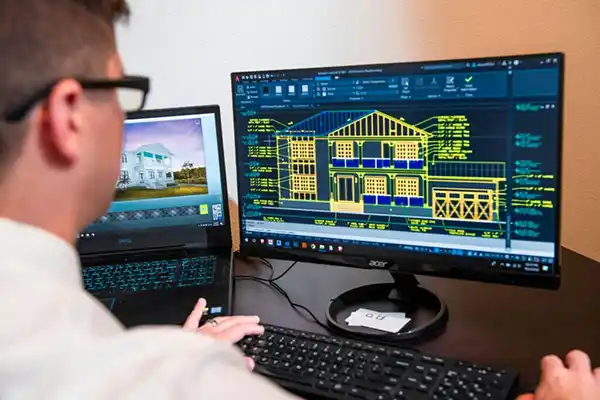
The global finite element analysis (FEA) market is valued at $7.6 billion in 2026. And it’s projected to reach $15.7 billion by 2033, growing at a CAGR of 10.9%. More tools, more features, more promises. Yet, for most engineering teams, choosing the right structural analysis software hasn’t become easier. It’s become more confusing.
And the cost of getting it wrong isn’t obvious at first. It shows up later. When your model outgrows the tool. When a client asks for a standard that your software doesn’t support. When reporting takes days instead of hours.
Selecting the right engineering analysis solution is one of those decisions that compounds over time. The right choice quietly improves every project. The wrong one builds friction into all of them.
This guide cuts through the noise and focuses on what actually matters.
KEY TAKEAWAYS
- The right structural analysis software improves productivity over time; the wrong one creates long-term inefficiencies.
- Standards coverage should be your top priority, not feature count.
- Seamless FEA integration reduces errors and saves significant time.
- Automation and reporting capabilities have the biggest impact on workflow efficiency.
Standards Coverage Comes First
Before you even look at features, ask a simple question: Will this software cover the standards your projects demand?
Engineering projects rarely stay within one standard’s boundaries. An FPSO module might need DNV rules for classification, NORSOK N-004 for overall steel structure design, including accidental limit states, and Eurocode 3 for topside structural steel members and connections. A crane designed for European markets needs EN 13001 for structural design checks, with FEM 1.001 still referenced by some clients and classification bodies for legacy or specific crane types. If your software only covers two of the three, you’re back to spreadsheets for the rest.
Look beyond the count. What actually matters is whether the standards you need (the specific edition, with correct partial factors and interaction formulas) are implemented and kept up to date. Eurocode is undergoing its second-generation revision. DNV updates rules annually. AISC published AISC 360-22 recently. Ask the vendor how often standard libraries get updated and whether your specific edition is supported before committing.
FEA Integration: Standalone or Extension?
Software doesn’t operate in isolation. How does the software connect to your FEA environment? The answer determines how much friction you deal with on every project.
There are broadly two models. Some tools work as extensions inside an existing FEA platform: Ansys, Femap, Simcenter 3D, or other CAE software. Others are standalone applications with their own solver.
Extensions keep everything in one environment. Build the model, run the solver, perform code checks, all without switching windows. Standalone tools suit teams that don’t want to license a full FEA suite separately. SDC Verifier offers both a standalone version with a built-in Nastran solver and extensions for Ansys, Femap, and Simcenter 3D.
Avoid software that forces exporting through intermediate file formats. Every export is a potential source of error: wrong coordinate system, missing load cases, truncated element data. Component names, material properties, things like that just vanish somewhere in the conversion chain. Anyone who’s debugged a stress discrepancy between solver output and a verification spreadsheet knows how much time that wastes.
Automation Level
If there’s one feature that directly impacts productivity, it’s automation.
Manually tagging structural elements for code verification is one of the most tedious tasks in engineering. Ask anyone who’s done it on a jacket model with a few thousand elements. On a typical offshore structure, identifying every beam member, stiffened panel, weld connection, and joint takes days before a single check runs.
Choosing structural analysis software with strong automation changes this entirely. Take a panel: modern tools identify shell element fields between stiffeners, extract dimensions (length, width, thickness, orientation), and feed them directly into plate buckling formulas. Weld connections get identified at element intersection nodes with stresses transformed into the weld coordinate system. Without this, an engineer clicks through hundreds of elements one at a time.
Then there’s batch processing. Running code checks against one load case is simple enough. Running them against 1000+ combinations, which is standard on offshore projects, is where automation earns its keep. Engineers who automate FEA tasks complete analyses 3-5 times faster than those relying on manual methods. That’s not a marginal improvement. That’s the difference between delivering on schedule and requesting a deadline extension.
And consistency matters just as much as speed.
Reporting Capabilities
Most teams underestimate this part until it’s too late.
Most engineering failures attributed to’software error’ are actually modeling errors, boundary condition mistakes, or misinterpretation of results.
The same thing happens with reporting. When verification results get manually transcribed into documents, errors creep in. And nobody catches them until a classification society reviewer sends the report back.
Automated report generation pulls results directly from the model into formatted documents (Word, PowerPoint, PDF). Model descriptions, utilization plots, governing load cases, and code clause references. When the model changes, the report regenerates. No manual rewriting, no stale data.
Consider the alternative. Allseas needed to document over 4,000 pages of code-check results across 22 FEM models. With automated reporting, that took two days. Without it, the same task would have consumed weeks, and the output would have been less consistent and more likely to contain transcription errors.
INTERESTING STAT
Studies show that design engineers spend 40% time on non-creative, repetitive tasks like searching and reorganizing raw data, post-processing results, and generating reports.
Scalability
Small models don’t reveal software limitations. Structural engineering projects grow. What starts as a preliminary design becomes a detailed model with hundreds of thousands of elements and potentially thousands of load combinations.
Best analysis solutions account for where your projects will be in two years. Does the solver handle large models without excessive run times? Can the post-processor display results for 500,000+ elements without choking? Does verification scale linearly with element count and load combinations?
Team scalability matters too. If five engineers on the same project all build their own verification spreadsheets, peer review turns into archaeology. Standardized software keeps the methodology consistent.
Five Mistakes Engineers Make When Choosing Structural Analysis Software
Even experienced teams fall into predictable traps.
- Choosing based on price alone: The cheapest license often means the most expensive projects, because your team compensates with manual work that software should handle.
- Ignoring post-processing: FEA solvers get all the attention during evaluation. But engineers spend a substantial portion of project time on post-processing and reporting, not running analyses. Evaluate the full workflow, not just the solver.
- Skipping real-world testing: Demo datasets are designed to work perfectly. Ask for a trial period and run your own model, preferably the ugliest, most complex one you have.
- Underestimating standards needs: Today, you need Eurocode and AISC. Next quarter, a maritime client requires DNV and ABS. Switching software mid-project is not realistic.
- Overlooking reporting: Nobody thinks about documentation until the deadline. Then it’s too late to discover your software can’t generate the 200-page compliance report the classification society expects.
Making the Decision
Choosing the right tool doesn’t need to feel overwhelming.
Start with standards coverage because it’s the hardest gap to work around. Then test FEA integration with your existing tools. Run a realistic model through the automation and reporting workflow. Check whether the platform scales to your largest project.
And talk to your team. The engineers who use the software daily know which bottlenecks cost the most time. Their input matters more than any feature matrix.
The FEA market keeps growing, projected to reach $14.72 billion by 2031. More options, more noise. Cut through it by focusing on the criteria that directly affect project outcomes. Everything else is marketing.
FAQs