How Semrush Helped Me Build a Content Strategy That Finally Worked

**This post is sponsored by Semrush. When you purchase through links in this article, we may earn an affiliate commission from Semrush.**
For the longest time, I wondered if consistency was the secret to growing a website, thinking that if I published enough articles, traffic would eventually follow. Every week I brainstormed topics that sounded interesting, published them, and moved on to the next.
Looking back, I noticed that I wasn’t building a content strategy at all. I was just creating content and hoping for the best. That is when I came across Semrush, allowing me to create a definite content strategy, backed by results, thereby transforming my whole workflow.
Here’s how I used it to transform my whole process and attain genuine results over time.
From Writing What I Wanted to Writing What People Needed
The first thing I stopped doing was depending on inspiration alone.
Before opening a blank document, I began researching what people were actually looking for. Using Semrush, I explored keyword opportunities, compared search intent, and searched topics that aligned with both my audience and my business goals.
That simple change immediately gave my ideas a clearer direction.
The next step was competitor analysis. Rather than copying successful articles, I studied why they performed well. Which questions were they answering? What information was still missing? Where could I create something more complete or more practical?
Semrush made those comparisons much simpler as I could view keyword opportunities and competitor insights within the same workflow instead of collecting information from several disconnected platforms.
I also started planning content in monthly batches instead of deciding what to write one article at a time. That gave each draft a purpose within a larger strategy instead of existing on its own.
Within a few months, something interesting happened.
Traffic wasn’t increasing because I was publishing more articles.
It was growing because I was publishing more relevant ones.
That became the biggest lesson from my personal case study. Better research consistently produced better indications before I even started writing.
The Next Challenge Was AI Search
Just as I became comfortable with my new workflow, another shift began evolving digital marketing.
People were no longer relying exclusively on traditional search engines. More users were asking questions through AI-powered experiences, and many businesses were learning that rankings alone no longer reflected their complete visibility online.
That forced me to rethink my process once again.
I had already built a dependable workflow around traditional SEO, but I also wanted to understand how my content was appearing across AI-generated interfaces.
This was where Semrush One became an important addition to my workflow.
One detail that deserves clarification is that Semrush offers practical solutions for different needs. The SEO Toolkit prioritizes traditional SEO, while the AI Visibility Toolkit specifically measures how brands appear across AI platforms.
Semrush One is the complete solution that combines both traditional SEO and AI Visibility into a single connected workflow.
That distinction held importance because I didn’t want another standalone platform to monitor separately.
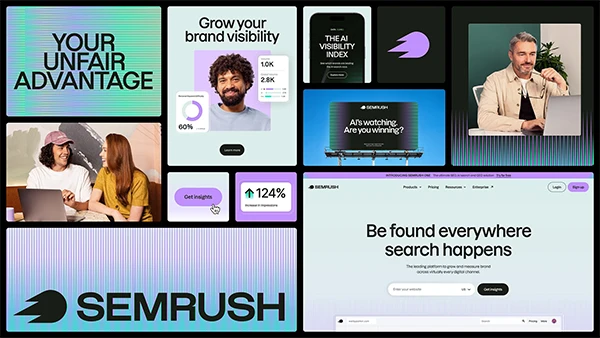
With Semrush One, I could continue monitoring keyword rankings while also gaining insight into how my content was represented across emerging AI search experiences. Rather than reacting to changes after they affected my traffic, I had a clearer picture of how search itself was evolving.
The workflow remained surprisingly familiar.
- Research keywords.
- Study competitors.
- Plan content.
- Publish with purpose.
- Measure both traditional search performance and AI Visibility.
What changed wasn’t the quantity of work I was doing. It was the confidence behind every decision.
That doesn’t mean Semrush is the only platform I utilize today. Every creator benefits from combining different tools according to their projects. Some platforms excel at writing, others at analytics, and others at design.
The major difference is that Semrush became the platform where every important decision starts because it connects research, planning, and measurement into one place. When I need to scale that workflow to include AI Visibility alongside traditional SEO, Semrush One allows me to do just that without rebuilding my entire process.
Looking back, my biggest mistake wasn’t publishing too little content.
It was publishing without enough insight into what people were actually looking for.
Final Thoughts
Treating my website like a case study helped me discover that successful content rarely begins with inspiration alone. It starts with understanding what your audience is actually looking for, validating those opportunities with data, and creating something genuinely more useful than what’s already available.
If your own content feels like it’s missing direction despite all the effort you’re putting into it, consider transforming the process before changing the goal.
Explore Semrush, see how Semrush One combines traditional SEO and AI Visibility, and design a workflow based on evidence instead of assumptions. It’s a change that can make every future article more purposeful than the last.
FAQs
Ans: The ideal workflow plan looks like:
- Research keywords
- Study competitors
- Plan content
- Publish with purpose
Ans: Semrush One provides a complete solution that combines both traditional SEO and AI Visibility into a single connected workflow.
Ans: The SEO Toolkit prioritizes traditional SEO, while the AI Visibility Toolkit specifically measures how brands appear across AI platforms.