How to Budget an Office Fit-Out Without Stalling Growth
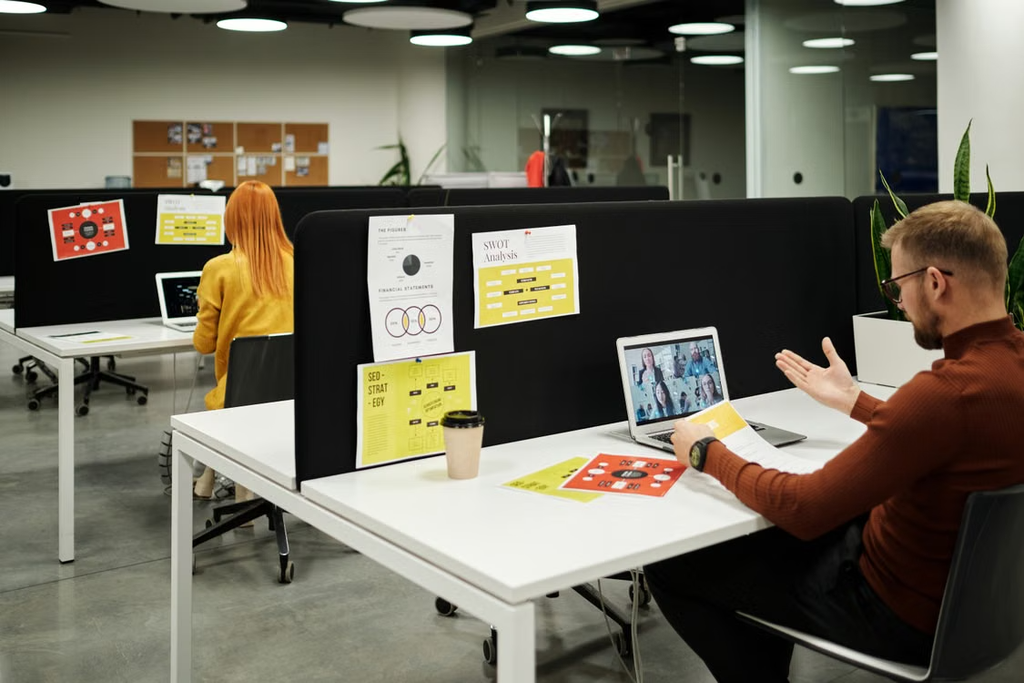
Fitting out an office could be a big thing and incredibly difficult without a correct brief. Setting: how do you set the right budget without a brief? You can’t, no matter how good the results could be; if the brief is wrong, there is a zero percent chance of success.
Here’s the good news:
When it comes to improving your office, the most important part is understanding what isn’t working and why
Before making any drastic changes, take a step back and evaluate what needs to be improved from both an aesthetic and functional standpoint.
If youtube able to identify the real issue an dsolve, then that will make a great impact on your office. If not, then you know what happens.
Let’s see how to do all that in this blog:
Why Fit-Out Budgets Blow Out
The cause of most fit-out budgets failing: They start with a picture, not a number.
You see office inspiration online, add to the wishlist, and THEN do the costing. By the time you sign the lease, the scope can’t move, and the only things you can cut are those that your employees use every day.
The second cause is more difficult to spot.
Members spend too much money on items that guests see once and too little money on what the team does eight hours a day. Workstations are the most obvious example. A height-adjustable desk is one of the few fit-out items that persists to earn its keep long after the colour has dried because every individual on the floor uses it every day. Nice quality standing desks cost more money upfront compared to a standard fixed bench; yet, a height-adjustable desk will stay through two or three office moves, and the team will see it the first morning. Nobody recalls that fancy marble reception counter after week one.
That’s the perspective shift. Spend where the hours are.
Benchmark The Cost Per Square Metre First
Before pricing a single chair, get a measurement.
The cost of fit-outs in Australia has continued to grow due to continuing labour deficits and material costs. According to JLL’s latest 2026 price guide, a medium-quality office fit-out will cost $3,011/m2, growing by 3.5% to 6% year-on-year depending on location.
That’s your ‘centre of the market.’ Nationally, you can expect to pay about $800 per square metre for a plain refresh. Towards the top end, prices surpass $3,500/m².
The scope matters far more than the average.
Run the numbers like this:
- Pick the usable floor space in square metres.
- Multiply it by a speed that matches the finish level.
- Add furniture, technology and relocation fees on top.
- Compare that total against twelve months of gain.
If what you’re paying on fit-out could not be built back by your business within a year or two, you’re over-scoped. Plain and simple.
And do this BEFORE signing the lease. The Landlord contribution, the state of the base building, and the make-good clause all affect the final number. Pricing the fit-out after the lease is signed clears all leverage.
Split The Spend Into Fixed And Flexible
This is the phase that saves the most money.
Each fit-out has two types of cost. Handling them both the same way is why budgets become stagnant.
Fixed Costs
These are joined to the building, and they’re very difficult to alter after:
- Partitions, walls and roofs
- Electrical, data cabling and lighting
- Air conditioning and fire services
- Flooring and compliance job
- Make-good on the last residence
Set costs need only be paid one time…done right. Cheap out here and it hits you later.
Flexible Costs
These move with the business:
- Desks, chairs and storage
- Monitors, screens and conference room tech
- Soft furnishings and plants
- Escape and teamwork areas.
Flexible spend can be staged over six or twelve months. Fixed spend can’t.
Thus, an expanding business should fund heavily in services and infrastructure, then deploy the flexible layer as the team physically scales. Buying forty computers for a team of eighteen is idle capital.
The Furniture Line Nobody Plans Properly
Furniture usually accounts for 15% to 25% of a mid-range fit-out.
It’s also the budget item most likely to be saved for last – when the remaining funds are hastily thrown at whatever can be delivered quickly.
Flip it around.
Negotiate price early, ideally alongside the build programme. Unlike any other aspect of the fit-out process, furniture has a direct impact on how people work once they settle into their new home. Plus there’s a health argument to be made. But that rapidly becomes a business argument.
One systematic review of sit-stand workstation programs reported total daily sedentary time reduced by approximately 69 minutes after three months of intervention (assessed at 12 months).
Sit less. Feel less pain. Take less sick leave. Have employees who will remain in the position for longer. That’s an employee retention issue. Not an ergonomics issue.
When pricing the furniture layer, look for:
- Adjustability, so one desk suits several people over time.
- Modular frames that can be reconfigured instead of replaced
- Warranty length, because a five year warranty changes the real cost per year
- Lead times that match the build program
Don’t do custom joinery if there’s a standard product available. Custom cabinets look great in a brochure, but they’re the first thing to get tossed when you outgrow your business.
Protect The Contingency
Every fit-out budget needs a contingency, and every fit-out budget gets raided.
Include 10% to 15% contingency on a properly scoped project. If you don’t know what condition the base building is in, contingency that up to 20% or more. Old A/C and outdated fire systems can run you $10,000’s before any walls are built.
Then treat that money as untouchable.
It whispers sweet nothings. Upgrade this finish, splurge on that feature wall, and the contingency fund slips silently into scope creep. And then something truly unexpected happens in week six,x and there’s nothing to hide behind.
ONE RULE THAT SERVES EVERY PROJECT WELL: contingency gets released by ONLY the person signing off the entire budget, never by the person choosing the finishes.
Tying It All Together
An office fit-out should support growth, not compete with it.
Companies that execute successfully are not the ones spending the most money. They are the ones spending the right way and maintaining agility in the flexible layer.
To quickly recap:
- Benchmark the cost per square metre before committing to anything.
- Price the fit-out before signing the lease, not after
- Separate fixed building costs from flexible business costs
- Spend on the things staff touch for eight hours a day.
- Stage the furniture rollout as headcount grows.
- Hold 10% to 20% back and defend it.
Do that, and the office becomes an asset that scales with the team.
Skip it, and the business spends the next two years paying for a room.
Frequently Asked Questions
1-How much should we budget for future growth in an office fit-out?
Most businesses should carry a contingency of 10 to 15% for unknowns uncovered during design and delivery, plus additional planning capacity.
2-What’s the difference between an office fit-out and a workplace transformation?
A fit-out typically refers to a fixed, one-off construction outcome. Workplace transformation treats the same project as an ongoing relationship between the business and its space,
3-Do we need flexible or modular furniture if we’re planning for growth?
It’s one of the most cost-effective ways to build in flexibility. Modular systems and adaptable floor plans allow a workplace to absorb extra headcount or reconfigured teams without triggering a full re-fit.