IT Compliance Basics Every Business Needs
Non-compliance is expensive. According to IBM, the average global cost of a data breach has reached $4.44 million, covering everything from detection and notification to legal and recovery expenses. For most businesses, that’s a financial hit they can’t afford.
Fortunately, IT compliance isn’t about navigating endless legal jargon. It’s mostly about putting the right processes, security controls, and documentation in place to protect sensitive information and meet regulatory requirements. Understanding these fundamentals early helps businesses avoid costly penalties, strengthen customer trust, and stay prepared as regulations evolve.
KEY TAKEAWAYS
- IT compliance helps businesses protect sensitive data while meeting legal, industry, and contractual requirements.
- Understanding which regulations apply to your business is the foundation of an effective strategy.
- Strong access controls, data classification, documentation, and employee training significantly reduce compliance risks.
- Instead of a one-time project, treating it as an ongoing business process improves long-term security and resilience.
What IT Compliance Actually Covers
It means maintaining standards around how businesses deal with sensitive info in terms of:
- Collection
- Storage
- Processing
- Protection
These standards come from government regulations, industry bodies, or contractual obligations with partners.
Compliance isn’t one single checklist. It shifts based on industry, location, and the type of data involved. A healthcare provider deals with different rules than a retail company processing credit cards.
The global average cost of a breach reached $4.44 million in 2025. That figure includes detection, notification, and recovery costs, not just the breach itself.
Common Regulatory Frameworks
Most firms follow at least one compliance framework. Some even follow multiple. Knowing which ones apply is the first step toward building a real program. Staying current matters here since requirements change often. This breakdown of key IT compliance regulations for 2026 covers the frameworks businesses are tracking most closely this year.
A few frameworks show up across most industries:
- HIPAA for healthcare data
- PCI DSS for payment card handling
- GDPR for businesses serving EU customers
- SOC 2 for service providers handling client data
- CCPA for companies operating in California
Businesses often fall under more than one at once. A healthcare company processing payments online deals with both HIPAA and PCI DSS simultaneously. For healthcare providers specifically, even routine document workflows need to meet standard— HIPAA compliant fax services, for example, are a common requirement when transmitting patient records electronically.
Data Classification Comes First
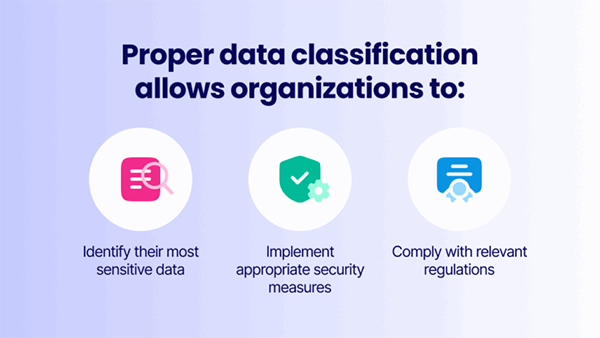
Before building any compliance program, a business needs to know what info it holds. Data classification sorts information by sensitivity level. This step makes it clear which controls is appropriate for what data.
Typical classification tiers include public, internal, confidential, and restricted. Restricted info, like social security numbers or medical records, needs the strongest protections. Public data, like marketing content, needs almost none.
Skipping this step leads to overprotecting low-risk info while leaving sensitive data exposed. Neither outcome helps the business.
Not skipping it can beget many benefits:
Access Controls Reduce Risk
One of the most-effective and simplest ways to reduce compliance risks: Restricting access to sensitive info. Role-based access control assigns permissions based on job function, not individual preference.
Multi-factor authentication adds another layer. Suppose, even a password gets compromised. MFA forces a second verification step that blocks most unauthorized access attempts. Regular access reviews catch permissions that should have been revoked when employees change roles or leave the company.
Documentation Is Not Optional
Auditors and regulators want proof, not promises. Written policies, incident response plans, and training records all serve as evidence that a business takes compliance seriously.
Documentation should cover data handling procedures, breach response steps, and employee training schedules. Without paper trails, a business has no way to demonstrate compliance during an audit or after an incident.
Employee Training Closes Gaps
Technology alone cannot enforce compliance. Employees make mistakes that create the biggest vulnerabilities, often through phishing emails or mishandled files.
Regular training keeps compliance top of mind. Sessions should cover recognizing phishing attempts, proper data handling, and reporting procedures for suspected incidents. Annual training isn’t enough for fast-moving threats. Quarterly refreshers keep the information current and reduce complacency.
Speaking of employees, tax and payroll compliance is another important aspect to consider for businesses besides IT compliance.
Building an Incident Response Plan
No compliance program is complete without a plan for when things go wrong. An incident response plan outlines exactly what happens after a breach is discovered.
Key components include:
- Immediate containment steps
- Internal escalation procedures
- Legal and regulatory notification timelines
- Customer communication protocols
- Post-incident review process
Testing this plan through simulated breach scenarios reveals gaps before a real incident exposes them. Waiting until an actual breach to test the plan almost always leads to slower response times and higher costs.
Making Compliance Sustainable
IT compliance isn’t a one-off project. It works best as an ongoing process. Regular audits, updated policies, and continuous employee training keep a business aligned with changing regulations. Businesses that treat compliance as a core operational function, rather than a box to check, end up more resilient when threats and regulations evolve.