The Hidden Costs of Building and Running Modern Data Centers
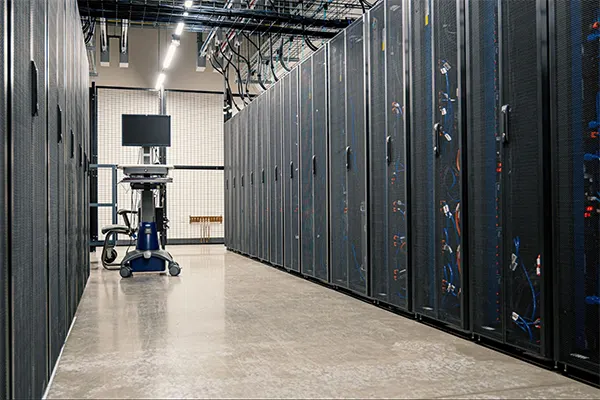
The cloud feels invisible, but the bill behind it is anything but. Have you ever stopped to consider what actually powers the cloud?
Every video stream, database query, AI workload, and customer login runs through physical infrastructure that is expensive to build, harder to operate, and even harder to future-proof. That reality is becoming more important as data-centre demand accelerates: according to the International Energy Agency 2024 report, electricity consumption from data centres amounts to around 415 terawatt hours (TWh), or about 1.5% of global electricity consumption, and their power use is projected to keep rising as AI workloads scale.
That is why the cost of a modern data center cannot be measured by land, concrete, and server racks alone. The visible construction budget is only the opening line item. The real cost stretches across utility upgrades, cooling systems, maintenance programs, staffing shortages, hardware refresh cycles, and growing regulatory pressure around water, noise, and energy use.
In other words, building a data center is not just a construction project. It is a long-term operational commitment with a very short tolerance for mistakes. To understand the true economics of modern data infrastructure, you have to look beyond the initial build and examine the hidden costs that accumulate long after the ribbon-cutting.
KEY TAKEAWAYS
- Specialized engineering, equipment, and upgrades can significantly increase the true cost of a new data center.
- Cooling, power losses, preventive maintenance, and specialized staffing create substantial recurring costs long after the facility goes live.
- Server refresh cycles and rising rack densities can force expensive retrofits to cooling and electrical infrastructure within just a few years.
- Water usage, noise control, and local grid constraints increasingly influence where data centers can be built and how much they cost to operate.
The True Weight of the Initial Build
Building a data center has far more in common with engineering critical infrastructure than developing ordinary commercial real estate. Every element of the facility, from structural design to fire suppression, has to protect sensitive hardware while supporting uninterrupted operations.
First comes specialized engineering. A data center must withstand extreme weather events, maintain strict security perimeters, and support immense structural loads. The flooring alone requires heavy reinforcement to handle dense server racks. You know, specialized fire suppression systems are also essential. These systems must extinguish flames without using water, which would instantly destroy millions of dollars in technology.
Then comes the challenge of power procurement. Securing a connection to the local electrical grid is rarely simple. In many regions, the local utility company must upgrade its substations and transmission lines to accommodate the massive energy draw. These infrastructure upgrades are often funded entirely by the organization building the facility. This adds substantial upfront costs before the first server even turns on.
Unpredictable supply chain issues introduce severe financial risks. The heavy equipment required for these facilities isn’t mass-produced on a standard assembly line. Industrial generators, large cooling units, and massive electrical switchgears require long manufacturing lead times. Delays in shipping can stall construction schedules, causing labor costs to rise and pushing back the eventual launch date.
But timing is everything in business.
The Invisible Ongoing Costs
Once the facility is live, cooling becomes one of its most persistent operating expenses. High-density compute environments generate enormous heat loads, and removing that heat reliably requires:
- Continuous energy
- Specialized equipment
- Increasingly sophisticated thermal design
If that heat isn’t managed properly, equipment degrades rapidly or shuts down entirely. You can literally feel the physical vibration and the low, heavy drone of energy passing through the floorboards when you walk into a cooling plant.
Power distribution is another area where costs quickly compound. A facility doesn’t just pay for the energy its servers consume. It also pays for the energy lost during transmission and conversion. Power traveling from the grid must seamlessly pass through transformers, power supplies, and distribution units before reaching the hardware. Each step causes minor energy loss, which accumulates significantly over thousands of hours.
Maintenance can’t be deferred or minimized. Ever. To achieve maximum uptime, every critical system needs regular inspection and testing. Backup generators must be exercised weekly. Large battery arrays require continuous monitoring. Air filtration systems need frequent filter replacements to keep dust out of sensitive electronics.
But who actually keeps these systems running?
Finding the right people to handle this work is becoming its own expensive hurdle. Staffing has become a massive bottleneck for the industry, as facilities desperately compete for a limited pool of specialized technicians and certified engineers. This shortage drives up recruitment costs and forces companies to lean on skilled labor staffing agencies and offer premium salaries just to keep their critical infrastructure adequately staffed. I guess it’s easy to focus on the hardware and completely look past the human hands required to keep it alive.
SURPRISING STAT
Power accounts for a huge portion of a data center’s operating costs, up to 70% by some estimates.
The Constant Pressure of Technological Obsolescence
Unlike most commercial buildings, data centers are designed for long physical lives but short technology cycles. The shell may last decades, yet the infrastructure inside it can start aging against new computing requirements almost as soon as it is commissioned.
Server technology evolves at a rapid pace. Almost every year, chips get faster and more efficient. To remain competitive and handle modern workloads, organizations must refresh their hardware every three to five years. This constant upgrade cycle requires significant capital. It also creates a logistical headache as old hardware must be securely decommissioned and recycled. It feels like a relentless treadmill.
So, how do you budget for a landscape that changes every thirty-six months?
This rapid evolution creates a secondary problem. Newer, high-density servers pack more computing power into smaller spaces. Less real estate requirement, but power and cooling requirements per sqft rise as much. A cooling system designed just five years ago may struggle to keep up with the intense heat generated by modern hardware. Consequently, operators face the difficult choice of either leaving server racks half-empty or investing in expensive retrofits to upgrade their cooling infrastructure. Maybe that’s the hardest pill to swallow, realizing your brand-new build is already falling behind the curve.
Regulatory Pressures and Community Impact
The economics of a data center are shaped not only by engineering constraints but also by regulatory and community pressure. As facilities grow larger and more resource-intensive, there’s greater scrutiny over:
- Water use
- Energy demand
- Land use
- Local quality-of-life impacts
Water scarcity is a growing concern for facilities that rely on evaporative cooling systems. In arid regions, data centers can consume millions of gallons of water daily to keep equipment cool. Local governments are increasingly implementing strict regulations on water usage. Some go as far as placing moratoriums on new construction until operators can prove they won’t deplete municipal water supplies. Transitioning to water-free cooling methods often requires more expensive equipment or higher electricity consumption, shifting the financial burden elsewhere.
Noise pollution is another friction point with local communities. The massive fan walls used in cooling systems, combined with regular testing of large backup diesel generators, create a constant acoustic hum. To maintain good community relations and comply with local zoning laws, operators must invest heavily in soundproofing walls, acoustic baffles, and advanced silencers for their exhaust systems.
A Holistic View of the Investment
The only useful way to evaluate this specialized infrastructure is through total cost of ownership, not construction cost alone. The upfront build may be the largest single check, but it is only the starting point in a long chain of operating, upgrade, compliance, and labor expenses.
True efficiency isn’t bought on opening day; it is earned through years of smart, painful adjustments. Organizations that succeed in this space are those that plan for operational reality from day one. They design with future flexibility in mind, recognizing that the technology inside the walls will change multiple times before the building itself reaches the end of its useful life. By understanding the true complexity of construction, the hidden realities of daily operations, and the relentless pace of technological change, businesses can make smarter strategic decisions that safeguard both their data and their bottom line.
FAQs
Ans: The biggest hidden costs usually include utility and grid upgrades, cooling infrastructure, energy losses in power distribution, preventive maintenance, specialized staffing, and ongoing hardware refresh cycles.
Ans: Keeping equipment within safe operating temperatures requires continuous cooling, which increases electricity consumption, equipment costs, and maintenance demands.
Ans: Many operators refresh server hardware every three to five years to keep up with performance, efficiency, and workload demands.