What is Internet of Everything (IoE)? Beyond the Internet of Things
The Internet of Everything is the backbone of high-end interconnectivity among living and non-living components in the whole world. While the Internet of Things only deals with connecting physical devices, the capability of IoE ensures that even data, processes, and people are also part of this wide interconnected network. Learn more about it in this short but insightful read.
What is the Internet of Everything (IoE)?
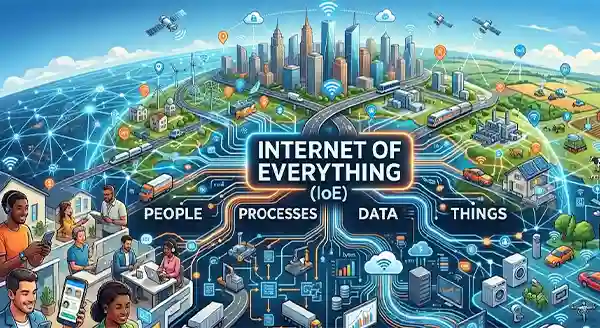
The Internet of Everything is a wider concept than the Internet of Things. It is a broad framework that extends the Internet of Things, or takes it to the next level. The Internet of Everything doesn’t just connect different devices, but also people, processes, data, and other things into a single, unified, and intelligent ecosystem. It is a step further into making a highly interconnected world.
Four Major Pillars of the Internet of Everything (IoE)
The Internet of Everything has four major pillars, namely people, process, data, and things. These are briefly explained below.
- People: Individuals connect to the network with the help of wearables or social media.
- Process: It represents the connection between people and other pillars so that the right person can receive the right information.
- Data: The availability of processed data ensures better insights and enhanced decision-making.
- Things: Physical objects, like sensors, appliances, and other assets, always remain interconnected over the internet.
What are the key Benefits of the Internet of Everything?
The key benefits of the Internet of Everything, or IoE, are as provided in the table below. It includes increased efficiency, quick decision-making, and others.
| Increased efficiency | Due to automation and reduced human errors |
| Quick decision-making | Because of the availability of key insights for fast analytics |
| Better experience | Each individual availing of a better personalized experience by reason of customized services |
| Sustainability | Optimization of limited resources and using renewable energy sources |
Real-World Usage of Internet of Everything (IoE)

Smart cities, healthcare, logistics, and manufacturing are the major areas where the Internet of Everything is heavily used.
- Smart cities: In the context of smart infrastructure, this capability is mostly used for managing the flow of traffic, maintaining public safety, etc.
- Healthcare: IoE in this section mainly helps in remote patient monitoring, especially through wearables.
- Logistics: This enables the real-time tracking of goods in the context of supply chain dynamics.
- Manufacturing: The capability of alerting technicians automatically about potential machine-related wear and tear helps keep everything fixed and up to the mark for maximum productivity.
Also read: 10 Cybersecurity Brands Leading Zero Trust Innovation in 2026
Conclusion
The Internet of Everything takes the concept of the Internet of Things further. It doesn’t just connect devices to each other, but also adds people and other parts of existence into the network for an ultra-connected feel. It is a single unified network that connects devices, big data, AI, and human beings all together in one place!
FAQs
Ans: It is a broad system that connects people, data, processes, and physical things into one intelligent network.
Ans: IoT strictly focuses on connecting physical devices, while IoE is a broader capability not just connecting devices but also people, among other components.
Ans: It is just a piece of technology. Whether it is good or bad entirely depends on how safely it is implemented and used.