Five Unexpected Places Where CPR Saves Lives Daily
Jump To Key Section
- Why Are Home Garages and Basements High-Risk Zones?
- What Happens When Emergencies Strike Youth Sports Fields?
- How Can Digital Nomads Prepare for Remote Trails and Cabins?
- Why Do Gamers, Streamers, and Night-Shift Coders Need First Aid?
- What Makes Modern Blended Training Fit Unconventional Schedules?
- How Can Community Hubs Turn Bystanders Into First Responders?
- Frequently Asked Questions
Most of the time, roughly seventy percent of out-of-hospital emergencies such as cardiac arrest occur in everyday spaces like home gyms, weekend youth tournaments, and remote hiking trails. If ordinary people know about modern emergency response, they can act decisively before paramedics ever arrive on the scene.
When everyday citizens enroll in programs like Coast2Coast First Aid Training, they quickly realize how often life-saving skills matter outside the office. Knowing how to stabilize a stranger or a loved one, from high-stress gaming marathons to backyard dinner parties, changes everything.
Why Are Home Garages and Basements High-Risk Zones?
Think about how many hours people spend alone in home workshops, basement gyms, and backyard sheds. You’re lifting heavy weights in isolation, using power tools, or shoveling wet snow before dawn. Nobody is walking past a glass office wall to notice if you suddenly collapse.
Physical exertion combined with undetected heart conditions causes thousands of sudden cardiac arrests at home every single year. When someone drops in a living room, every minute without chest compressions drops their survival odds by around ten percent.
Having a spouse, roommate, or teenage kid who knows how to begin immediate CPR bridges the gap while an ambulance passes neighborhood traffic. Even better, keeping a compact home Automated External Defibrillator (AED) mounted near the front closet turns frantic panic into a calm, methodical rescue.
What Happens When Emergencies Strike Youth Sports Fields?
Picture a sunny Saturday morning at a common soccer pitch or community ice rink. Parents are holding coffee cups, kids are sprinting down the sidelines, and referees are blowing whistles. Suddenly, a teen athlete takes a heavy ball to the chest or collapses mid-stride.
Commotio cordis—a rare but severe disruption of heart rhythm caused by a blunt impact to the chest—can happen to healthy, young athletes in a split second. Heat exhaustion, hazardous asthma attacks, and anaphylactic reactions to sideline snacks are just as common.
Coaches and team parents who rely only on venue staff to handle modern medical crises take a massive gamble. When two or three parents in the bleachers hold valid CPR/AED Level C credentials, the whole team gains an immediate safety net.
How Can Digital Nomads Prepare for Remote Trails and Cabins?
Remote work has pushed millions of professionals out of downtown towers and into rural cabins, camper vans, and backcountry trails. Working from a lakeside deck sounds idyllic until someone suffers a deep laceration, a hazardous allergic sting, or sudden heatstroke thirty miles from the nearest clinic.
Cell service drops out fast once you leave important highways. Even when a call goes through, rural emergency medical services face long drive times over winding roads.
- Control Severe Bleeding: Learning how to create direct pressure, pack a deep wound, and use a commercial tourniquet buys critical hours during trauma emergencies.
- Recognize Hidden Shock: Pale, clammy skin and quick, shallow breathing signal internal distress long before a victim loses consciousness.
- Manage Allergic Reactions: Knowing how to use an epinephrine auto-injector—and when a second dose is needed—avoids fatal airway swelling in remote areas.
- Treat Environmental Extremes: Detecting the early stages of hypothermia or heat exhaustion lets you intervene before organ failure sets in.
Why Do Gamers, Streamers, and Night-Shift Coders Need First Aid?
It sounds great, right? Sitting in an ergonomic chair with a headset on doesn’t look dangerous on paper. Yet, marathon gaming sessions, energy drink overload, and sleep deprivation put serious strain on the cardiovascular system.
Deep vein thrombosis (blood clots from sitting motionless for twelve hours) and sudden arrhythmias have made headlines across the local community. Worse yet, when someone lives alone or works overnight shifts, nobody notices right away if they slump over their keyboard.
Roommates, partners, and late-night coworkers who understand common emergency assessment can spot slurred speech, chest pain, or unresponsiveness quickly. Knowing the difference between simple exhaustion and a stroke or cardiac event saves lives in the digital world just as much as on a factory floor.
What Makes Modern Blended Training Fit Unconventional Schedules?
Traditional two-day classroom courses feel old for freelancers, parents, and shift workers who can’t easily block off an entire weekend. Nobody wants to sit on a folding chair for sixteen hours just to see safety slides.
Blended learning solves that stress by splitting the experience into two practical stages:
- Self-Paced Online Theory: You finish interactive video scenarios, quizzes, and emergency decision trees from your couch at midnight or during a quiet lunch break.
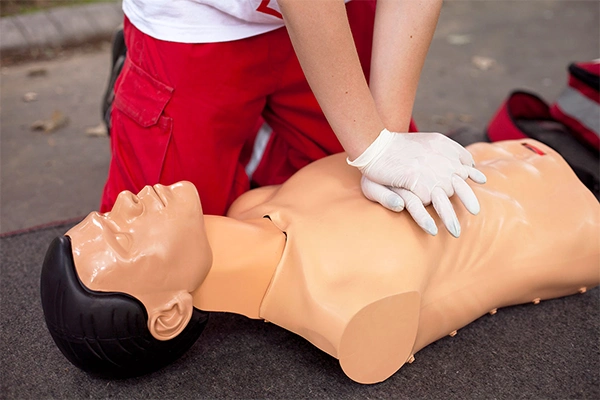
- Focused In-Class Practice: You attend a single, high-energy practical workshop where certified instructors coach your hand placement, compression depth, and rescue breathing on feedback manikins.
- WSIB and OHS Recognition: Because the hands-on evaluation meets strict national standards, your certification carries full workplace compliance with personal peace of mind.
Have you ever wondered if you’d freeze up during an actual crisis? Practicing physical skills in a realistic, hands-on setting develops muscle memory so your hands move automatically even when your adrenaline spikes.
How Can Community Hubs Turn Bystanders Into First Responders?
You don’t have to run a massive corporation to organize group safety training. Book clubs, neighborhood associations, volunteer fire auxiliaries, and local gaming cafés are hosting private weekend workshops to make their parts of the world safer.
When neighbors learn together, emergency response becomes a shared community habit instead of a rare specialist skill. Imagine a street where every third household knows how to clear a restricted airway, apply a bandage, and operate an AED. That kind of grassroots readiness turns normal neighborhoods into resilient communities.
If you are checking for first aid training near Bells Corners, the Highway 417 and Robertson Road corridor, Moodie Drive, or other areas close to our facility, then you may reach out to Coast2Coast First Aid/CPR – Nepean in that area. To find a schedule that matches your lifestyle, you can explore Coast2Coast First Aid class formats and reserve your spot online today.
Frequently Asked Questions
Ans: No. While online modules teach you the theory and steps, workplace regulators like WSIB and OHS require an in-person practical skills evaluation on manikins to ensure you can perform proper chest compressions.
Ans: CPR/AED Level C covers resuscitation and choking emergencies for adults, children, and infants, making it ideal for parents, coaches, and general workplaces. BLS is designed for healthcare providers and covers team-based resuscitation and bag-valve-mask ventilation.
Ans: Yes. Modern AEDs feature clear voice prompts and visual diagrams that walk you step-by-step through pad placement. The machine analyzes the victim’s heart rhythm automatically and will never deliver a shock unless one is medically needed.
Ans: Standard First Aid and CPR/AED Level C certificates remain valid for three years from the course completion date. Healthcare providers holding a Basic Life Support (BLS) certificate must renew their credentials every 12 months.
Ans: Yes. Groups of eight or more participants can arrange private on-site training where a certified instructor brings all the manikins, AED trainers, and supplies directly to your home, clubhouse, or office.