When a Business Winds Down, This Is What Happens to the Data Center Hardware in Insolvency or Shutdown
Jump To Key Section

The process of closing down or reducing the size of your business is about much more than simply letting your workers go, telling your creditors, and handling your office space. There are also many other tasks to take care of when you have your IT infrastructure inside the business.
Your servers, your data storage, your network equipment, your backup gear, and additional hardware can easily fall off your radar when you close down. They do not simply disappear after that.
Some of your devices will earn you some money on the market, while others will give you a lot of trouble and expenses. It is always good to know exactly what you have got there.
Hardware and Ownership
As far as the issue of downsizing and insolvency goes, the topic of IT infrastructure may not rank at the top (payroll, customer needs, real estate, etc.). However, failing to address IT assets can result in missed opportunities and/or costly oversights.
Not all data center hardware is created equal. Some pieces of equipment may still have value due to their age and/or features and could find a second life as refurbished or replacement equipment. Other equipment might not be as valuable but may have information that needs to be wiped from its hard drives or be required by law to comply with regulations. Some good high-level categories to consider when creating an asset inventory:
- Servers, storage, networking equipment
- UPS, PDU, and other power-related assets
- Racks, cable, rails, cooling, and other ancillary items
- Hard drives, media, spares, other miscellaneous inventory
- Leased/financed/customer owned equipment
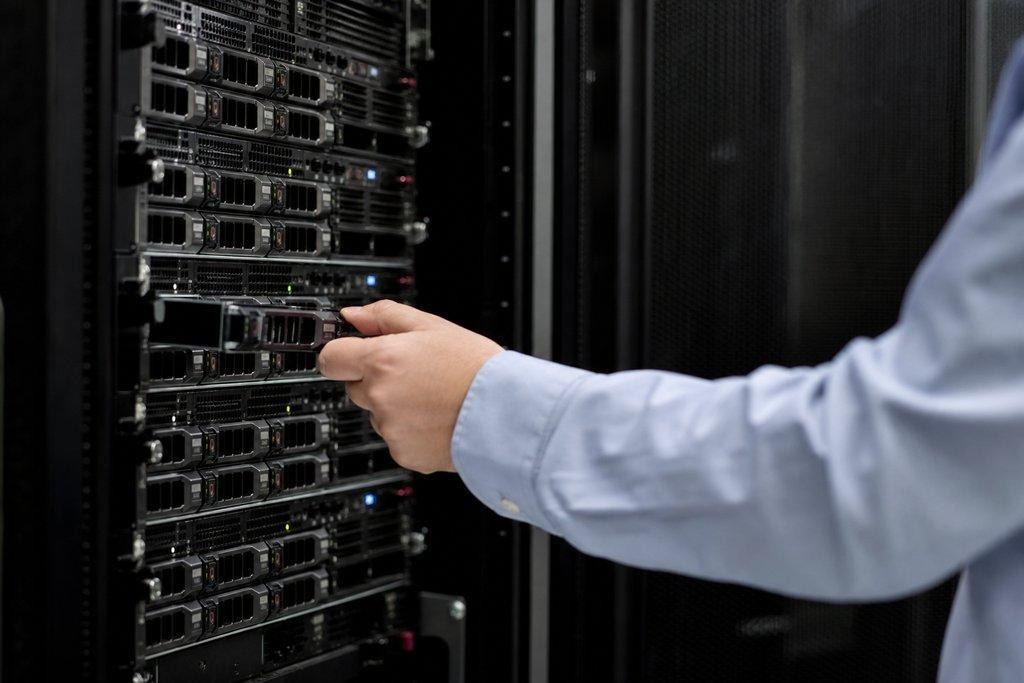
Lastly, the most important part of the list above is that some of the IT assets in the data center or server room may not belong to the company running the business there. Equipment may be subject to financing/asset-backed loans, equipment leases, customer agreements (Co-lo, MSP, etc.) which will dictate who has control/ownership of the assets and what can be done with them (resell, erase, relocate, etc.).
Timing and Documentation
In light of the market dynamics, the longer it takes for the asset to stay in storage, the less chance there is of it making money. Similarly, assets stored in less-than-ideal conditions will likely see diminished value as well. Having an accurate list of the assets in question will help guide disposition decisions and avoid leaving money on the table, and data center asset recovery connects that inventory to resale and disposition planning.
For businesses with server rooms or data centers, as opposed to just a few PCs in a back office, taking the time to create an accurate and comprehensive asset inventory, including model/configuration information (CPUs, amount of memory, drives, etc.), serial numbers, asset condition, and taking pictures of assets in operation can go a long way towards maximizing asset value. The quality of the server will be dependent on the accessories, which should be inventoried and kept with the corresponding server.
Data and Removal
Whereas, if a company goes bankrupt, its responsibilities concerning protecting information may not end there. Servers and other IT assets may have customer, employee, financial, and other business/application data, encryption keys, credentials, audit trails, and more stored on them. Before assets are relocated or otherwise dispositioned, it’s important to have a clear understanding of data erasure/destruction and records retention requirements and ensure these are adhered to.
Data erasure isn’t necessarily as straightforward as it may seem, since wiping/reloading an OS or deleting files/folders doesn’t necessarily mean the data is unrecoverable. Other assets may need for the hard drives or other storage media to be removed and/or destroyed. Some assets may have multiple locations where data could be stored (management controllers, removable media, configuration file backups, etc.) that should be taken into consideration when erasing assets.
Site Access
If a business is closing because it is moving premises or exiting a colocation facility, it’s important to identify access and egress requirements (freight elevator availability and usage restrictions, cargo weight limitations, etc.), special handling requirements (racks may need to be dismantled to fit through doors or elevators, while UPS batteries and CRAC units may be too heavy to offload manually, etc.), and environmental/regulatory restrictions on IT asset recycling and disposal (circuit boards, batteries, etc.) early on to avoid any nasty surprises at the eleventh hour.
Decision Authority
Depending on the circumstances surrounding a business closure/liquidation – including bankruptcy/insolvency, landlord requirements/requests etc. – there may be multiple stakeholders with vested interests/opinions as to what should happen with IT assets (executives, IT staff, lenders, landlords, customers etc.). It is necessary to ensure that right from the outset, there is clarity regarding the entity having the decision-making powers regarding IT asset disposition in order to prevent any unwanted surprises later.
Depending on asset condition/type and time/cost constraints, disposition via individual sales/auctions may or may not make sense compared to simply selling assets in bulk, which is why it’s important to weigh all options before making any decisions.
Final Safeguards
Unless there are compelling company reasons not to (asset/records retention requirements, contractual obligations, etc.), it’s almost always advisable to err on the side of caution when it comes to IT asset disposition post-business closure, as there’s nothing more threatening than realizing after-the-fact that there was a last-minute details extract, legal hold, or customer data transfer requirement!
FAQs
Ans: The process involves inventory and examination of ownership of data center hardware, along with its potential resale, relocation, or recyclability. There also needs to be consideration of data security, any contracts, and removal of hardware, among other aspects.
Ans: IT asset inventory helps companies to determine equipment, verify ownership, determine resale value, and prepare for removal.
Ans: Data in server storage is subject to relevant privacy laws and recordkeeping rules. Businesses may be required to delete data or physically destroy drives from servers before selling them for parts or scrap.
Ans: Businesses can evaluate access to the site, freight lift restrictions, load limitations, dismantling needs, transport plans, and disposal laws before undertaking removal activities.